Spotting Deepfakes and Misinformation
Understanding Deepfakes
Seeing Isn't Believing Anymore
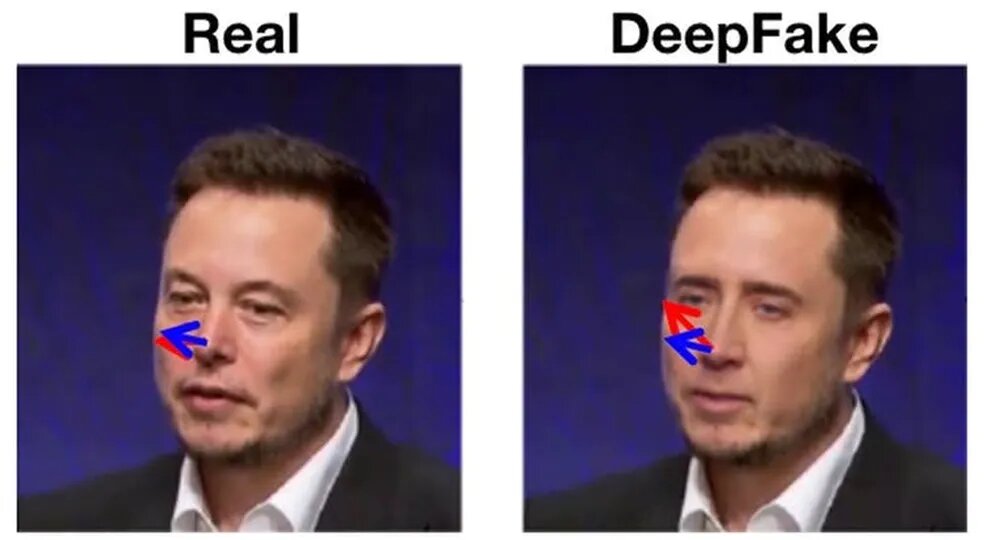
Have you ever seen a video of a celebrity saying something completely out of character, only to find out it wasn't real? Or maybe you've seen a historical figure seemingly brought back to life to speak in a modern advertisement. This is the world of deepfakes, a technology that can create highly realistic but entirely fabricated videos, images, and audio.
deepfake
noun
A form of synthetic media where a person's likeness is replaced or altered using artificial intelligence, specifically deep learning techniques.
The term is a blend of "deep learning" and "fake." Deep learning is a type of machine learning that uses complex neural networks to analyze vast amounts of data. In the case of deepfakes, these networks learn a person's facial expressions, mannerisms, and voice from existing photos and videos. They can then generate new content where that person appears to do or say things they never did.
How Are They Made?
While the technology is complex, the core idea behind many deepfakes involves a clever AI setup called a Generative Adversarial Network, or GAN. Imagine two AIs competing against each other.
One AI, the Generator, is like an art forger. Its job is to create fake images or video frames. It starts by making random, noisy images and slowly learns to produce more realistic ones based on a dataset of real images (say, thousands of pictures of a specific actor).
The second AI, the Discriminator, acts as the art critic. It's trained on the same dataset of real images. Its job is to look at an image—either a real one or one from the Generator—and decide if it's authentic or a fake.
This creates a feedback loop. The Generator keeps trying to trick the Discriminator, and the Discriminator keeps getting better at spotting fakes. This constant competition forces the Generator to produce incredibly realistic results. After millions of rounds, the Generator becomes so skilled that its creations can fool even human eyes.
The Dangers of Deception
The rapid advancement of deepfake technology raises serious ethical questions. While it can be used for harmless fun or legitimate purposes in filmmaking, its potential for misuse is vast and troubling.
The more insidious impact of deepfakes, along with other synthetic media and fake news, is to create a zero-trust society, where people cannot, or no longer bother to, distinguish truth from falsehood.
Here are some of the major risks:
- Political Propaganda: Imagine a fake video of a political candidate admitting to a crime right before an election. Even if it's debunked later, the initial damage could be irreversible, swaying public opinion and disrupting democratic processes.
- Financial Fraud: Scammers can use deepfake audio to impersonate a CEO, ordering an employee to make an urgent, unauthorized wire transfer. This type of fraud, known as vishing (voice phishing), is already happening.
- Personal Defamation: The technology can be used to create fake explicit content of individuals without their consent, leading to harassment, blackmail, and severe emotional distress. It can also be used to ruin reputations by creating videos of people making racist or inflammatory remarks.
- Erosion of Trust: Perhaps the biggest danger is the slow erosion of our collective trust in what we see and hear. If any video or audio clip can be faked, it becomes easier to dismiss real evidence as fake. This is sometimes called the "liar's dividend," where bad actors can claim real, incriminating footage of them is just a deepfake.
As the technology gets better, telling fact from fiction becomes harder. Early deepfakes had tell-tale signs like unnatural blinking, weird lighting, or blurry spots. But modern versions are much more sophisticated, making detection a constant cat-and-mouse game between creators and those trying to spot fakes.
High-quality DeepFakes are not easy to discern, but with practice, people can build intuition for identifying what is fake and what is real.
Public awareness is one of our best defenses. Understanding that this technology exists and being skeptical of shocking or unbelievable content is a crucial first step in mitigating its influence.
Time to check your understanding of deepfakes.
In the context of a Generative Adversarial Network (GAN) used to create deepfakes, what is the primary role of the 'Discriminator' AI?
The term 'liar's dividend' refers to a situation where...
Deepfake technology presents a significant challenge to our information ecosystem. While it has creative applications, its potential for harm requires us to be more vigilant and critical consumers of media.