Spotting Deepfakes and Misinformation
Understanding Deepfakes
When Seeing Isn't Believing
You scroll through your social media feed and see a video of a world leader saying something completely outrageous. It looks real. It sounds real. But is it? In today's digital world, that's an increasingly tricky question to answer, thanks to a technology called deepfakes.
Deepfakes are photos, videos, or audio clips that have been digitally created to show people saying and doing things that never happened.
The term itself is a blend of "deep learning" and "fake." Deep learning is a type of artificial intelligence that teaches computers to learn from massive amounts of data, much like how humans learn from experience. This technology allows creators to swap faces, manipulate expressions, and synthesize voices with stunning realism.
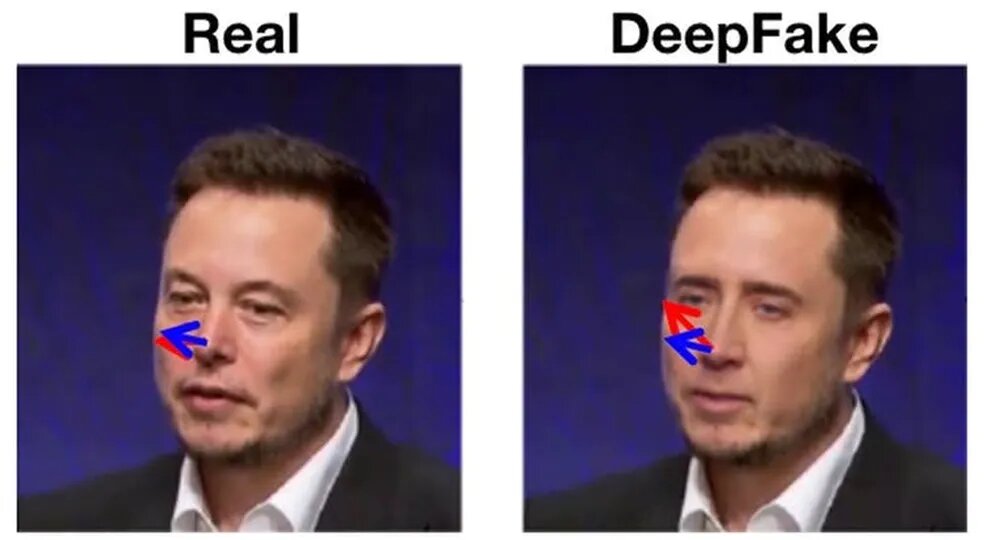
While the idea of altering images is not new, deepfakes represent a huge leap forward. The first convincing examples began appearing online around 2017, and the technology has evolved at a startling pace ever since. What once required Hollywood-level visual effects can now be done with accessible software, making it easier than ever to create convincing fakes.
How AI Creates a Fake
So how does a computer learn to create a believable fake? The magic behind many deepfakes is a clever AI technique called a Generative Adversarial Network, or GAN. You can think of a GAN as two AIs working against each other in a training exercise.
One AI, the Generator, is like an art forger. Its job is to create fake images or videos. For example, it might try to place Actor A's face onto Actor B's body.
The second AI, the Discriminator, acts as an art critic or detective. Its job is to look at images, both real and forged, and decide which is which.
At first, the Generator is terrible at its job, and the Discriminator easily spots the fakes. But every time the Discriminator rejects a forgery, the Generator learns from its mistakes and tries again, making a slightly better fake. This cycle repeats millions of times. The forger gets better at forging, and the critic gets better at critiquing. Eventually, the Generator becomes so skilled that its creations are good enough to fool the Discriminator, and often, human eyes as well.
Uses and Misuses
Deepfake technology isn't inherently good or bad. Like any powerful tool, its impact depends on who is using it and why.
On one hand, it has positive applications. In filmmaking, it can be used to de-age actors or even bring performers back to the screen posthumously. It can create new forms of art and satire, help people with speech impediments by creating a natural-sounding voice, or allow someone to try on clothes virtually.
On the other hand, the potential for misuse is vast and troubling.
Malicious deepfakes are often used to spread misinformation, commit fraud, harass individuals, or undermine trust in institutions. A fake video of a politician could influence an election, while a fake audio clip of a CEO could tank a company's stock.
Perhaps the most significant danger is the erosion of trust. If any video or audio clip can be faked, how can we believe what we see and hear? This problem is sometimes called the "liar's dividend." When people know that convincing fakes exist, they can dismiss real, inconvenient evidence as just another deepfake. This makes it harder to hold people accountable and to agree on a shared set of facts.
As this technology continues to advance, being aware of its existence is the first step toward navigating a more complex media landscape. Understanding that what you see might not be real is a critical skill in the digital age.
The term "deepfake" is a combination of which two concepts?
What is the name of the AI technique that uses two competing neural networks, a 'Generator' and a 'Discriminator', to create realistic synthetic media?