Spinoza and the Upanishads
Introduction to Spinoza's Metaphysics
One Big Thing
In the 17th century, the Dutch philosopher Baruch Spinoza offered a revolutionary view of reality. He argued that everything we see, feel, and think is not a collection of separate objects but part of a single, infinite, and unified whole. To understand the universe, Spinoza said we first have to understand the one thing it's all made of.
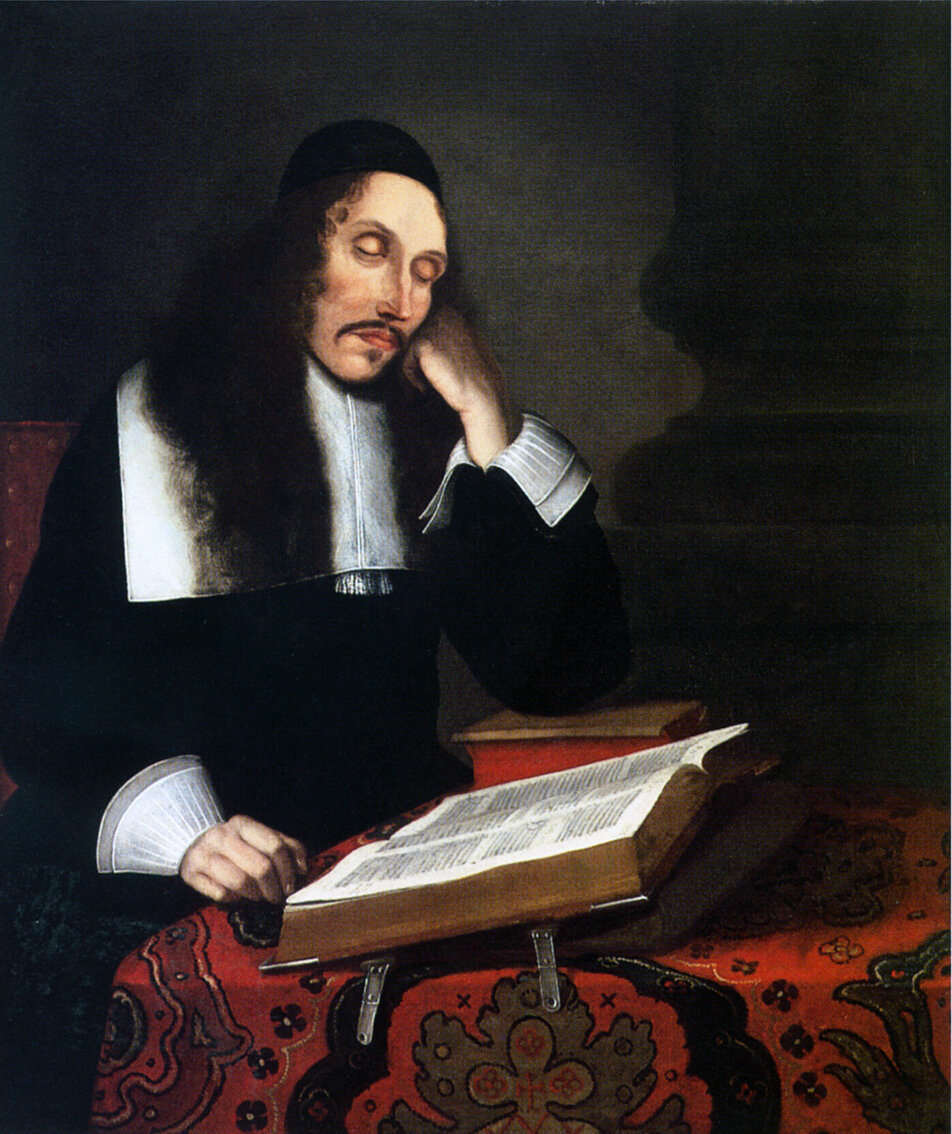
This idea forms the bedrock of his metaphysics, a branch of philosophy concerned with the fundamental nature of being and the world. Spinoza's system is built on a few key concepts that fit together like puzzle pieces: substance, attributes, and modes.
The Foundation: Substance
For Spinoza, a "substance" is something that exists in and of itself. It doesn’t need anything else to exist or to be understood. Think about a chair. A chair needs wood, metal, or plastic to exist. The wood, in turn, is made of cells, which are made of molecules, and so on. None of these are truly independent. They all depend on something else for their existence.
Spinoza reasoned that if you trace this chain of dependency back far enough, you must arrive at something that is completely self-sufficient. This ultimate, independent reality is what he calls substance. And, he concluded, there can only be one.
If there were two or more substances, they would have to limit each other, which would mean neither is truly infinite or independent. Therefore, only one substance can exist.
Spinoza identifies this single, all-encompassing substance with a term that might surprise you: God. But his concept of God is very different from a traditional, personal deity. For Spinoza, God is Nature. It isn't a creator who stands apart from the universe; it is the universe and all of its laws.
substance
noun
That which is in itself and is conceived through itself; the concept of which does not require the concept of another thing from which it has to be formed.
Attributes and Modes
If everything is just one substance, how do we explain the incredible variety we see around us? This is where attributes and modes come in.
An attribute is a fundamental way of understanding substance. Spinoza believed that this single substance has infinite attributes, but human beings can only perceive two of them: thought and extension.
Think of substance as a diamond. The diamond itself is one thing, but it has many facets through which we can see it. Attributes are like those facets.
The attribute of thought encompasses everything related to the mind: ideas, consciousness, feelings, and concepts. The attribute of extension covers everything related to the physical world: size, shape, motion, and all physical objects.
A mode is a specific modification or expression of substance. It's a particular thing that exists within an attribute. Your idea of a dog is a mode of thought. The actual, physical dog is a mode of extension. Both are expressions of the same underlying substance, just perceived through different attributes.
So, a human being is not two separate things (a mind and a body) mysteriously linked together. Instead, a person is a single mode of the one substance, perceived through the attributes of both thought and extension. The mind and body are two sides of the same coin.
This framework presents a perfectly ordered and logical universe. Everything that happens is a necessary outcome of the nature of the single substance. Every object and every idea is an inevitable modification of God or Nature, unfolding according to its eternal laws.
According to Spinoza, what is a "substance"?
How did Spinoza explain the variety of things we see in the world, like a specific tree or a particular thought?