Spinal Root Development and Organization
Embryonic Germ Layers
The Three Foundational Layers
Early in development, a human embryo is just a hollow ball of cells called a blastocyst. But soon, a crucial process called gastrulation begins. During this stage, the cells rearrange themselves into three distinct layers. These are the primary germ layers, and they are the blueprint for every single tissue and organ in the body.
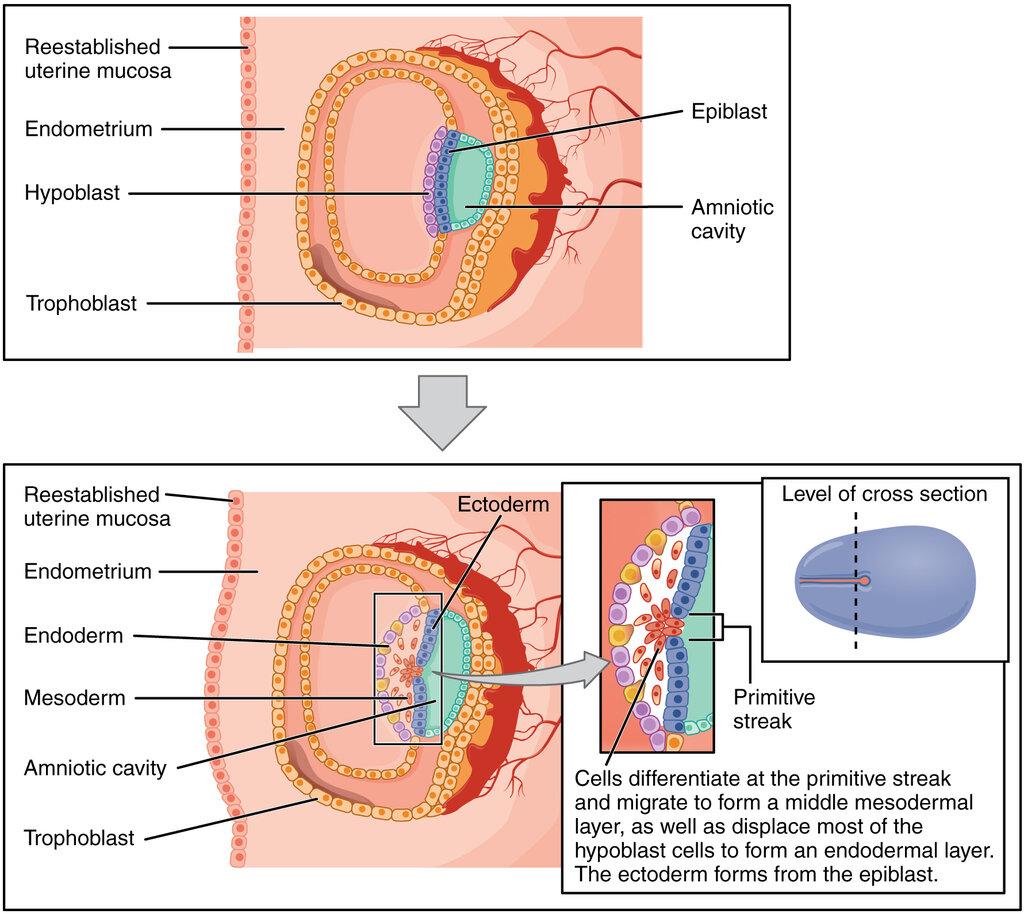
Think of these layers as the foundational building materials for a complex structure. Each layer has a specific destiny, giving rise to different parts of the body. The three layers are the ectoderm (outer layer), mesoderm (middle layer), and endoderm (inner layer).
Ectoderm: The Outer Layer
The ectoderm is the outermost of the three germ layers. It's responsible for forming the structures that interface with the outside world. This includes the epidermis, which is the outer layer of your skin, along with hair and nails.
Crucially for our topic, the ectoderm also gives rise to the entire nervous system. A specialized region of the ectoderm, called the neural plate, folds in on itself to form the neural tube. This structure is the precursor to the brain and spinal cord. Nerves that branch out from the spinal cord, called spinal roots, also originate from these ectodermal cells.
Ectoderm
noun
The outermost of the three primary germ layers in the early embryo.
Mesoderm: The Middle Layer
Sandwiched between the other two, the mesoderm is the middle layer. It's the source of most of the body's structural components. It differentiates to form bones, cartilage, and the muscles that allow us to move.
The mesoderm also develops into connective tissues, like ligaments and tendons, which hold our skeleton together. Furthermore, it's responsible for forming the heart, blood vessels, and blood cells of the circulatory system, as well as the kidneys.
Mesoderm
noun
The middle of the three primary germ layers in the early embryo.
Endoderm: The Inner Layer
The endoderm is the innermost germ layer. Its primary role is to form the lining of the body's internal tubes. This includes the entire digestive tract, from the esophagus to the colon.
It also forms the lining of the respiratory tract, including the trachea and lungs. Many vital glands, such as the liver, pancreas, and thyroid, also originate from the endoderm. These organs are essential for digestion, metabolism, and breathing.
Endoderm
noun
The innermost of the three primary germ layers in the early embryo.
This differentiation process, where simple germ layers give rise to complex and specialized tissues, is one of the most remarkable events in biology. Here's a quick summary:
| Germ Layer | Location | Key Derivatives |
|---|---|---|
| Ectoderm | Outermost | Nervous system, skin, hair, nails |
| Mesoderm | Middle | Bones, muscles, heart, blood vessels, kidneys |
| Endoderm | Innermost | Lining of digestive and respiratory tracts, liver, pancreas |
Understanding these three layers is the first step in tracing how any part of the body, including the spinal cord and its roots, comes into being. Let's see what you've learned.
Which of the following correctly lists the three primary germ layers?
A developmental issue prevents the proper formation of the neural tube. This problem originates in which germ layer?
From these three simple layers, all the complexity of the human body emerges.