Speeding Up ClickHouse Full-Text Search
Introduction to ClickHouse
What is ClickHouse?
ClickHouse is an open-source database designed for speed. It's built to handle huge amounts of data and answer analytical questions about it almost instantly. Think of it as a specialized tool for sifting through mountains of information to find patterns and insights in real time.
The secret to its performance lies in its structure. ClickHouse is a columnar database. Most databases you might be familiar with, like those used for online shopping or banking, are row-oriented. They store all the information for a single record together in a row.
A row-oriented database is like a filing cabinet where each folder represents a customer, and inside you have separate sheets for their name, age, and city.
A columnar database flips this concept. It stores all values from a single column together. It’s like having separate folders for 'Names', 'Ages', and 'Cities', with each folder containing a list of all the values for that specific attribute.
| Row-Oriented Storage | Column-Oriented Storage |
|---|---|
1, Alice, 30, New York | 1, 2, 3 |
2, Bob, 45, London | Alice, Bob, Carol |
3, Carol, 22, Paris | 30, 45, 22 |
New York, London, Paris |
This structure is incredibly efficient for analytics. If you want to find the average age of all your customers, a row-oriented database has to read through every piece of data for every customer. ClickHouse just reads the 'Age' column, ignoring everything else, which makes the query dramatically faster.
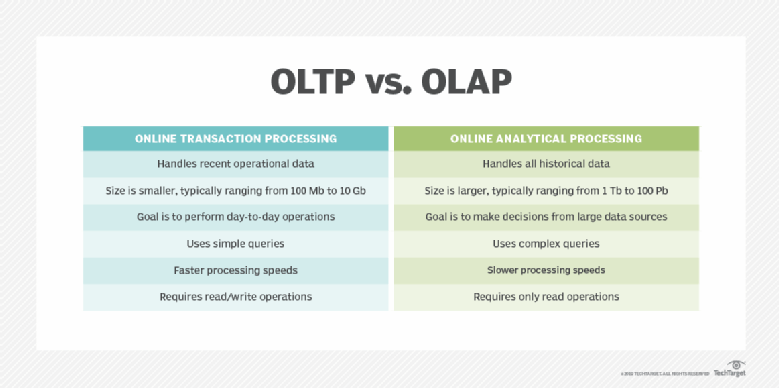
This design makes ClickHouse an ideal system for Online Analytical Processing (OLAP). OLAP systems are built for complex queries on large historical datasets, which is different from Online Transaction Processing (OLTP) systems that handle day-to-day transactions like placing an order or making a deposit.
How It's Built
ClickHouse is designed to be a distributed system, meaning it can run across multiple servers, or nodes, working together as a single database. This allows it to handle massive datasets and high query loads by sharing the work.
It uses a "shared-nothing" architecture. Each server in the cluster has its own processor, memory, and storage. They are independent and don’t share resources. This makes the system highly scalable—to increase capacity, you just add more servers to the cluster. It also improves fault tolerance, as the failure of one node doesn't bring down the entire system.
The core of ClickHouse's data management is its storage engine, particularly the MergeTree engine family. Think of a storage engine as the component that controls how data is physically written to disk, indexed, and retrieved. The MergeTree engine is brilliant at handling high-volume data writes, organizing the data efficiently in the background, and creating sparse indexes to quickly find the data blocks needed for a query without having to scan everything.
Another key aspect is data compression. Since similar data types are stored together in columns, they can be compressed very effectively. This not only saves a huge amount of disk space but also speeds up queries because less data needs to be read from the disk.
Key Features and Use Cases
So, what makes ClickHouse stand out?
- Blazing Speed: Its columnar storage, ability to process data in batches (vectorized query execution), and parallel processing across multiple CPU cores and servers make it one of the fastest analytical databases available.
- Linear Scalability: It scales horizontally. If your data volume doubles, you can often double the number of nodes in your cluster to maintain the same query performance.
- SQL Support: It uses a familiar SQL dialect. This means analysts and developers don't need to learn a completely new query language to interact with the data.
- Data Compression: Excellent compression ratios reduce storage costs and improve query speed.
These features make ClickHouse a perfect fit for a variety of applications that require real-time analytics on large streams of data.
Common use cases include web and app analytics, business intelligence dashboards, monitoring systems for IT infrastructure and IoT devices, and analyzing logs for security or performance insights.
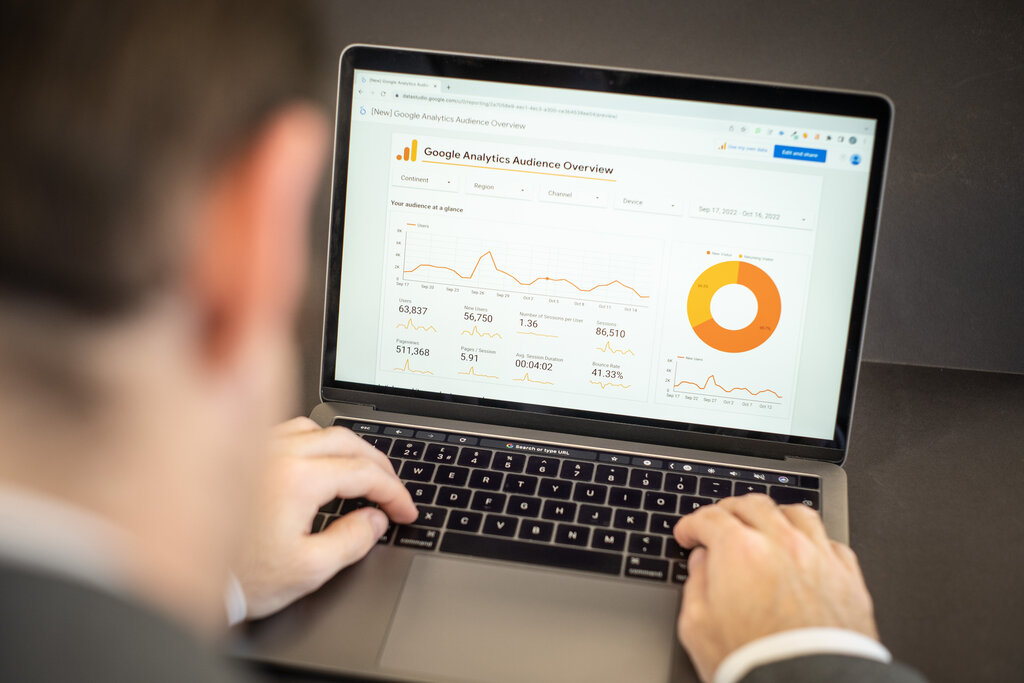
For example, an e-commerce company could use ClickHouse to analyze user clicks, page views, and shopping cart events as they happen. They could build a live dashboard showing which products are trending, how marketing campaigns are performing, and where users are dropping off in the checkout process. Answering these questions with a traditional database would be slow and resource-intensive, but ClickHouse is built for exactly this kind of job.
Ready to check your understanding of these core concepts?
What is the primary advantage of ClickHouse's columnar storage model for analytical queries, such as calculating the average of a single metric across millions of records?
ClickHouse is best described as an OLTP (Online Transaction Processing) system.
ClickHouse provides a powerful solution for anyone needing to query and analyze massive datasets quickly. Its unique architecture and feature set make it a top choice for modern data analytics.