Speed Up Your Mac Mini
Understanding Mac Mini Performance
Inside the Silver Box
A Mac Mini's performance comes down to a team of components working together. Think of it like a busy workshop. You have a master craftsperson, a workbench, and a storage warehouse. How well they cooperate determines how quickly work gets done.
The main worker is the Central Processing Unit, or CPU. It's the brain of the computer, executing instructions and performing calculations for everything from opening an app to editing a video. The CPU's speed is measured in gigahertz (GHz), and a higher number generally means it can think faster. But speed isn't the only factor. Modern CPUs have multiple "cores," which are like having several craftspeople working at once. A quad-core CPU can handle four tasks simultaneously, making the whole system feel much more responsive when you're multitasking.
CPU
noun
The Central Processing Unit is the primary component of a computer that executes instructions. It's responsible for performing most of the processing inside the computer.
Workspace and Warehouse
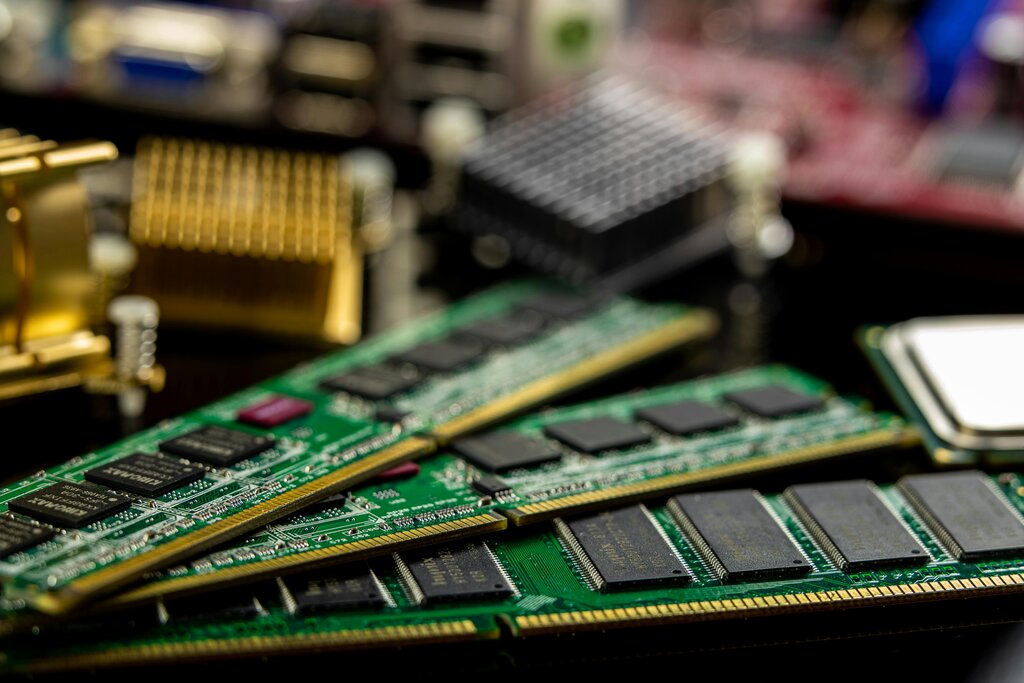
Next up is memory, or RAM (Random Access Memory). This is your computer's workbench. It's a temporary, super-fast space where the CPU keeps the data for all the apps and files you're currently using. The more RAM you have, the bigger your workbench. With a small workbench, you have to constantly swap tools and materials back and forth from the warehouse, which slows everything down. More RAM allows you to keep more apps open and switch between them smoothly without delay.
The warehouse is your computer's storage drive. This is where your files, applications, and the operating system are kept permanently. For a long time, most computers used Hard Disk Drives (HDDs), which store data on spinning magnetic platters. They work, but accessing the data involves physical movement, which takes time.
Most modern Macs, including the Mini, now use Solid-State Drives (SSDs). SSDs have no moving parts and store data on flash-memory chips, similar to a USB drive. This makes them dramatically faster at reading and writing data. An SSD makes your Mac Mini boot up faster, launch apps almost instantly, and makes the entire system feel snappier.
| Feature | Hard Disk Drive (HDD) | Solid-State Drive (SSD) |
|---|---|---|
| Technology | Spinning magnetic platters | Flash-memory chips |
| Speed | Slower | Much Faster |
| Moving Parts | Yes | No |
| Impact | Slower boot times, app loading | Quick boot times, instant app loading |
The Complete Picture
Finally, there's the Graphics Processing Unit, or GPU. The GPU is a specialized processor designed to handle everything you see on screen. It renders images, videos, and the user interface. While some high-end computers have a separate, powerful GPU, the Mac Mini typically uses "integrated graphics," meaning the graphics-handling capability is built directly into the main CPU. This is more than enough for everyday tasks like browsing the web, streaming video, and light photo editing. For graphically intensive work like professional video editing or 3D gaming, the performance depends heavily on how efficient this integrated GPU is.
Overseeing this whole operation is macOS, the operating system. It acts as the workshop manager, deciding which tasks the CPU should work on, what data gets placed on the RAM workbench, and when to fetch things from storage. macOS is highly optimized to manage these resources efficiently, ensuring that the system remains responsive even when you have multiple applications running. It intelligently allocates power and memory to where they're needed most, squeezing the best possible performance out of the hardware.
A balanced system is key. A super-fast CPU won't feel quick if it's constantly waiting for a slow hard drive or doesn't have enough RAM.
In the provided 'workshop' analogy, what does having more RAM correspond to?
What is the primary advantage of a Solid-State Drive (SSD) over a Hard Disk Drive (HDD)?
Understanding these core components is the first step to knowing what makes your Mac Mini tick.