Speed Reading for Students
Understanding Reading Fundamentals
How Your Eyes Really Read
When you read, it feels like your eyes glide smoothly across the page. But that's just an illusion. In reality, your eyes move in a series of quick, jerky jumps. These jumps are called saccades.
Between each jump, your eyes pause for a fraction of a second. These pauses are called fixations, and they're the only time you actually absorb information. During a fixation, your eye takes in a snapshot of a few words. Then, it jumps to the next point, and the process repeats. Your brain stitches these snapshots together so seamlessly that you experience reading as a continuous flow.
Sometimes, your eyes even jump backward. This is called a regression, and it happens when you get confused or need to reread something for clarity. It's a normal part of the process.
Efficient readers make fewer, longer fixations. They also have fewer regressions. They're able to take in more words with each pause and trust their brain to fill in the gaps.
Reading doesn't happen when your eyes are moving. It happens when they stop.
The Voice Inside Your Head
Have you ever noticed a little voice in your head that sounds out the words as you read? This is called subvocalization. It’s a habit most of us picked up in childhood when we learned to read by sounding words out loud. Over time, that external voice became an internal one.
This inner voice is a major bottleneck for reading speed. Most people speak at a rate of about 150 to 250 words per minute. If you're subvocalizing every word, you can't read much faster than you can talk. Your brain can process words much faster than your inner voice can pronounce them.
Subvocalization
noun
The silent speech or inner voice that one uses when reading.
However, subvocalization isn't all bad. It can be a useful tool for comprehension, especially when you’re reading complex or dense material like a legal document or a scientific paper. The inner voice forces you to slow down and process the information more carefully. The key is to learn when to use it and when to quiet it.
To become a truly effective speed reader, you’ll need to learn to suppress this inner voice (known as “subvocalization”) for the majority of words you read.
From Words to Meaning
Reading isn't just about seeing words; it's about understanding them. Comprehension is an active process where your brain works to construct meaning from the text. It’s like building something out of LEGOs. The words are the bricks, but you are the one who assembles them into a coherent structure.
Your brain does this by connecting what you're reading to what you already know. Your existing knowledge, experiences, and vocabulary form a mental framework. When you read new information, your brain fits it into this framework, making connections and drawing inferences along the way.
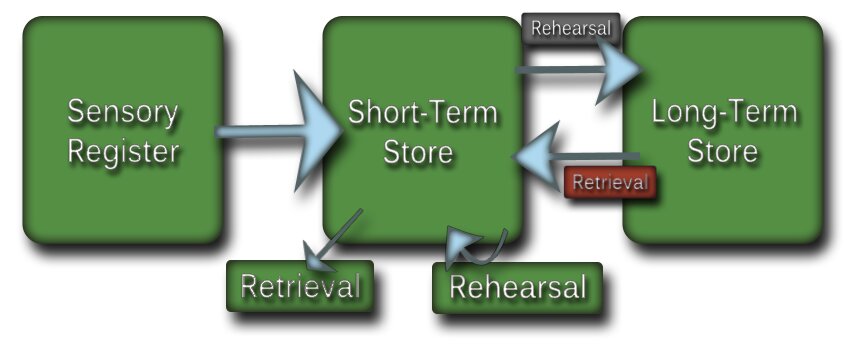
Another crucial cognitive process is chunking. Instead of reading word-by-word, your brain naturally groups words into meaningful phrases or chunks. For example, you don't read "the," then "cat," then "sat," then "on," then "the," then "mat." You process the entire phrase "the cat sat on the mat" as a single idea.
Improving your reading skills involves making this chunking process more efficient. By training your eyes to take in larger chunks of text during each fixation, you can process information more quickly and improve your overall comprehension. You're not just seeing more words; you're seeing more ideas.
Now let's check your understanding of these fundamental concepts.
During which phase of eye movement while reading is information actually absorbed?
Subvocalization, the inner voice you hear while reading, is always a hindrance and should be eliminated completely.
Understanding these mechanics is the first step. By being aware of how your eyes move, the effect of your inner voice, and how your brain builds meaning, you can start to read more consciously and effectively.