Specific Heat Explained
Introduction to Specific Heat
Why Sand Burns and Water Chills
Ever walked on a sandy beach on a hot day? The sand can be scorching, yet the ocean water just a few feet away feels cool and refreshing. Both are under the same sun, so why the dramatic temperature difference? The answer lies in a property called specific heat.
Specific heat is the amount of heat energy required to raise the temperature of one gram of a substance by one degree Celsius. Think of it as a measure of a substance's thermal inertia, or its resistance to changing temperature.
Materials with a high specific heat, like water, need a lot of energy to warm up and release a lot of energy to cool down. Materials with a low specific heat, like sand, change temperature much more quickly.
This property is incredibly important. Water's high specific heat helps regulate Earth's climate by absorbing huge amounts of solar energy without drastic temperature swings. It's also why a pot of water takes a while to boil, but the metal pot itself gets hot almost instantly.
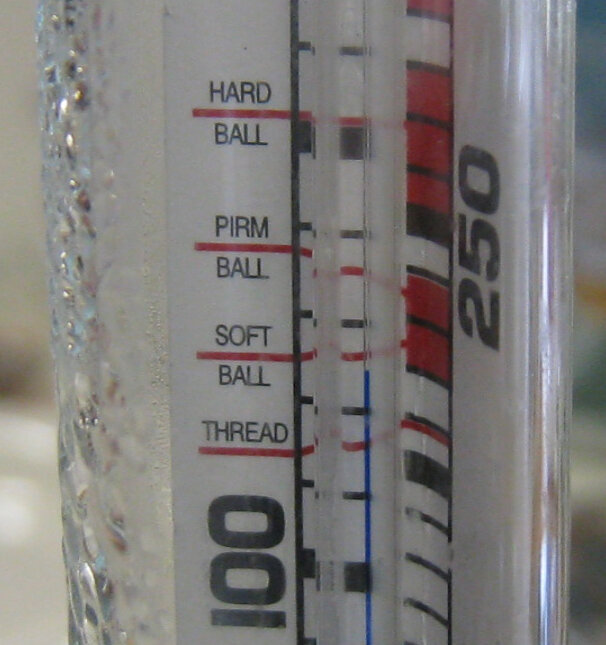
Measuring Thermal Resistance
Specific heat is measured in units of energy per unit of mass per degree of temperature. The most common units are joules per gram per degree Celsius (J/g°C) or calories per gram per degree Celsius (cal/g°C).
FACT: One scientific calorie is the amount of energy required to raise the temperature of 1 gram of water by 1 degree Celsius.
Because of this definition, the specific heat of water is very easy to remember: it's 1 cal/g°C. In joules, it's 4.184 J/g°C. Let's compare that to a few other common substances.
| Substance | Specific Heat (J/g°C) |
|---|---|
| Water (liquid) | 4.184 |
| Air | 1.012 |
| Aluminum | 0.902 |
| Sand (silica) | 0.835 |
| Iron | 0.450 |
As you can see, water's specific heat is significantly higher than that of metals and sand. This is why it's such an effective coolant.
Putting It All Together
We can calculate the amount of heat () absorbed or released by a substance using a simple formula. It connects the substance's mass (), its specific heat (), and the change in temperature ().
Here, (delta T) is the final temperature minus the initial temperature. Let's try an example. How much heat energy, in joules, is needed to raise the temperature of a 250 g cup of water from 22°C to 97°C for a cup of tea?
-
Identify your variables: g J/g°C (for water)
-
Plug them into the formula:
-
Calculate the result: J
It takes nearly 78.5 kilojoules of energy to heat that cup of water. If you were heating the same mass of iron, it would require less than a tenth of that energy.
Now, let's test your understanding of these core concepts.
Specific heat is a measure of a substance's:
On a hot sunny day, the sand on a beach feels much hotter than the ocean water. Why?
Understanding specific heat is fundamental to exploring how energy interacts with matter.