Speak Urdu Confidently
Urdu Script and Pronunciation
The Urdu Alphabet
The Urdu alphabet, known as the Urdu abjad, is your gateway to reading and writing the language. It's based on the Perso-Arabic script and, like its parent scripts, is written from right to left. That might feel strange at first, but you'll get used to it quickly.
The alphabet has 38 letters. Many of these will be familiar to anyone who has seen Arabic or Persian script, but Urdu adds its own unique letters to represent sounds specific to South Asia.
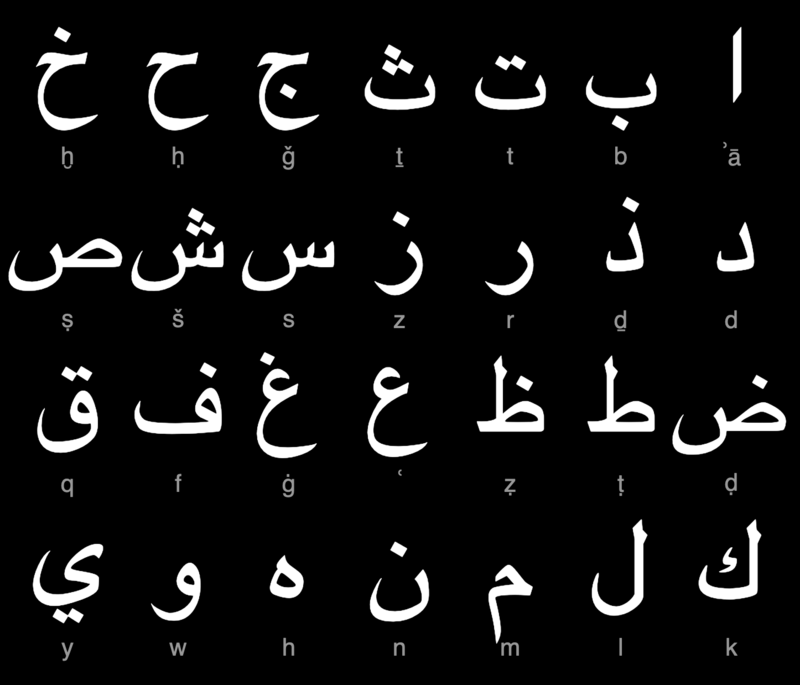
Each letter has a name and a distinct sound. Let's look at a few examples to get started.
| Letter | Name | Transliteration | Pronunciation Guide |
|---|---|---|---|
| ا | alif | ā / a | Like the 'a' in 'father' |
| ب | be | b | Like the 'b' in 'bat' |
| پ | pe | p | Like the 'p' in 'pat' (not in Arabic) |
| ت | te | t | Like the 't' in 'top' |
| ج | jīm | j | Like the 'j' in 'jump' |
| د | dāl | d | Like the 'd' in 'dog' |
| ک | kāf | k | Like the 'k' in 'kite' |
| گ | gāf | g | Like the 'g' in 'go' (not in Arabic) |
How Letters Connect
One of the most important features of the Urdu script is its cursive nature. Letters in a word are almost always connected to each other. Because of this, most letters have different forms depending on their position: initial (at the start of a word), medial (in the middle), final (at the end), or isolated (standing alone).
Think of it like cursive handwriting in English, where letters flow into one another. The core shape of the letter usually remains, but it's adapted to link up with its neighbors. Don't worry about memorizing all the forms at once. You'll start to recognize the patterns as you see more words.
A letter's shape changes to connect with the letters before and after it. Some letters, however, only connect to the letter that comes before.
Let's see this in action. The letters ب (be), ا (alif), and ت (te) can combine to form the word بات (bāt), meaning "talk" or "matter."
Unique Urdu Sounds
Urdu includes several sounds that are not found in Arabic or Persian. These are represented by modifying existing letters, usually by adding a small symbol called 'to'e' (ط) or by combining a letter with 'do chashmi he' (ھ) to create aspirated sounds.
One key group is the retroflex consonants. To pronounce these, you curl the tip of your tongue back to touch the roof of your mouth. It's a sound common in South Asian languages.
| Letter | Transliteration | Pronunciation Guide |
|---|---|---|
| ٹ | ṭ | A retroflex 't' sound. Try saying 'top' with your tongue curled back. |
| ڈ | ḍ | A retroflex 'd' sound. Try saying 'dog' with your tongue curled back. |
| ڑ | ṛ | A retroflex flap, similar to the 'tt' in the American pronunciation of 'butter'. |
Aspirated consonants are another key feature. They are pronounced with a strong puff of air, like the 'p' in the English word 'pit'. You create them by pairing a consonant with the letter ھ.
Examples include بھ (bh), پھ (ph), and تھ (th). This puff of air can completely change the meaning of a word.
Getting comfortable with these new letters and sounds is a big first step. Let's look at a couple of words that use some of the letters we've learned.
Book
Water
Now's a great time to review what you've just learned about the Urdu alphabet.
Ready to check your understanding?
In which direction is the Urdu script written?
Why do most Urdu letters have different forms (initial, medial, final, and isolated)?
Don't worry if it seems like a lot at first. With a little practice, recognizing and pronouncing these letters will become second nature. The key is to start reading and writing simple words as soon as you can.