Speak French Intermediate
Pronunciation Basics
The Building Blocks of French
Getting the sounds right is the first big step to speaking French confidently. Unlike English, where a single vowel can have multiple pronunciations, French vowels are crisp and consistent. They are "pure" sounds, meaning you hold your mouth in one position for the entire vowel. Think of the "ee" sound in "see." In French, this sound, written as 'i', is short and sharp, without the little 'y' glide we often add at the end in English.
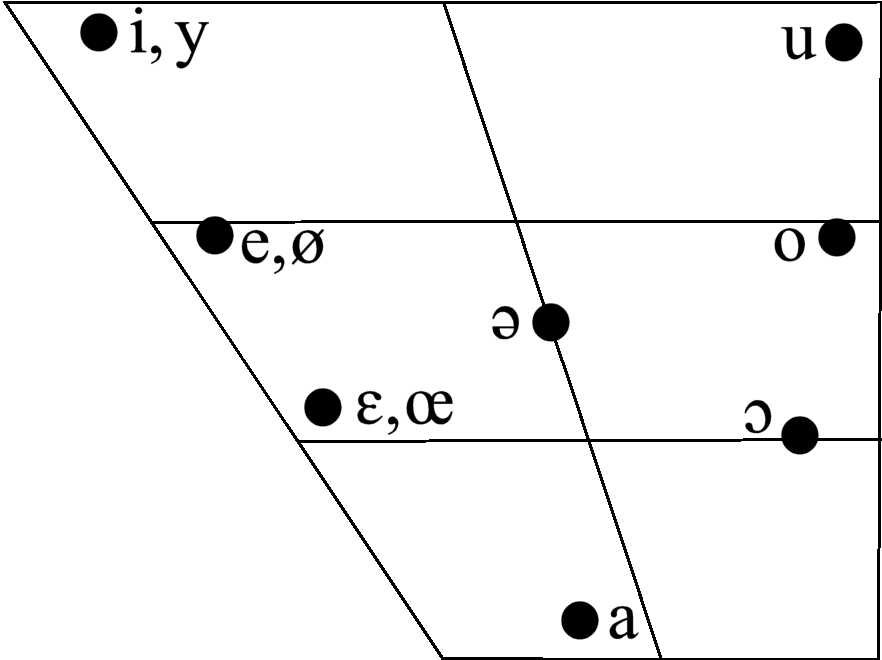
Let's look at a few common vowels:
- a is open, like the 'a' in "father." Example: la (the).
- i is a high, tight sound, like the 'ee' in "see." Example: vie (life).
- u is tricky. To make this sound, shape your lips like you're saying "oo" but try to say "ee" instead. Example: tu (you).
Consonants are a bit more familiar. Many sound just like they do in English, such as 'b', 'd', 'k', 'm', and 'p'. A key rule to remember is that final consonants are often silent. For instance, in the word trop (too much), you don't pronounce the 'p'. The same goes for the 's' in trois (three) and the 'd' in grand (big).
Nasal Vowels
French is famous for its nasal vowels. These sounds are made by letting air flow through both your mouth and your nose. In English, we have nasal consonants like 'm' and 'n', but the vowels themselves aren't usually nasal. In French, when a vowel is followed by an 'n' or 'm' at the end of a syllable, it often becomes a nasal sound, and the 'n' or 'm' itself isn't pronounced.
| Spelling | Approximate Sound | Example Word | Meaning |
|---|---|---|---|
| an, en | "ahn" (like an open 'ah' through the nose) | maman | mom |
| in, ain, ein | "an" (like the 'a' in "can," but nasal) | vin | wine |
| on | "ohn" (like a round 'oh' through thenose) | bon | good |
| un | "uhn" (like the 'u' in "undone," but nasal) | un | one |
The key is to not close off your airway with your tongue or lips to make an 'n' or 'm' sound. Just let the vowel resonate through your nose.
The French R
The French 'r' can be intimidating, but it's just a sound made in a different part of the mouth. The English 'r' is formed with the tip of the tongue. The French 'r', however, is made in the back of the throat.
Imagine you're lightly gargling or clearing your throat. That vibration at the back, involving the uvula (the little thing that hangs down), is where the French 'r' comes from. It's a soft, throaty friction sound, not a rolled 'r' like in Spanish.
Try saying the word "Paris." Start with the 'Pa' sound, and then for the 'ri' part, make that gentle gargling sound in your throat before finishing with the 'ee' sound. The 's' is silent!
street
Here's another word to practice with.
to watch
Intonation and Rhythm
French has a very different rhythm from English. In English, we stress certain syllables in a word, like pho-to-graph versus pho-to-gra-pher. In French, the stress is much more regular. It falls on the last syllable of a word or, more importantly, on the last syllable of a group of words.
This creates a smooth, flowing rhythm. Instead of individual words punching through, phrases are linked together into melodic units. Statements tend to have a flat or slightly falling pitch at the end, while yes-or-no questions have a sharp rising intonation on the final syllable.
For example, in the phrase un petit garçon (a little boy), the stress isn't on petit or garçon individually. The whole phrase is said as one unit, with the emphasis on the final syllable: un-pe-tit-gar-ÇON.
Let's review these core concepts.
Now, let's test your knowledge.
How are French vowels generally described, especially when compared to English vowels?
In the French word grand (big), how is the final 'd' typically pronounced?
Listening to and imitating native speakers is the best way to improve. With practice, these sounds will start to feel natural.