Speak English Faster
Building Everyday Vocabulary
Greetings and Small Talk
Let's start with the words you'll use most often. Greetings are the key to starting any conversation. You probably know "hello" and "goodbye," but there are many ways to say the same thing. The one you choose often depends on the time of day or how well you know the person.
| Situation | Formal Greeting | Informal Greeting |
|---|---|---|
| Morning (before noon) | Good morning. | Morning! |
| Afternoon (noon to 5 PM) | Good afternoon. | Hey, how's it going? |
| Evening (after 5 PM) | Good evening. | What's up? |
| Meeting someone new | It's a pleasure to meet you. | Nice to meet you. |
| Leaving | Have a good day. | See you later! / Bye! |
After the greeting, you'll often make small talk. This is light, friendly conversation. You can ask about someone's day or how they are feeling.
- "How are you?"
- "How has your day been?"
- "What have you been up to?"
When you introduce yourself, you can say, "Hi, I'm [Your Name]." When you want to ask for someone else's name, you can say, "What's your name?" It's simple, but it's the foundation of every new connection.
Your Daily Life
Now let's talk about you. Describing your daily routine is a great way to practice. Most of us do similar things every day, so this vocabulary is very useful. Think about what you do from the moment you wake up until you go to sleep.
I usually wake up at 7 AM. I make coffee and have breakfast. Then, I get ready for work. I start working at 9 AM. After work, I like to cook dinner and relax. I might watch a movie or read a book. I usually go to bed around 11 PM.
Here are some key verbs for daily activities:
- Morning: wake up, get up, take a shower, get dressed, eat breakfast, brush your teeth
- Afternoon: eat lunch, work, study, take a break, exercise
- Evening: cook dinner, eat dinner, relax, watch TV, read, go to bed
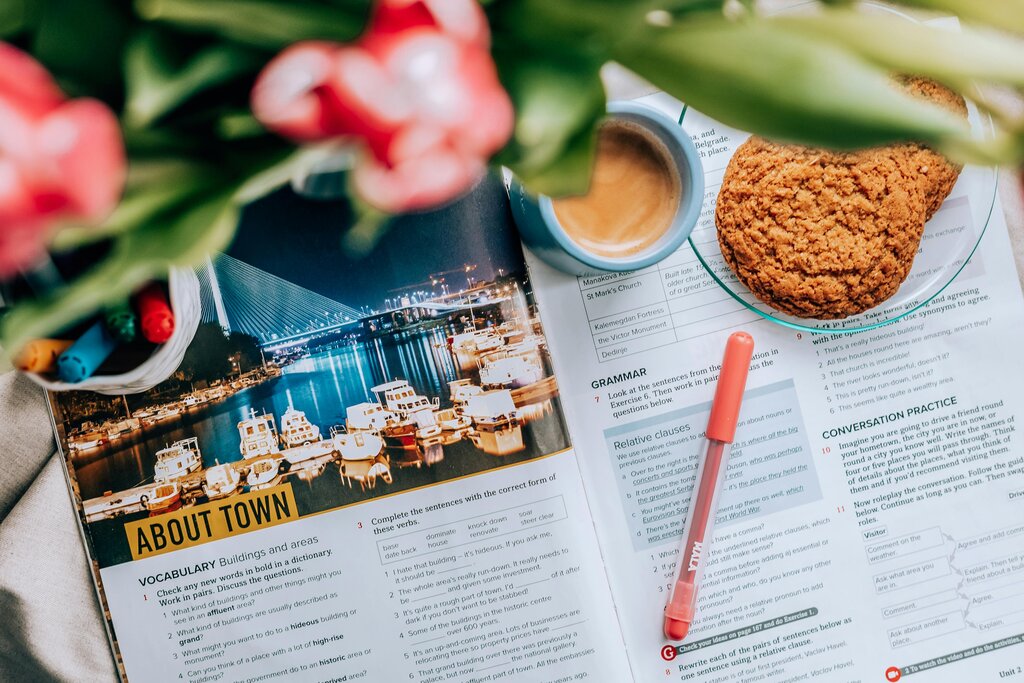
Out and About
Life happens outside your home, too. You need words for shopping, eating at restaurants, and getting around town. Let's look at some common situations.
Learn practical vocabulary and phrases that you can use in real-life situations.
When you're shopping, you might need to ask for the price or size of something.
- "How much does this cost?"
- "Do you have this in a different size?"
- "I'd like to buy this, please."
At a restaurant, you'll need to order your food and pay the bill.
- "Could I see the menu, please?"
- "I'll have the chicken sandwich."
- "Can I get the check, please?"
Getting from one place to another involves transportation. You might take a bus, train, taxi, or subway. You could ask:
- "Where is the nearest bus stop?"
- "A ticket to the city center, please."
- "Does this train go to the airport?"
Hobbies and Interests
Talking about what you love to do is a great way to connect with people. What do you do for fun? Your hobbies and interests are a big part of who you are.
| Interest | Related Verbs | Related Nouns |
|---|---|---|
| Sports | play, watch, run, swim | team, game, ball, player |
| Music | listen to, play, sing, dance | song, band, concert, instrument |
| Reading | read, borrow, buy | book, library, author, novel |
| Movies | watch, see, go to | film, actor, cinema, ticket |
| Travel | visit, explore, fly, drive | trip, country, hotel, vacation |
To talk about your hobbies, you can say:
- "In my free time, I like to..."
- "I enjoy playing soccer."
- "I'm interested in photography."
Asking about someone else's interests is easy, too. Just ask, "What do you like to do for fun?" or "Do you have any hobbies?"
Ready to review?
Now let's see what you've learned.
When you meet someone for the first time, a good way to ask for their name is:
Which of the following activities is typically part of an evening routine?
Building your vocabulary takes time and practice. Try to use a few new words each day. Soon, they will become a natural part of your conversations.