Speak Clearly Without Stumbling
Understanding Speech Fluency
What is Speech Fluency?
Speech fluency is the smooth, forward flow of speech. Think of it like a river moving steadily along its course. When you speak fluently, your words connect easily without unintended pauses, repetitions, or stumbles. It’s about expressing your thoughts effortlessly and clearly, allowing listeners to focus on your message, not on how you’re saying it.
Fluency is not just about speaking fast—it’s about speaking clearly, expressing yourself smoothly, and feeling confident in conversations.
Everyone experiences moments of disfluency. It’s completely normal to occasionally use filler words like “um” or “like,” or to repeat a word when you’re tired or thinking. These minor hitches don't define your speaking ability. However, when these interruptions become frequent, they can disrupt communication and create challenges.
Common Roadblocks to Fluency
Disfluencies are the interruptions that break the flow of speech. While they vary from person to person, some common types appear regularly.
| Type of Disfluency | What It Sounds Like |
|---|---|
| Fillers | Using words like “um,” “ah,” “uh,” or “like” to fill pauses. |
| Repetitions | Repeating sounds, syllables, or entire words (e.g., “I-I-I want…” or “We are go-go-going”). |
| Prolongations | Stretching out a sound in a word (e.g., “Ssssssee me later.”). |
| Blocks | An audible stop or silent pause where a word gets stuck and won't come out. |
| Revisions | Changing a word or phrase mid-sentence (e.g., “I went to the—I walked to the store.”). |
When disfluencies are persistent, they can impact more than just conversation. They can affect a person's confidence in social situations, presentations, or even simple daily interactions like ordering coffee. The fear of stumbling over words can cause someone to avoid speaking altogether, leading to missed opportunities for connection and self-expression.
The Body's Role in Speech
Speaking is a complex physical act. It requires precise coordination between your brain and several parts of your body. First, your brain formulates a thought. Then, it sends signals to your respiratory system to push air from your lungs up through your vocal cords in your larynx (voice box). These cords vibrate to create sound. Finally, your articulators—your tongue, lips, and jaw—shape that sound into recognizable words.
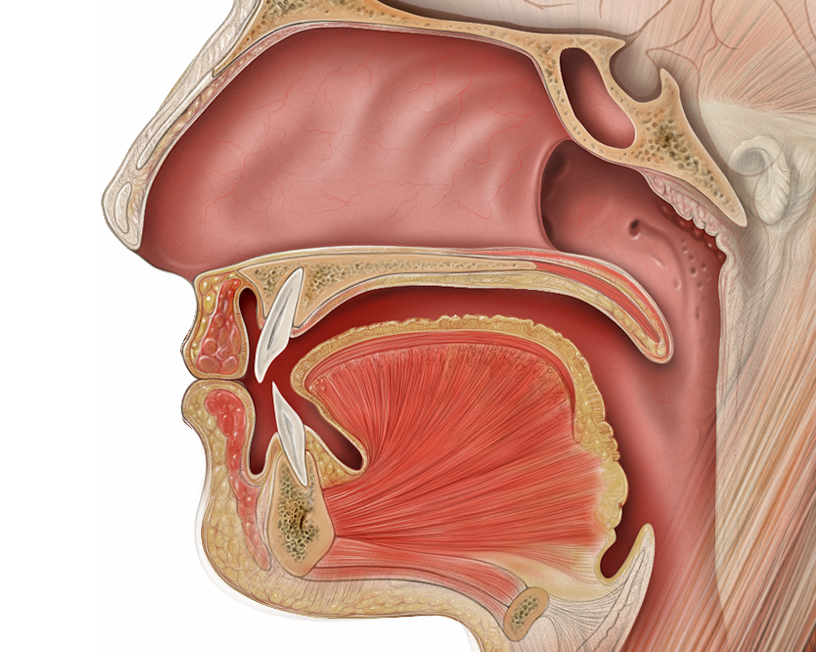
A breakdown anywhere in this chain can cause a disfluency. For example, if the timing between your breath and vocal cord vibration is off, you might experience a block. If your articulators don't move quickly or precisely enough, you might stumble over a word. These physiological factors are the machinery behind your speech.
The Mind's Influence
Just as important as the physical mechanics are the psychological factors. Your mental and emotional state has a direct impact on your ability to speak fluently. Stress, anxiety, and self-consciousness can create tension throughout your body, including the muscles needed for speech.
When you're anxious about speaking, your brain can enter a state of 'fight or flight.' This can disrupt breathing patterns, tighten vocal cords, and make it harder for your brain to retrieve words, creating a self-fulfilling prophecy where the fear of speaking poorly makes it happen.
Conversely, feeling calm, confident, and prepared can help the physical process of speaking run much more smoothly. The connection between mind and body is central to understanding and improving speech fluency.
Which of the following best defines speech fluency?
According to the text, what is the role of the 'articulators' (tongue, lips, and jaw) in producing speech?
Now that we’ve explored the what, why, and how of speech fluency, we can begin to look at practical ways to build a smoother, more confident speaking style.