Speak Basic Telugu
Telugu Script
The Telugu Script
Welcome to the Telugu script, a beautiful writing system with flowing, rounded characters. It's a member of the Brahmic family of scripts, which means it shares ancestors with many other writing systems across South and Southeast Asia. You can see Telugu in the bottom left of this comparison.
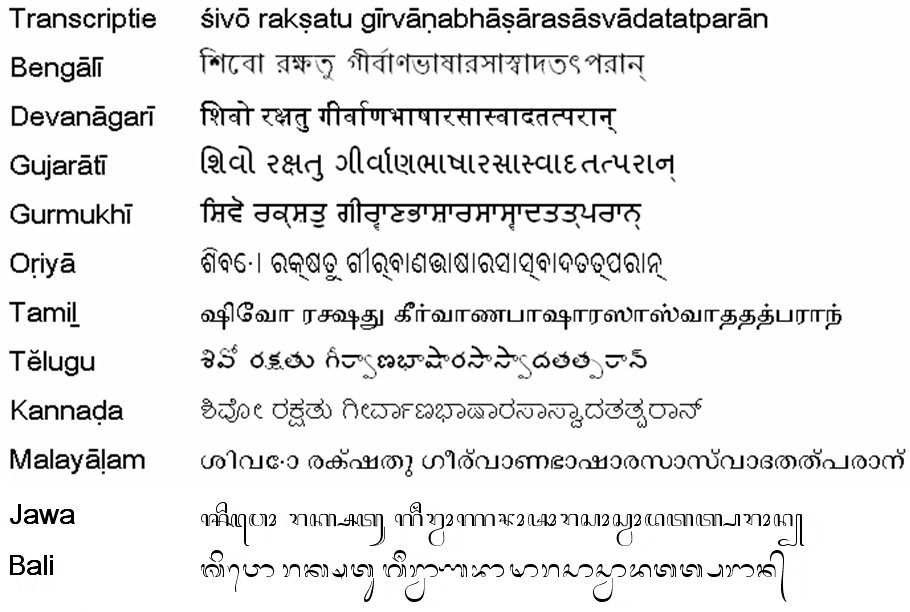
Telugu is an abugida. In an abugida, each consonant has an inherent vowel sound, which is typically 'a'. To create other vowel sounds with a consonant, we add special marks called diacritics. We'll explore this system as we go.
First, let's break the script down into its two main parts: vowels, called Achulu, and consonants, called Hallulu.
Vowels (Achulu)
Vowels are the foundational sounds of the language. In Telugu, they are called Achulu (అచ్చులు). There are 16 vowels, and they can appear as independent letters, usually at the beginning of a word. Each has a distinct sound, with short and long versions for 'a', 'i', and 'u'.
| Vowel | Transliteration | Pronunciation (like the vowel in...) |
|---|---|---|
| అ | a | cut |
| ఆ | ā | father |
| ఇ | i | fit |
| ఈ | ī | feet |
| ఉ | u | put |
| ఊ | ū | rule |
| ఋ | ṛ | rip (a rolling 'r' sound) |
| ౠ | ṝ | (long version of ఋ, rarely used) |
| ఎ | e | bed |
| ఏ | ē | cafe |
| ఐ | ai | aisle |
| ఒ | o | obey |
| ఓ | ō | go |
| ఔ | au | out |
| ಅಂ | aṁ | sum (nasal sound) |
| అః | aḥ | (adds a soft 'ha' sound, like a breath) |
The vowels ఌ (ḷ) and ౡ (ḹ) are also part of the classical script but are no longer in common use.
Consonants (Hallulu)
There are 36 consonants, or Hallulu (హల్లులు), in Telugu. As we mentioned, each consonant has an inherent 'a' sound (అ). For example, the first consonant, క, is pronounced 'ka'.
Telugu consonants are neatly organized based on where and how the sound is produced in the mouth. This makes them much easier to learn. For instance, the first five rows group sounds made in the back of the throat, then with the palate, the roof of the mouth, the teeth, and finally the lips.
| Type | Unaspirated | Aspirated | Unaspirated | Aspirated | Nasal |
|---|---|---|---|---|---|
| Velar (throat) | క (ka) | ఖ (kha) | గ (ga) | ఘ (gha) | ఙ (ṅa) |
| Palatal (palate) | చ (ca) | ఛ (cha) | జ (ja) | ఝ (jha) | ఞ (ña) |
| Retroflex (roof) | ట (ṭa) | ఠ (ṭha) | డ (ḍa) | ఢ (ḍha) | ణ (ṇa) |
| Dental (teeth) | త (ta) | థ (tha) | ద (da) | ధ (dha) | న (na) |
| Labial (lips) | ప (pa) | ఫ (pha) | బ (ba) | భ (bha) | మ (ma) |
Notice the pattern? Each row has an unaspirated sound (like 'ka'), followed by an aspirated version with a puff of air ('kha'). Then a voiced sound ('ga'), and its aspirated version ('gha'). The last one is a nasal sound ('ṅa'). This logical structure is a hallmark of Brahmic scripts.
Here are the remaining consonants, which are mostly approximants and sibilants:
| Letter | Transliteration | Letter | Transliteration |
|---|---|---|---|
| య (ya) | ya | ర (ra) | ra |
| ల (la) | la | వ (va) | va |
| శ (śa) | sha (palatal) | ష (ṣa) | sha (retroflex) |
| స (sa) | sa | హ (ha) | ha |
| ళ (ḷa) | la | క్ష (kṣa) | ksha |
| ఱ (ṟa) | ra (stronger) |
Adding Vowels to Consonants
So, how do you say 'ki' or 'ko' if the consonant క already sounds like 'ka'? You use diacritical marks. These are small symbols added to a consonant to change its inherent 'a' vowel to any other vowel sound.
Each vowel has a corresponding diacritic mark. Let's see how this works with the consonant క (ka).
| Vowel Sound | Diacritic Mark | Example with క (ka) | Result |
|---|---|---|---|
| ఆ (ā) | ా | కా | kā |
| ఇ (i) | ి | కి | ki |
| ఈ (ī) | ీ | కీ | kī |
| ఉ (u) | ు | కు | ku |
| ఊ (ū) | ూ | కూ | kū |
| ఋ (ṛ) | ృ | కృ | kṛ |
| ఎ (e) | ె | కె | ke |
| ఏ (ē) | ే | కే | kē |
| ఐ (ai) | ై | కై | kai |
| ఒ (o) | ొ | కొ | ko |
| ఓ (ō) | ో | కో | kō |
| ఔ (au) | ౌ | కౌ | kau |
This system applies to all consonants. By learning the 36 consonants and these 12 basic diacritics, you can form almost any syllable in Telugu.
What if you want just the consonant sound without any vowel, like the 'k' in 'ask'? A special mark called a virāma (విరామము) is used. It looks like this: ్. Adding it to a consonant removes the inherent 'a' sound. So, క (ka) becomes క్ (k).
Take some time to practice writing these letters. Notice how many are formed with smooth, continuous curves. This is partly because they were traditionally written on palm leaves, and straight lines could tear the leaf.
Ready to test your knowledge of the script?
What is the primary function of diacritical marks in the Telugu script?
The Telugu consonant క is pronounced 'ka'. How would you write just the consonant sound 'k' without any vowel?
Getting comfortable with the script is the first and most important step. With this foundation, you'll be ready to start forming words and sentences.