Spark Streaming to Iceberg
Introduction to Real-Time Data Processing
The Need for Speed
Many data processing systems work in batches. They collect data over a period—an hour, a day, or even a week—and then process it all in one large job. Think of it like doing all your laundry on Sunday. This method, called batch processing, is great for many tasks, like generating monthly sales reports. But what if you need information right now?
Imagine you're using a ride-sharing app. You want to see available cars near you instantly, not based on data from yesterday. Or consider your bank. When you swipe your credit card, it needs to check for potential fraud in milliseconds, not hours. These situations demand real-time data processing, where data is analyzed as soon as it's created.
Real-time data processing means acting on information the moment it arrives. The goal is to minimize the delay, or latency, between when an event happens and when the system responds to it.
Latency
noun
The delay before a transfer of data begins following an instruction for its transfer. In real-time systems, the goal is to have very low latency.
This shift from processing data 'later' to 'now' requires a different way of thinking. Instead of seeing data as static files stored in a database, we must see it as a continuous, never-ending flow.
Data Streams and Events
A data stream is a sequence of data generated continuously. Picture a river, not a lake. A lake is a large, static body of water, similar to a traditional database. A river, on the other hand, is always moving. Data streams are like that river; they are made up of individual pieces of data called events.
An event is a small record of something that happened. A user clicking a link, a sensor reporting a temperature, or a financial transaction are all events. Each event contains information about what occurred, like a timestamp, a user ID, or a purchase amount.
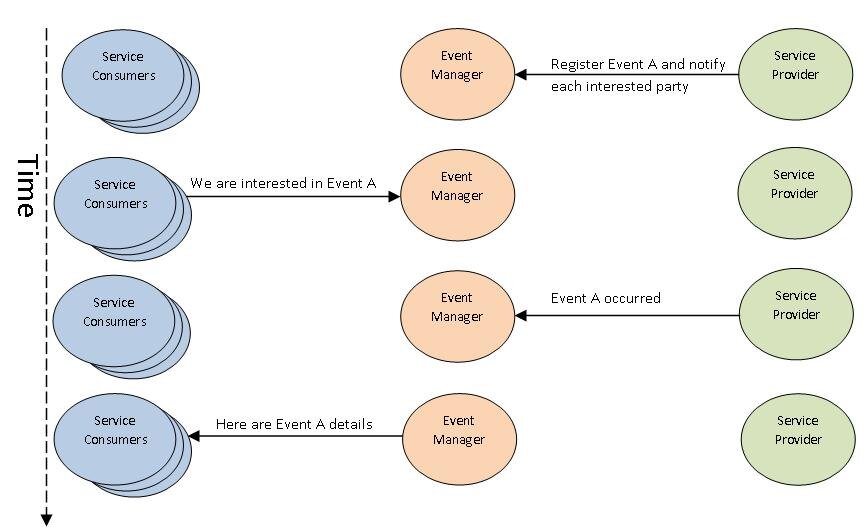
This leads to an event-driven architecture. In this model, different parts of a system communicate by producing and consuming events. When one service has new information, it sends out an event. Other services that care about that type of information listen for it and react immediately. This is much more efficient than one service constantly asking another, "Is there anything new yet?"
Real-Time Challenges
Processing data in real time is powerful, but it comes with its own set of challenges. It's not as simple as just processing things faster.
| Challenge | Description |
|---|---|
| Scalability | The system must handle huge volumes of data without slowing down. If a million users suddenly start generating events, the system can't just crash. |
| Fault Tolerance | What happens if a server goes down mid-process? The system must be able to recover without losing data or producing incorrect results. |
| State Management | How do you keep track of information over time? For example, to calculate a running average of stock prices, you need to remember past prices. Managing this 'state' in a continuous stream is complex. |
| Ordering | Events might not arrive in the order they happened due to network delays. The system needs to handle out-of-order data correctly. |
These challenges require specialized tools and architectures designed specifically for the high-speed, continuous nature of data streams. Overcoming them is key to building robust applications that can deliver insights and actions the moment they're needed.
Which analogy best describes the difference between data in a traditional database and data in a stream?
Which of the following scenarios is best suited for batch processing rather than real-time stream processing?
Tackling these issues is what makes real-time data engineering a fascinating field. Now that we've covered the core concepts, we can explore the specific tools that make it all possible.