Spanish Language Fundamentals
Spanish Alphabet and Pronunciation
The Spanish Alphabet
The Spanish alphabet, or el abecedario, is your starting point for reading and speaking. It's very similar to the English alphabet, but with one extra letter. It has 27 letters in total.
Familiarizing yourself with these letters and their pronunciations is a great first step.
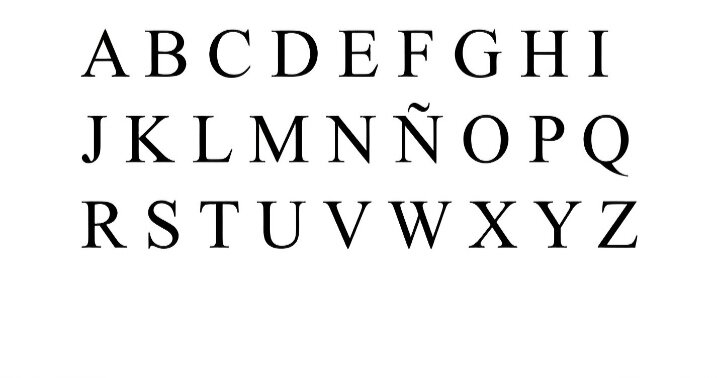
The most notable difference is the letter ñ (pronounced enye). You'll also notice that some older alphabets include ch and ll as separate letters, but they were officially removed in 2010. For learning, we'll stick to the modern 27-letter version.
Consistent Vowel Sounds
Here's some great news: Spanish vowels are simple and consistent. Each vowel has only one basic sound, unlike in English where a letter like 'a' can be pronounced in many different ways.
Master these five sounds, and you've already won a huge part of the pronunciation battle.
A, E, I, O, U. Five letters, five sounds. That's it.
| Vowel | Pronunciation (like the vowel in...) |
|---|---|
| A | father |
| E | bed |
| I | machine |
| O | boat |
| U | rule |
Let's see them in action. Notice how the sound stays the same in each word.
house
baby
to live
crazy
one
Key Consonant Sounds
While most Spanish consonants sound like their English counterparts, a few have very different rules. Pay close attention to these, as they're common pitfalls for new learners.
ñ
noun
Pronounced like the 'ny' in 'canyon'.
The J in Spanish is never pronounced like the 'j' in 'jump'. Instead, it sounds like the 'h' in 'hello'. Think of it as a breathy sound from the back of your throat.
garden
The Spanish R can be tricky. When it's a single 'r' in the middle of a word, it's a light tap of the tongue, similar to the 'dd' sound in the American English pronunciation of 'ladder'. When it's a double 'rr' (or a single 'r' at the beginning of a word), you need to roll or trill it. This takes practice!
To roll your R's, relax your tongue and let air flow over it, causing it to vibrate against the roof of your mouth. Start by trying to make a purring sound.
but
dog
Finally, the letters B and V. In many Spanish dialects, these two letters are pronounced almost identically. The sound is softer than an English 'b' and made with the lips barely touching. Don't pronounce the 'v' with your teeth on your lip like you do in English.
to live
Here is a quick summary of other important consonant sounds:
| Letter | Sound | Example |
|---|---|---|
| H | Always silent | hola (OH-lah) |
| C | Like 'k' before a, o, u. Like 's' before e, i. | casa, cero |
| G | Like hard 'g' before a, o, u. Like 'h' before e, i. | gato, gente |
| Z | Like 's' in Latin America. Like 'th' in Spain. | zapato |
| LL | Like 'y' in 'yes'. | calle (KAH-yay) |
Time to review what you've learned.
Ready to test your knowledge?
How many letters are in the modern Spanish alphabet (el abecedario)?
The Spanish letter 'J' is typically pronounced like the 'h' sound in which English word?
Getting these core sounds right from the start is a huge advantage. It makes speaking clearer and understanding others much easier. Keep practicing, and listen to native speakers as often as you can.