Spanish Language Fundamentals for Beginners
Spanish Pronunciation and Alphabet
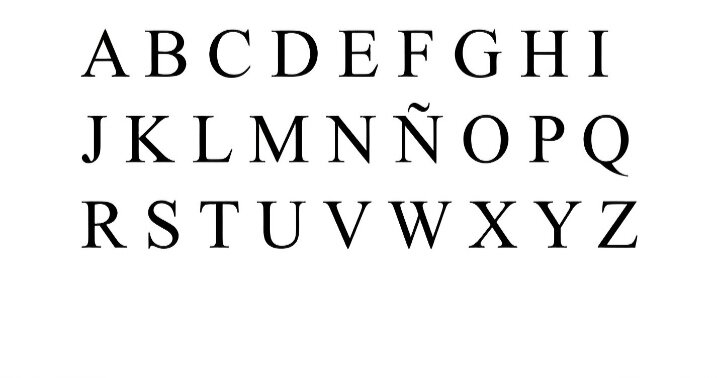
The Spanish Alphabet
One of the best parts about learning Spanish is its straightforward pronunciation. Unlike English, where letters can have many different sounds, Spanish is highly phonetic. Once you learn the sound for each letter, you can confidently pronounce almost any word you see.
The Spanish alphabet, or abecedario, has 27 letters. It's the same as the English alphabet, plus one extra character.
ñ
noun
A letter of the Spanish alphabet, pronounced like the 'ny' sound in 'canyon'.
Spanish maintains remarkably consistent sound-to-letter relationships, meaning once you master the basic pronunciation rules, reading aloud becomes significantly more predictable than in English.
The Five Vowels
Spanish has only five vowel sounds, and they are always pronounced the same way. This is a huge advantage for learners. Forget the multiple sounds of 'a' in English words like 'cat,' 'car,' and 'cake.' In Spanish, each vowel has one pure, crisp sound.
Let's go through them:
- A sounds like the 'a' in "father."
- E sounds like the 'e' in "they."
- I sounds like the 'ee' in "see."
- O sounds like the 'o' in "go."
- U sounds like the 'oo' in "moon."
That's it. Every time you see these letters, you'll know exactly how to say them. The letter U is silent after a Q (as in queso) and is sometimes silent after a G to make a hard 'g' sound (as in guitarra).
Tricky Consonants
Most consonants in Spanish sound similar to their English counterparts, but a few have unique rules. Mastering these will make a big difference in how natural you sound.
Here are some of the most important consonants to watch out for.
| Letter(s) | Sound | Example |
|---|---|---|
| H | Always silent. | hola (OH-lah) |
| J | A raspy 'h' sound, from the back of the throat. | jardín (har-DEEN) |
| LL | Like the 'y' in 'yes'. | llamar (yah-MAR) |
| RR | A rolled 'r' sound. | perro (PERR-ro) |
| C | Before a, o, u: like 'k'. Before e, i: like 's'. | casa (KAH-sah), cero (SEH-ro) |
| G | Before a, o, u: a hard 'g'. Before e, i: like the Spanish 'j'. | gato (GAH-toh), gente (HEN-teh) |
| Z | Like an 's' sound. | zapato (sah-PAH-toh) |
Notice the letter B and V. In many Spanish-speaking regions, these two letters are pronounced identically. The sound is similar to the English 'b', but a bit softer. Don't stress about making them sound different; context will always make the meaning clear.
Time to check what you've learned.
How is the Spanish vowel 'A' pronounced?
The Spanish vowel 'I' sounds most like the vowel sound in which English word?
With these rules, you have a solid foundation for reading and speaking Spanish. Practice saying the letters and sounds out loud to build muscle memory.