Spanish Language Fundamentals
Spanish Alphabet and Pronunciation
The Spanish Alphabet
Welcome to the foundation of Spanish: its alphabet. The good news is that it's very similar to the English alphabet and, for the most part, words are pronounced exactly as they're written. This makes Spanish pronunciation much more predictable than English.
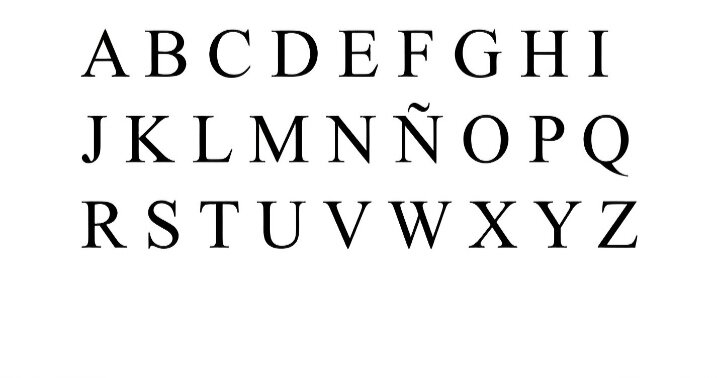
The Spanish alphabet, or abecedario, has 27 letters. Let's look at each letter and its Spanish name.
| Letter | Name | Pronunciation of Name |
|---|---|---|
| A, a | a | ah |
| B, b | be | beh |
| C, c | ce | seh |
| D, d | de | deh |
| E, e | e | eh |
| F, f | efe | EH-feh |
| G, g | ge | heh |
| H, h | hache | AH-cheh |
| I, i | i | ee |
| J, j | jota | HOH-tah |
| K, k | ka | kah |
| L, l | ele | EH-leh |
| M, m | eme | EH-meh |
| N, n | ene | EH-neh |
| Ñ, ñ | eñe | EHN-yeh |
| O, o | o | oh |
| P, p | pe | peh |
| Q, q | cu | koo |
| R, r | ere | EH-reh |
| S, s | ese | EH-seh |
| T, t | te | teh |
| U, u | u | oo |
| V, v | uve | OO-beh |
| W, w | uve doble | OO-beh DOH-bleh |
| X, x | equis | EH-kees |
| Y, y | i griega | ee GRYAY-gah |
| Z, z | zeta | SEH-tah |
The Five Vowel Sounds
Spanish has only five vowel sounds, and they are always pronounced the same way. This consistency is a huge help for new learners. Unlike English, where a vowel's sound can change from word to word (think "through," "though," and "tough"), Spanish vowels are pure and predictable. Master these five sounds, and you've unlocked a major part of Spanish pronunciation.
| Vowel | Sound | Like the vowel in... |
|---|---|---|
| A | ah | father, taco |
| E | eh | bed, met |
| I | ee | see, meet |
| O | oh | go, note |
| U | oo | moon, food |
Key Consonant Sounds
Many Spanish consonants sound just like their English counterparts. However, a few have unique sounds or rules you'll need to learn. Let's start with two letters you won't find in the English alphabet: ñ and ll.
The letter ñ is pronounced like the "ny" sound in "canyon." You'll see it in words like año (year) and español (Spanish).
The double L, ll, is pronounced like the "y" in "yes." For example, llamar (to call) sounds like "yah-mar," and calle (street) sounds like "cai-yeh."
Here are a few other consonants that have specific pronunciation rules you should know.
| Letter(s) | Sound & Rule |
|---|---|
| C | Before 'a', 'o', 'u', it's a hard 'k' sound (casa). Before 'e' or 'i', it's a soft 's' sound (cielo). |
| G | Before 'a', 'o', 'u', it's a hard 'g' sound (gato). Before 'e' or 'i', it's a soft 'h' sound (gente). |
| H | Always silent. Think of it as a placeholder. Hola is pronounced "oh-la." |
| J | Always sounds like the English 'h'. Jardín is pronounced "har-DEEN." |
| R / RR | A single 'r' is a light tap of the tongue. The double 'rr' is a trilled or "rolled" sound, as in perro (dog). |
| Z | Sounds like the English 's'. Zapato (shoe) is pronounced "sah-PAH-toh." |
Putting Sounds Together
Sometimes, two vowels appear next to each other in a Spanish word. When this happens, they often blend to form a single syllable. This combination is called a diphthong.
A diphthong usually forms when a "strong" vowel (a, e, o) combines with a "weak" vowel (i, u), or when two weak vowels combine. The sounds just glide together smoothly.
| Diphthong | Example Word | Pronunciation |
|---|---|---|
| ai / ay | aire (air) | EYE-reh |
| ei / ey | rey (king) | ray |
| ie | siete (seven) | SYAY-tay |
| ue | puerta (door) | PWAYR-tah |
| iu | ciudad (city) | syoo-DAHD |
Getting comfortable with these letter sounds and combinations is the first major step toward speaking and understanding Spanish. Practice saying them out loud!
Time to check your understanding.
How many letters are in the official Spanish alphabet, or abecedario?
Which statement best describes Spanish vowel sounds compared to English vowel sounds?
By mastering these fundamental sounds, you've built a solid base for your entire Spanish learning journey.