Spanish Language Fundamentals
Spanish Alphabet and Pronunciation
The Spanish Alphabet
Getting started with Spanish pronunciation is simpler than you might think. The Spanish alphabet is almost identical to the English one, but the sounds are far more consistent. Once you learn the sound for each letter, you can pronounce almost any word correctly just by reading it.
Let's start with the letters themselves. Spanish has 27 letters. Most will look familiar, with one special addition.
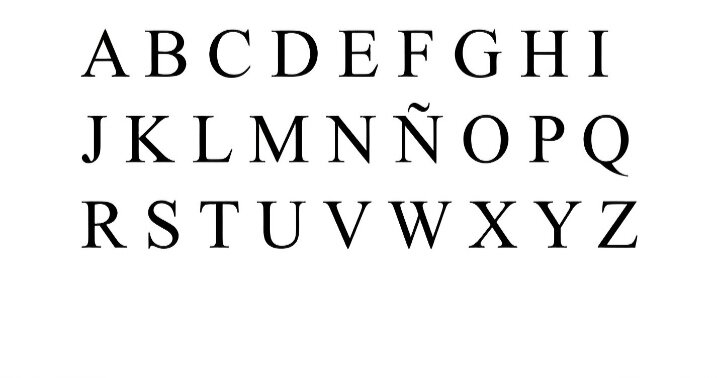
| Letter | Spanish Name | Pronunciation of Name |
|---|---|---|
| A, a | a | ah |
| B, b | be | beh |
| C, c | ce | seh |
| D, d | de | deh |
| E, e | e | eh |
| F, f | efe | EH-feh |
| G, g | ge | heh |
| H, h | hache | AH-cheh |
| I, i | i | ee |
| J, j | jota | HOH-tah |
| K, k | ka | kah |
| L, l | ele | EH-leh |
| M, m | eme | EH-meh |
| N, n | ene | EH-neh |
| Ñ, ñ | eñe | EHN-yeh |
| O, o | o | oh |
| P, p | pe | peh |
| Q, q | cu | koo |
| R, r | ere | EH-reh |
| S, s | ese | EH-seh |
| T, t | te | teh |
| U, u | u | oo |
| V, v | ve | beh |
| W, w | doble ve | DOH-bleh beh |
| X, x | equis | EH-kees |
| Y, y | i griega | ee GRYEH-gah |
| Z, z | zeta | SEH-tah |
The Five Vowel Sounds
The biggest key to Spanish pronunciation is mastering the vowels. Unlike English, which has many vowel sounds for each letter, Spanish keeps it simple. There are only five vowel sounds, and they never change.
- A is always "ah," like in "father." Example: casa (house).
- E is always "eh," like in "bed." Example: mesa (table).
- I is always "ee," like in "see." Example: libro (book).
- O is always "oh," like in "go." Example: hola (hello).
- U is always "oo," like in "moon." Example: uno (one).
When you see a vowel in a Spanish word, it will always make that same sound. This consistency is a huge help for new learners.
Master these five pure vowel sounds, and you've unlocked the foundation of Spanish pronunciation.
Tricky Consonants
While most Spanish consonants sound similar to their English counterparts, a few have unique rules or sounds that English speakers should pay close attention to. These are often the biggest giveaways of a non-native speaker.
| Letter(s) | Sound | Rule |
|---|---|---|
| c | like 'k' | Before a, o, u (casa, cosa) |
| c | like 's' | Before e, i (cielo, cena) |
| g | like 'g' in 'go' | Before a, o, u (gato, gusto) |
| g | like 'h' in 'hat' | Before e, i (gente, gigante) |
| h | Silent | Always silent (hola, hacer) |
| j | like 'h' in 'hat' | Always has this sound (jardín, rojo) |
| ll | like 'y' in 'yes' | Can vary, but 'y' is most common (llamar, silla) |
| ñ | like 'ny' in 'canyon' | A unique letter (año, piña) |
| v | like 'b' in 'ball' | B and V sound identical in Spanish (vaca, bueno) |
One of the most famous sounds in Spanish is the rolled 'r'. It's also one of the most challenging for English speakers. There are actually two 'r' sounds in Spanish.
First, there's the single r. When it appears in the middle of a word, it's a soft, quick tap of the tongue, similar to the 'dd' sound in the American English pronunciation of "ladder." Try saying pero (but) or caro (expensive).
Then there's the strong, trilled rr. You use this sound when you see a double 'rr' in a word, or when a single 'r' starts a word. This is the classic rolled 'r'. It requires vibrating your tongue against the roof of your mouth. Think of words like perro (dog) and rápido (fast).
Don't worry if you can't get the rolled 'rr' right away. It takes practice for almost everyone. The key is to relax your tongue and let the air do the work.
Spanish pronunciation is consistent: once you learn the sounds, you’ll understand and be understood more easily.
Ready to test what you've learned?
How is the Spanish vowel 'E' consistently pronounced?
True or False: The sound a Spanish vowel makes can change depending on the letters around it.
Understanding these basic rules of the Spanish alphabet and pronunciation will give you a solid base for speaking and reading the language.