Spanish Language Fundamentals
Spanish Alphabet and Pronunciation
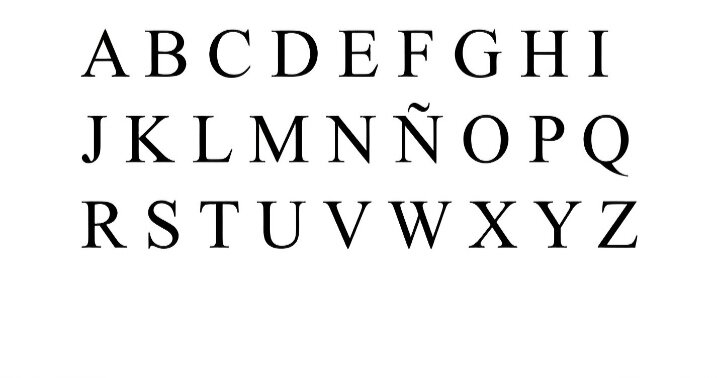
The Spanish Alphabet
Good news: the Spanish alphabet is very similar to the English one. Most of the letters look and sound familiar. There are just a few additions and pronunciation twists to learn.
Unlike English, spoken Spanish follows the written language perfectly, each letter corresponding to one specific sound.
The modern Spanish alphabet has 27 letters. In the past, 'ch' and 'll' were considered separate letters, but they were removed from the official alphabet in 2010. You'll still see them everywhere, but they are now treated as two-letter combinations.
Vowel Sounds Are Key
The five Spanish vowels—A, E, I, O, U—are the foundation of the language's pronunciation. Each vowel has only one sound, and it's always the same. This consistency makes Spanish much easier to pronounce than English.
Let's break them down:
- A sounds like the 'a' in "father." Example: casa (house).
- E sounds like the 'e' in "they." Example: bebé (baby).
- I sounds like the 'ee' in "see." Example: sí (yes).
- O sounds like the 'o' in "go." Example: oso (bear).
- U sounds like the 'oo' in "moon." Example: uno (one).
The letter Y can also act as a vowel. When it's by itself (meaning 'and') or at the end of a word, it sounds just like the Spanish vowel I.
Master these five pure sounds, and you're halfway to clear Spanish pronunciation.
Tricky Consonants
Most consonants sound similar to their English counterparts, but a few have special rules or unique sounds. Getting these right will make you sound much more natural.
| Letter(s) | Sound | Example |
|---|---|---|
| Ñ | Like 'ny' in "canyon" | español (Spanish) |
| LL | Like 'y' in "yes" | llave (key) |
| RR | A rolled 'r' sound | perro (dog) |
| H | Always silent | hola (hello) |
| J | A hard 'h' sound, like from the back of your throat | jardín (garden) |
| G | Like the 'j' sound before 'e' or 'i'; a hard 'g' otherwise | gente (people), gato (cat) |
| C | Like 's' before 'e' or 'i'; a hard 'k' sound otherwise | cielo (sky), carro (car) |
| Z | Like an 's' sound | zapato (shoe) |
The rolled RR is probably the most famous sound in Spanish. It takes practice. To make the sound, let the tip of your tongue flap or vibrate against the roof of your mouth, just behind your top teeth. A single R between vowels has a softer, single flap, similar to the 'tt' sound in the American English pronunciation of "butter."
Putting Sounds Together
When two vowels appear next to each other in a word, they often blend together to form one syllable. This combination is called a diphthong. The sound flows smoothly from one vowel to the next without a pause.
Here are a couple of common examples:
- ie as in siete (seven). The sound glides from the 'ee' sound of the 'i' to the 'eh' sound of the 'e'.
- ue as in puerta (door). The sound glides from the 'oo' sound of the 'u' to the 'eh' sound of the 'e'.
Don't worry about memorizing every combination. Just remember that when you see two vowels together, you should blend their sounds smoothly.
Ready to check your understanding? Let's see what you've learned.
How many letters are in the modern Spanish alphabet?
The Spanish vowel 'A' consistently sounds like the 'a' in which English word?
The key to good pronunciation is practice. Try reading Spanish words aloud, focusing on the pure vowel sounds and the unique consonant rules you've just learned.