Spanish Language Fundamentals
Spanish Alphabet and Pronunciation
The Spanish Alphabet
The Spanish alphabet is nearly identical to the English one. The main difference is the addition of one special letter: the ñ.
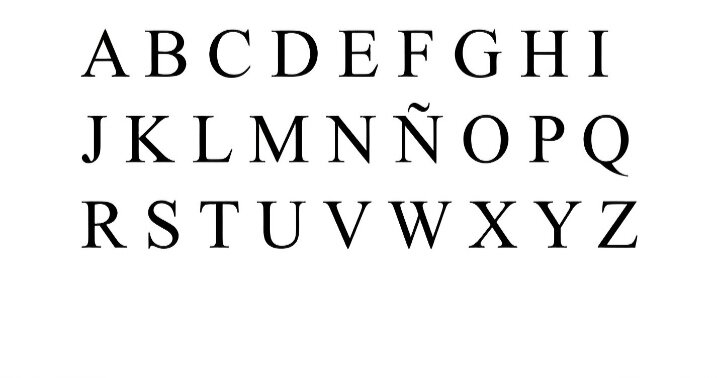
The best part about learning Spanish pronunciation is that it's very consistent. Once you learn the sound for each letter, you can pronounce almost any word correctly just by looking at it. This is a huge advantage compared to English, where letters can have many different sounds.
Spanish pronunciation is consistent: once you learn the sounds, you’ll understand and be understood more easily.
The Five Vowel Sounds
Spanish has only five vowel sounds, and they are always pronounced the same way. Mastering them is the first big step toward sounding like a native speaker. The sounds are always short, crisp, and pure.
| Vowel | Sound | Example Word |
|---|---|---|
| A | "ah" as in father | agua (water) |
| E | "eh" as in bed | elefante (elephant) |
| I | "ee" as in see | iglú (igloo) |
| O | "oh" as in go | oso (bear) |
| U | "oo" as in food | uno (one) |
Notice how the sound never changes, no matter where the vowel appears in the word. Practice saying them out loud: ah, eh, ee, oh, oo.
Tricky Consonants and Special Sounds
Most Spanish consonants sound similar to their English counterparts, but a few have unique rules. The letter H is always silent, and the letter J is pronounced like the English H sound, as in hola (hello).
Here are the other key consonants to watch out for:
| Letter(s) | Sound | Spanish Example |
|---|---|---|
| C (before e, i) | "s" sound | cielo (sky) |
| C (otherwise) | "k" sound | casa (house) |
| G (before e, i) | like English "h" | gente (people) |
| G (otherwise) | hard "g" sound | gato (cat) |
| LL | "y" sound | llama (llama) |
| Z | "s" sound | azul (blue) |
Now, let's focus on the two most famous sounds in Spanish: the ñ and the rolled r.
The Ñ and the Rolled R
The letter ñ has a unique sound, similar to the "ny" in the word canyon. It's a distinct letter in the alphabet, not just an n with a mark over it.
year
The Spanish r can be tricky. When a single r appears in the middle of a word, it's a soft, quick tap of the tongue against the roof of your mouth, similar to the "dd" sound in the word ladder. For example, pero (but).
When you see a double rr, or when a single r starts a word, you need to roll it. This is the famous trill sound. It's made by vibrating your tongue against the roof of your mouth. Think of a purring cat or a motor revving. An example is the word perro (dog).
Practice is key for the rolled r. Try repeating words like carro (car) and rápido (fast) to build muscle memory.
Let's review these new concepts with some flashcards.
Ready to test your knowledge? Let's see what you've learned about the Spanish alphabet and its sounds.
What is the primary difference between the Spanish and English alphabets?
In Spanish, the letter 'H' is almost always...