Spanish Language Fundamentals
Spanish Alphabet and Pronunciation
The Spanish Alphabet
Good news: the Spanish alphabet, or abecedario, is almost identical to the English one. Most of the letters look the same and many sound similar. This makes getting started with Spanish reading and writing much more approachable.
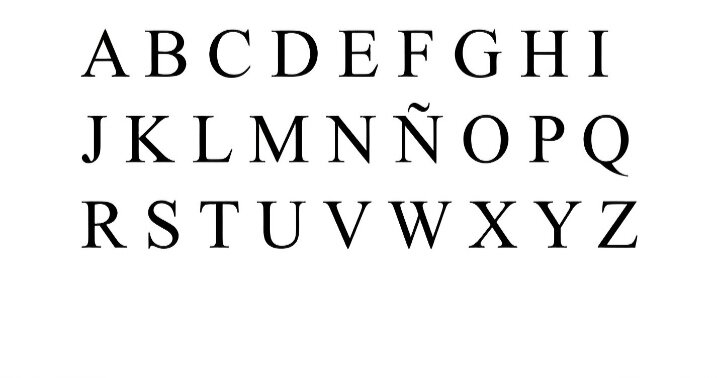
You'll notice one letter that isn't in the English alphabet: Ñ (eñe). This letter is a hallmark of the Spanish language. We'll cover its unique sound shortly.
Historically, the combinations CH (che) and LL (elle) were considered separate letters. However, since 2010, the official alphabet no longer includes them as distinct entries. They are now treated as two-letter combinations, just like in English.
The Five Vowels
Here's the single most important rule for Spanish pronunciation: vowels are consistent. Unlike English, where a letter like 'a' can sound different in "cat," "father," and "late," Spanish vowels each have one, and only one, sound. Master these five sounds, and your pronunciation will immediately become clearer.
If you master the five vowel sounds, you're halfway to sounding like a native speaker. Each vowel has one sound, and it never changes.
| Vowel | Sound | Example (Spanish) | Example (English Sound) |
|---|---|---|---|
| A, a | ah | papá (dad) | father |
| E, e | eh | bebé (baby) | bet |
| I, i | ee | vivir (to live) | see |
| O, o | oh | todo (all) | go |
| U, u | oo | único (unique) | flute |
That's it. Practice saying "ah, eh, ee, oh, oo." Every time you see these vowels in a Spanish word, they will make these exact sounds. This consistency is a huge advantage for learners.
Key Consonant Sounds
While many Spanish consonants sound like their English counterparts, a few have distinct pronunciations you'll need to learn. Let's focus on the most important ones.
H is always silent. The first letter in hola (hello) is never pronounced. Think of words like "hour" or "honor" in English.
J sounds like the English H. The Spanish J (jota) makes a sound like the 'h' in "house," but a bit more throaty, as if you're clearing your throat lightly. For example, jardín (garden) is pronounced "har-DEEN."
LL sounds like the Y in "yes." The double-L combination is very common. When you see calle (street), you pronounce it "CAH-yay."
Ñ sounds like 'ny' in "canyon." This unique letter is essential. The word español itself uses it. It's pronounced "es-pah-NYOL."
The letters B and V can be tricky because in Spanish, they sound almost identical. Both make a soft 'b' sound. For example, vaca (cow) and barco (boat) start with the same sound.
Finally, the rolled R. This is often the most challenging sound for English speakers.
- A single
rin the middle of a word is a quick tap of the tongue, similar to the 'tt' in the American pronunciation of "butter." Example: caro (expensive). - A double
rr, or a singlerat the beginning of a word, requires a full trill. Example: perro (dog) and rojo (red).
Don't worry if you can't roll your R's perfectly at first. It takes practice!
Time to check your understanding of these new sounds.
What is the single most important rule regarding Spanish vowel sounds?
Which letter is found in the Spanish alphabet but not in the English alphabet?
Learning these core rules of pronunciation is your first major step toward speaking and understanding Spanish. By focusing on the five simple vowel sounds and these key consonant differences, you've built a strong foundation for everything that comes next.