Spanish Language Essentials
Spanish Alphabet and Pronunciation
The Spanish Alphabet
Welcome to the foundation of Spanish: the alphabet, or el abecedario. The great news is that it's very similar to the English alphabet. It uses the same Latin letters, with just one unique addition. Once you learn the sound each letter makes, you can pronounce almost any word in Spanish just by looking at it. This phonetic consistency is a huge advantage for new learners.
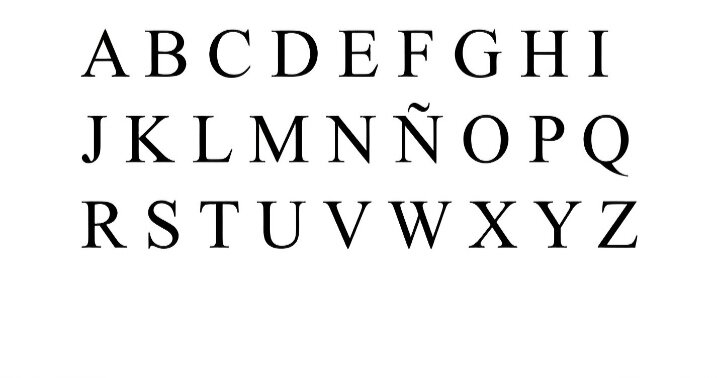
The Spanish alphabet has 27 letters. Here they are, along with their Spanish names.
| Letter | Name (in Spanish) | Pronunciation of Name |
|---|---|---|
| A, a | a | ah |
| B, b | be | bay |
| C, c | ce | say |
| D, d | de | day |
| E, e | e | eh |
| F, f | efe | EFF-ay |
| G, g | ge | hey |
| H, h | hache | AH-chay |
| I, i | i | ee |
| J, j | jota | HOH-tah |
| K, k | ka | kah |
| L, l | ele | ELL-ay |
| M, m | eme | EMM-ay |
| N, n | ene | ENN-ay |
| Ñ, ñ | eñe | EN-yay |
| O, o | o | oh |
| P, p | pe | pay |
| Q, q | cu | koo |
| R, r | ere | ERR-ay |
| S, s | ese | ESS-ay |
| T, t | te | tay |
| U, u | u | oo |
| V, v | uve | OO-bay |
| W, w | uve doble | OO-bay DOH-blay |
| X, x | equis | ECK-ees |
| Y, y | i griega | ee-gree-AY-gah |
| Z, z | zeta | SAY-tah |
Once you’ve learned some simple rules, the pronunciation of any Spanish word becomes predictable.
The Five Pure Vowels
Spanish pronunciation is built on five simple, pure vowel sounds. Unlike in English, where a vowel's sound can change dramatically (think of the 'a' in 'cat,' 'car,' and 'cake'), Spanish vowels are consistent. Master these five sounds, and you're halfway to clear pronunciation.
- A is always "ah," like the 'a' in "father."
- E is always "eh," like the 'e' in "get."
- I is always "ee," like the 'ee' in "see."
- O is always "oh," like the 'o' in "go."
- U is always "oo," like the 'oo' in "moon."
That's it. No exceptions, no surprises. Every time you see these letters, you know exactly how they sound.
Practice saying them in order: ah, eh, ee, oh, oo. This consistency is your best friend when learning to speak and read Spanish.
Key Consonants and Combinations
While most consonants sound similar to their English counterparts, a few have unique rules. Let's look at the ones that often trip up beginners.
Ñ
noun
A letter in the Spanish alphabet that represents a palatal nasal sound.
The Ñ is perhaps the most iconic Spanish letter. It makes a "ny" sound, like the 'ni' in "onion." Think of words like piña (PEEN-yah) for pineapple or mañana (man-YAN-ah) for tomorrow.
The letter H is always silent. Always. When you see the word hola (hello), you pronounce it "OH-la." The 'h' is just for show.
The J makes an "h" sound, similar to the 'h' in "house." So, the word jardín (garden) is pronounced "har-DEEN."
Things get interesting with C and G. Their sounds depend on the vowel that follows them.
- Before a, o, or u, C sounds like a hard 'k' (casa, color, cuna).
- Before e or i, C makes a soft "s" sound (cero, cine). In Spain, it's more of a "th" sound.
Similarly:
- Before a, o, or u, G sounds like a hard 'g' (gato, gota, gusto).
- Before e or i, G sounds like the Spanish J (an "h" sound), as in gente or gigante.
A few letter combinations also have their own distinct sounds.
| Combination | Sound | Example |
|---|---|---|
| CH | "ch" as in "cheese" | coche (car) |
| LL | "y" as in "yes" | llave (key) |
| RR | A strong, rolled 'r' | perro (dog) |
| QU | "k" (the 'u' is silent) | queso (cheese) |
The rolled RR can be tricky. It requires vibrating your tongue against the roof of your mouth. Don't worry if you can't get it right away; it takes practice for everyone! A single R has a softer, lighter tap of the tongue, similar to the 'dd' sound in the American English pronunciation of "ladder."
How is the Spanish vowel 'E' consistently pronounced?
The letter 'Ñ' (eñe) makes a sound similar to which English letter combination?
Getting comfortable with these sounds is the first major step toward speaking Spanish confidently. Practice them out loud, and soon they will become second nature.