Spanish Language Basics
Spanish Alphabet
Meet the Spanish Alphabet
Good news: Spanish pronunciation is much more consistent than English. Once you learn the sound each letter makes, you can pronounce almost any word correctly just by looking at it. The Spanish alphabet, known as the abecedario, is nearly identical to the English one, with just one extra character.
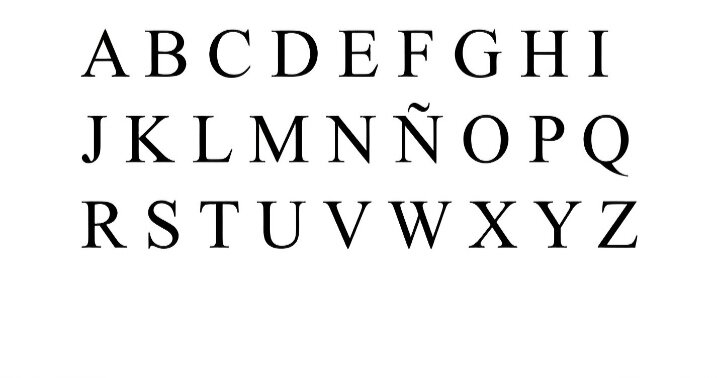
Let's start with the most important part: the vowels. Master these five sounds, and you're halfway to sounding clear and confident.
The Five Vowels
Unlike English, which has many different vowel sounds (think of the 'a' in cat, father, and late), Spanish vowels are pure and simple. Each one has a single, consistent sound.
| Vowel | Pronunciation | Example Word |
|---|---|---|
| A | ah (like in apple) | agua (water) |
| E | eh (like in elephant) | mesa (table) |
| I | ee (like in see) | isla (island) |
| O | oh (like in open) | oso (bear) |
| U | oo (like in moon) | uno (one) |
Practice saying them out loud: ah, eh, ee, oh, oo. That's it. Every time you see these letters, they will make these sounds.
Key Consonants
Most consonants sound similar to their English counterparts, but a few have special rules. Here are the most important ones to know from the start.
The letter H (hache) is always silent. You never pronounce it. Think of the word hola (hello). You say "oh-lah," not "ho-lah."
The letter J (jota) makes an "h" sound, like the 'h' in "house." A word like jardín (garden) is pronounced "har-deen."
The letter G (ge) is tricky. Before 'a', 'o', or 'u', it's a hard "g" sound like in "go" (gato, cat). But before 'e' or 'i', it sounds just like the Spanish J (gente, people).
What about the double letters?
LL (elle) is pronounced like the 'y' in "yes." So, calle (street) sounds like "cah-yay."
The RR (erre doble) is the famous rolled 'r'. It's a trilling sound made by vibrating your tongue against the roof of your mouth. You'll find it in words like perro (dog) and carro (car). Don't worry if you can't do it perfectly at first. It takes practice!
Finally, there's the one letter you won't find in the English alphabet.
ñ
noun
A letter in the Spanish alphabet that represents a palatal nasal sound.
The Ñ (eñe) is pronounced like the "ny" sound in "canyon." It's essential for words like niño (child) and mañana (morning/tomorrow).
Ready to review?
Which statement accurately describes Spanish vowels?
The Spanish letter 'J' (jota) is typically pronounced like the English...
Learning these basic rules gives you a huge head start. By focusing on the consistent sounds of the letters, you'll be able to read and speak with much more accuracy.