Spanish Language Basics
Spanish Alphabet and Pronunciation
The Spanish Alphabet
Welcome to the foundation of Spanish: its alphabet. The good news is that it's almost identical to the English alphabet. Once you learn the sound each letter makes, you can pronounce almost any Spanish word you see. Spanish is a highly phonetic language, which means words are spelled just like they sound.
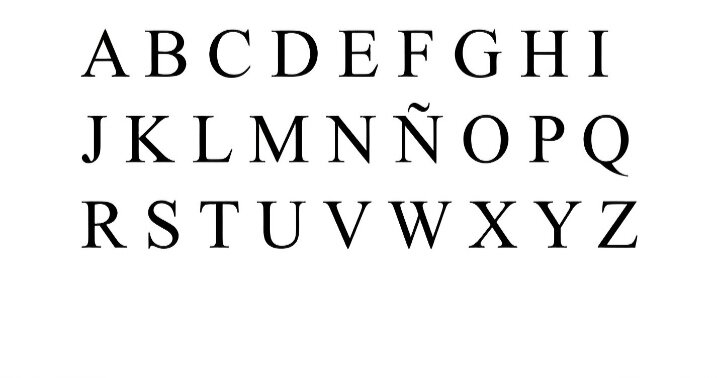
The Spanish alphabet has 27 letters. It also includes two letter combinations, called digraphs, that have their own unique sounds: 'ch' and 'll'. While they used to be considered separate letters in the alphabet, they are now officially treated as pairs of letters.
Consistent Vowel Sounds
The biggest secret to Spanish pronunciation is mastering the five vowels: A, E, I, O, U. Their sounds are short, clear, and consistent. Unlike English, where vowels can have many different pronunciations, in Spanish they almost always sound the same. Learn these five sounds, and you're halfway there.
| Vowel | Sound | Example Word |
|---|---|---|
| A | "ah" as in father | casa (house) |
| E | "eh" as in bed | elefante (elephant) |
| I | "ee" as in see | isla (island) |
| O | "oh" as in go | oso (bear) |
| U | "oo" as in food | uva (grape) |
That’s it. Every time you see an 'a' in a Spanish word, it will make the "ah" sound. No exceptions. This consistency makes reading and speaking much easier than in English.
Noteworthy Consonants
Most consonants in Spanish sound very similar to their English counterparts. However, there are a few that have special rules or unique sounds. Let's walk through them.
ñ
noun
Pronounced 'eñe', this letter makes a 'ny' sound, similar to the 'ny' in 'canyon'.
The letter H (hache) is always silent. You just ignore it. So, the word hola is pronounced "o-la."
The letter J (jota) makes a sound like the 'h' in "hat," but it's a bit more guttural, made at the back of your throat. Think of the sound in jalapeño.
The digraphs CH (che) and LL (elle) are also consistent. 'CH' sounds just like the 'ch' in "church." 'LL' is typically pronounced like the 'y' in "yes."
calle (street) is pronounced "CA-yay" mucho (much) is pronounced "MOO-cho"
The letters C and G are chameleons. Their sound changes depending on the vowel that follows.
When C comes before A, O, or U, it has a hard 'k' sound:
- casa (house)
- cosa (thing)
- cuna (crib)
When C comes before E or I, it has a soft 's' sound (in Latin America) or a 'th' sound (in Spain):
- cena (dinner)
- cine (cinema)
Similarly, when G comes before A, O, or U, it has a hard 'g' sound like in "go":
- gato (cat)
- gozar (to enjoy)
- gusto (pleasure)
When G comes before E or I, it has a soft sound, just like the Spanish J:
- gente (people)
- gigante (giant)
So what if you want a hard 'g' sound before an E or I? You add a silent U in between: 'gue' and 'gui'. For example, in guerra (war) and guitarra (guitar), the 'u' is silent and the 'g' is hard.
Rolling your Rs
The Spanish 'R' can be tricky for English speakers. There are two distinct sounds.
The single R (ere) is a soft, quick tap of the tongue on the roof of the mouth. It sounds a lot like the 'dd' in the American English pronunciation of "ladder."
- caro (expensive)
- pera (pear)
The double RR (erre) is a strong, trilled sound created by vibrating the tongue against the roof of the mouth. This sound is also used for a single 'R' when it's the first letter of a word.
perro (dog) - requires the trilled 'rr'. rojo (red) - starts with a single 'r', but it's pronounced with a trill.
Don't worry if you can't trill your 'r' perfectly right away. It takes practice for most learners. Just focus on making a clear distinction between the soft tap and the strong trill.
Now you have the tools to pronounce the vast majority of Spanish words. Let's review what we've covered.
Time to test your knowledge.
In Spanish, the pronunciation of vowels is highly consistent, with each vowel almost always making the same sound.
How is the letter 'H' (hache) pronounced in the word 'hola'?
By remembering these rules, you'll build a strong foundation for speaking and understanding Spanish. Consistency is the key.