Spanish Language Basics
Spanish Alphabet and Pronunciation
The Spanish Alphabet
The good news is that the Spanish alphabet is almost identical to the English one. It's built on the same Latin script, so you'll recognize all the letters. There's just one unique character you'll need to learn: the ñ.
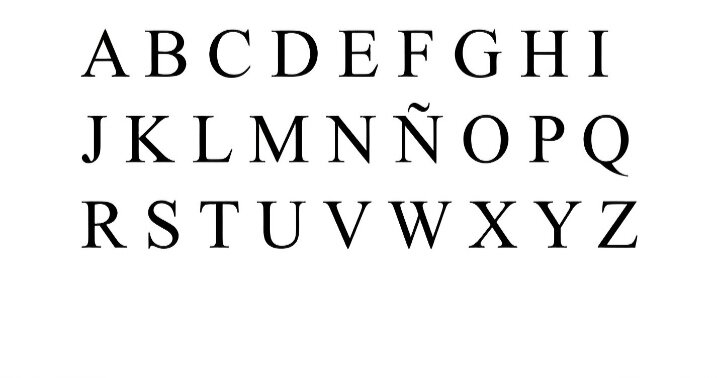
In the past, 'ch' and 'll' were considered separate letters, but they were officially dropped in 2010. However, they represent distinct sounds you'll still need to know. Here’s a full look at the letters and their Spanish names.
| Letter | Spanish Name | Pronunciation of Name |
|---|---|---|
| A, a | a | ah |
| B, b | be | beh |
| C, c | ce | seh |
| D, d | de | deh |
| E, e | e | eh |
| F, f | efe | EH-feh |
| G, g | ge | heh |
| H, h | hache | AH-cheh |
| I, i | i | ee |
| J, j | jota | HOH-tah |
| K, k | ka | kah |
| L, l | ele | EH-leh |
| M, m | eme | EH-meh |
| N, n | ene | EH-neh |
| Ñ, ñ | eñe | EHN-yeh |
| O, o | o | oh |
| P, p | pe | peh |
| Q, q | cu | koo |
| R, r | ere | EH-reh |
| S, s | ese | EH-seh |
| T, t | te | teh |
| U, u | u | oo |
| V, v | ve | beh |
| W, w | doble ve | DOH-bleh beh |
| X, x | equis | EH-kees |
| Y, y | ye | yeh |
| Z, z | zeta | SEH-tah |
Notice that the letters B and V are both named 'be'/'ve' and often sound very similar in spoken Spanish, like a soft English 'b'.
Mastering the Vowels
Unlike English, where vowels can make many different sounds (think of the 'a' in 'cat,' 'car,' and 'cake'), Spanish vowels are simple and consistent. There are only five vowel sounds, and they never change. Once you learn them, you can pronounce any Spanish word you see.
| Vowel | Sound | English Example |
|---|---|---|
| A | 'ah' | father |
| E | 'eh' | bet |
| I | 'ee' | see |
| O | 'oh' | go |
| U | 'oo' | moon |
Sometimes you'll see two vowels next to each other, forming what's called a diphthong. Don't let this intimidate you. To pronounce a diphthong, you just slide the two vowel sounds together smoothly into one syllable. For example, the 'ie' in siete (seven) combines the 'ee' sound of the 'i' and the 'eh' sound of the 'e'. The 'au' in pausa (pause) blends the 'ah' and 'oo' sounds.
Key Consonant Sounds
While most Spanish consonants sound similar to their English counterparts, a few have special rules or unique sounds.
Ñ, ñ (eñe)
noun
This letter makes a 'ny' sound, like the middle of the word 'canyon'.
The letter H is always silent. Always. So, the word hola is pronounced 'OH-la'.
The letter J sounds like the 'h' in 'house'. For example, jardín (garden) is pronounced 'har-DEEN'.
The letter combination LL is typically pronounced like the 'y' in 'yes'. So, calle (street) sounds like 'KAI-yeh'.
The letter Z and the letter C (but only before an 'e' or 'i') make an 's' sound in Latin America and most of Spain. So, cielo (sky) and zapato (shoe) both use an 's' sound.
The Rolled R
The Spanish 'r' can be tricky. There are two distinct sounds.
-
The Single R (ere): When 'r' appears in the middle of a word, it's a soft, quick tap of the tongue against the roof of your mouth. It sounds very similar to the 'dd' sound in the American English word 'ladder'.
-
The Double RR (erre): This is the famous trilled or rolled 'r'. You make this sound by vibrating your tongue against the roof of your mouth. This sound is used for 'rr' in the middle of a word (perro) or for a single 'r' at the beginning of a word (rojo).
but
dog
The difference is important! As you can see, mixing them up can change the meaning of a word entirely. Don't worry if you can't roll your 'r's perfectly right away. It takes practice for most learners.
Now that you've got the basics of the alphabet and pronunciation, let's test your knowledge.
Which letter is unique to the Spanish alphabet compared to the English alphabet?
True or False: The five Spanish vowels each have only one consistent sound.
With these rules, you have a strong foundation for reading and speaking Spanish. The key is consistency; words are almost always pronounced exactly as they are spelled.