Spanish Language Basics
Spanish Alphabet and Pronunciation
The Spanish Alphabet
Getting started with Spanish is simpler than you might think, especially when it comes to the alphabet. It uses the same Latin letters you know from English, with just one special addition. This makes reading Spanish words surprisingly straightforward.
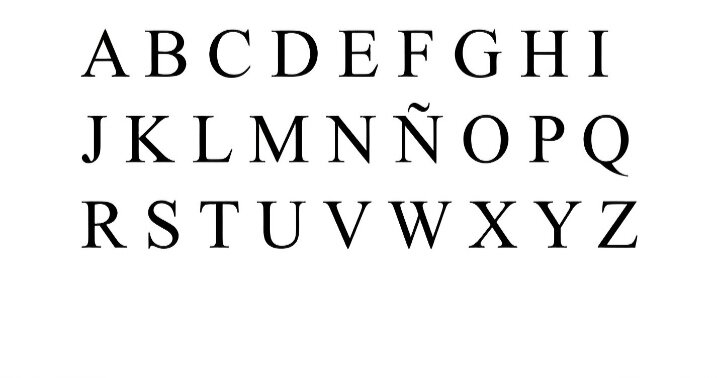
The extra character you'll see is the letter Ñ (eñe). While letters like ch and ll were once considered separate letters, they are now treated as combinations of two letters. For now, just know that the alphabet itself will look very familiar.
Mastering the Vowels
The secret to Spanish pronunciation lies in its five simple vowels: A, E, I, O, U. Unlike English, where vowels can have many different sounds, in Spanish each vowel has only one. Master these five sounds, and you've unlocked the key to pronouncing almost any Spanish word correctly.
Once you learn the sound for each vowel, it never changes. This consistency is your biggest advantage when learning to speak Spanish.
| Vowel | Sound (like in English) | Spanish Example |
|---|---|---|
| A | "ah" as in father | agua (water) |
| E | "eh" as in get | elefante (elephant) |
| I | "ee" as in see | iglú (igloo) |
| O | "oh" as in go | oso (bear) |
| U | "oo" as in food | uno (one) |
That's it. Every time you see an a, it will sound like "ah." Every time you see an i, it will sound like "ee." Practice these pure, short sounds. Avoid stretching them out like you might in English.
Key Consonant Sounds
Many Spanish consonants sound just like their English counterparts, which is great news. However, a few have their own distinct sounds. Let's focus on the ones that are different so you can sound more natural right away.
| Letter(s) | Sound (like in English) | Notes & Examples |
|---|---|---|
| C | 'k' or 's' sound | Like 'k' before a, o, u (casa). Like 's' before e, i (cine). |
| G | 'g' or 'h' sound | Like hard 'g' in 'go' before a, o, u (gato). Like 'h' in 'hello' before e, i (gente). |
| H | Silent | The 'h' is never pronounced. Think of hola (hello) as "ola." |
| J | 'h' sound | Always sounds like the 'h' in 'hat.' For example, jardín (garden). |
| LL | 'y' sound | Sounds like the 'y' in 'yes.' For example, llave (key). |
| Ñ | 'ny' sound | Makes a 'nyah' sound, like the middle of 'canyon.' For example, español. |
| R | Soft 'd' or rolled 'rr' | A single r is a quick tap, almost like the 'dd' in 'ladder' (pero - but). RR is a full, rolled sound (perro - dog). |
| Z | 's' sound | Sounds like the 's' in 'see.' For example, zapato (shoe). |
The rolled rr can be tricky, but don't worry about perfecting it right away. With practice, it will come. The most important thing is to be aware of these key differences.
Ready to test your knowledge? This quiz will cover the vowel and consonant sounds we've just learned.
Besides the 26 letters of the English alphabet, what is the one additional official letter in the modern Spanish alphabet?
What is the most important rule to remember about Spanish vowel sounds?
By focusing on these basic rules, you're building a strong foundation for both speaking and understanding Spanish. Keep practicing these sounds, and you'll find reading new words becomes surprisingly easy.