Spanish Language Basics
Spanish Alphabet
The Spanish Alphabet
Good news: the Spanish alphabet, or abecedario, is almost identical to the English one. It's written with the same Latin script and has most of the same letters. This makes reading and writing in Spanish much more approachable than you might think.
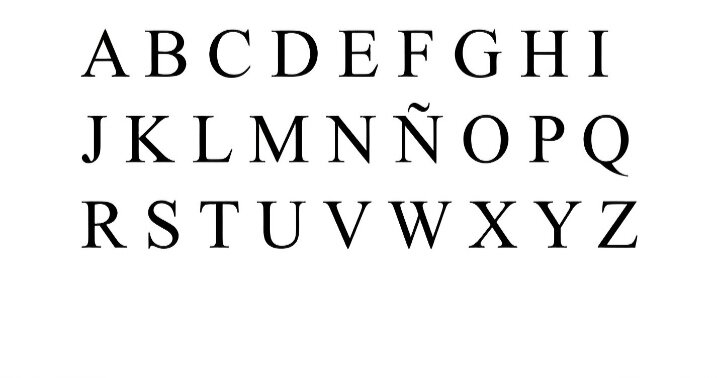
There are 27 letters in total. The main difference is the addition of a unique character: the ñ (pronounced eñe). You might also see older texts using ch and ll as separate letters, but since 2010, the official alphabet no longer includes them as distinct entries. They're now treated as two-letter combinations, just like in English.
Consistent Vowel Sounds
Here’s where Spanish gets much simpler than English. Each of the five vowels in Spanish has only one sound, and it never changes. Once you learn them, you can pronounce a huge number of words correctly. There are no silent vowels and no tricky combinations that create new sounds. One vowel, one sound. Always.
| Vowel | Pronunciation | Example Word |
|---|---|---|
| A | "ah" as in father | casa (house) |
| E | "eh" as in met | elefante (elephant) |
| I | "ee" as in see | isla (island) |
| O | "oh" as in go | toro (bull) |
| U | "oo" as in boot | único (unique) |
The letter U is silent after a Q (as in queso) and is also silent between a G and an E or I (as in guerra) unless it has two dots over it, called a diéresis or crema, like this: ü. In that case, you pronounce it, as in pingüino (penguin).
Tricky Consonants
Most Spanish consonants sound very similar to their English counterparts, but a few have their own distinct personalities. Mastering these is a big step toward sounding more natural.
Let's break down the consonants that often trip up new learners.
| Letter | Pronunciation Tip | Example |
|---|---|---|
| C | Sounds like 'k' before A, O, U. Sounds like 's' before E, I. | casa, ciudad |
| G | Sounds like a hard 'g' before A, O, U. Sounds like the 'h' in 'h'ello before E, I. | gato, gente |
| H | Always silent. | hola |
| J | Sounds like the 'h' in 'h'ello, but stronger, from the back of the throat. | jardín |
| LL | Sounds like the 'y' in 'y'es. | llave |
| Ñ | Sounds like the 'ny' in canyon. | año |
| R | A light tap of the tongue. When it's 'RR' or at the start of a word, it's rolled. | pero, perro |
| Z | Sounds like an 's'. | azul |
The rolled 'RR' can be challenging, but don't worry. It takes practice, and people will still understand you even if you can't roll it perfectly at first.
Accents and Stress
You've probably seen Spanish words with an accent mark over a vowel, like in café or teléfono. This mark is called a tilde (not to be confused with the squiggle over the ñ), and it has one simple job: it tells you which syllable to stress.
If you see an accent mark, that's your signal to put the emphasis on that syllable. No exceptions.
But what if there's no accent mark? Spanish has two simple rules for stress:
-
If a word ends in a vowel, an -n, or an -s, the stress falls on the second-to-last syllable. Examples: ca-sa, ha-blan, co-mes.
-
If a word ends in any other consonant, the stress falls on the last syllable. Examples: ha-blar, pa-pel, ciu-dad.
That's it. If a word breaks these two rules, it gets an accent mark to show you where the stress goes. For example, teléfono ends in a vowel, so the stress would normally be on the second-to-last syllable (fo). But the accent on the first e tells us to stress that syllable instead: te-lé-fo-no.
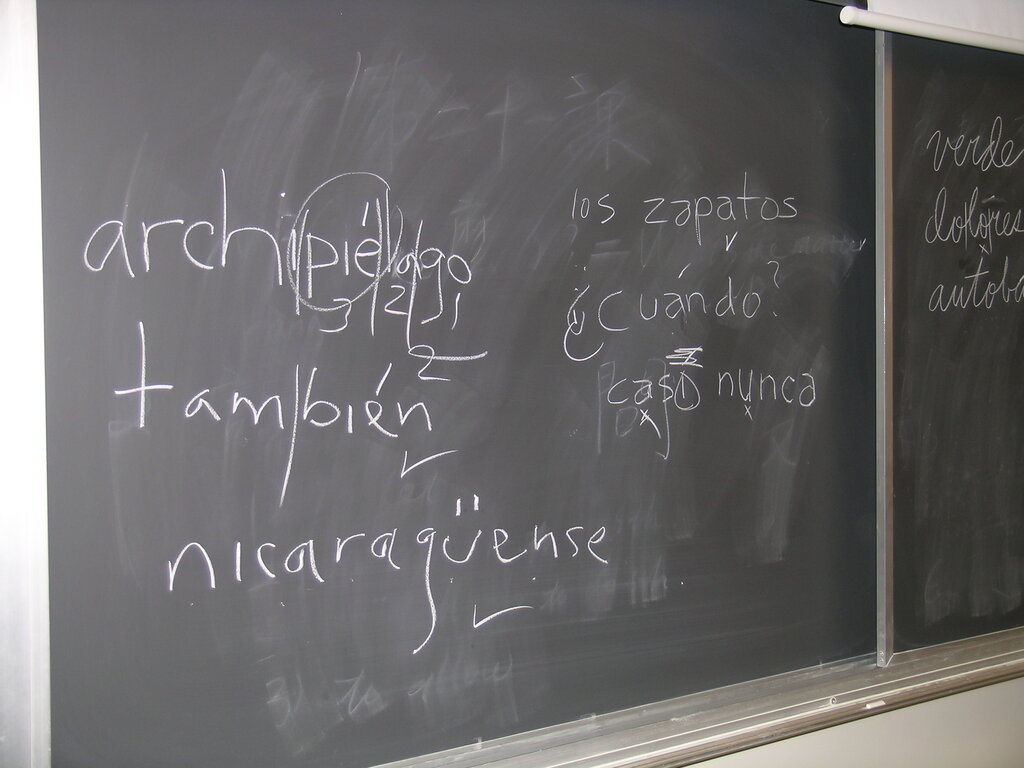
Understanding these rules is a huge shortcut. It means you can look at almost any new Spanish word and know exactly how to pronounce it.
How many letters are in the official Spanish alphabet, and what is its unique addition compared to the English alphabet?
In Spanish, each of the five vowels has only one sound, which never changes.
Now that you've covered the essentials of the Spanish alphabet and pronunciation, you're ready to start building your vocabulary.