Spanish Language Basics
Spanish Alphabet and Pronunciation
The Spanish Alphabet
The good news is that the Spanish alphabet is very similar to the English one. It's mostly phonetic, which means words are pronounced just as they're spelled. Once you learn the sound for each letter, you can confidently pronounce almost any word you see. Let's start by looking at the letters.
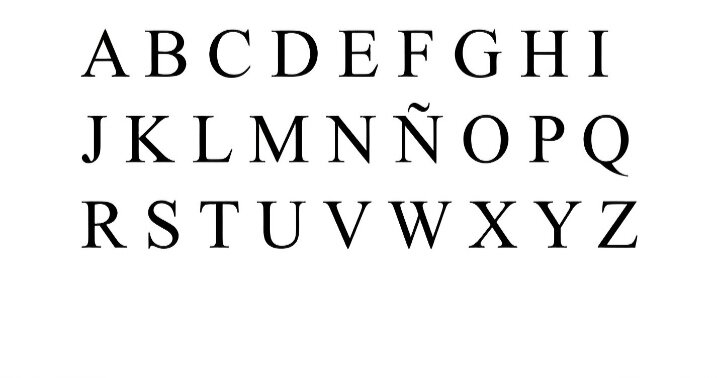
| Letter | Name of Letter (in Spanish) |
|---|---|
| A, a | a |
| B, b | be |
| C, c | ce |
| D, d | de |
| E, e | e |
| F, f | efe |
| G, g | ge |
| H, h | hache |
| I, i | i |
| J, j | jota |
| K, k | ka |
| L, l | ele |
| M, m | eme |
| N, n | ene |
| Ñ, ñ | eñe |
| O, o | o |
| P, p | pe |
| Q, q | cu |
| R, r | ere |
| S, s | ese |
| T, t | te |
| U, u | u |
| V, v | ve |
| W, w | doble ve |
| X, x | equis |
| Y, y | ye |
| Z, z | zeta |
You might notice that ch and ll, once considered separate letters, are now treated as combinations of two letters. We'll look at how to pronounce them later on.
The Five Vowel Sounds
Spanish has five simple, pure vowel sounds. Unlike English, where a vowel can have many different pronunciations, in Spanish, each vowel has only one sound. Master these, and your pronunciation will improve dramatically.
Unlike English, spoken Spanish follows the written language perfectly, each letter corresponding to one specific sound.
| Vowel | The Sound It Makes | Spanish Example |
|---|---|---|
| A | like the 'a' in "father" | amigo (friend) |
| E | like the 'e' in "they" | elefante (elephant) |
| I | like the 'ee' in "see" | iglesia (church) |
| O | like the 'o' in "go" | ojo (eye) |
| U | like the 'oo' in "moon" | uno (one) |
Tricky Consonants
Many Spanish consonants sound just like their English counterparts, such as M, N, P, S, and T. But a few can trip up new learners. Let's look at the most common ones.
H is always silent. Never pronounce it. Think of the word hola (hello). The 'h' is invisible to your ears; you just say "ola."
The letter J sounds like the English 'h'. It's a breathy sound made at the back of your throat.
Japan
The letter G has two sounds. Before an 'e' or 'i', it sounds like the Spanish J (an English 'h'). Before 'a', 'o', or 'u', it's a "hard" G, like in the English word "go."
Soft G: gente (people) Hard G: gato (cat)
Now for the special characters. The Ñ, called an eñe, makes a "ny" sound, like the middle of the word "canyon."
Spanish
The double L, or elle, is pronounced like the 'y' in "yes."
street
Finally, the R sound. A single R between vowels is a light tap of the tongue, similar to the 'tt' in the American English pronunciation of "butter." The double R, or RR, is the famous rolled R. It requires vibrating your tongue against the roof of your mouth. It takes practice, but it's a key sound in Spanish.
Single R: pero (but) Double RR: perro (dog)
Stress and Accents
Knowing which syllable to stress is essential for being understood. Luckily, Spanish has very consistent rules for this. There are only two main rules to remember for natural stress.
- If a word ends in a vowel, -n, or -s, the stress falls on the second-to-last syllable. (Example: ca-sa, ha-blan)
- If a word ends in any other consonant, the stress falls on the last syllable. (Example: a-zul, co-mer)
What about when a word breaks these rules? That's where accent marks (called tildes) come in. An accent mark over a vowel tells you to stress that syllable, ignoring the rules above.
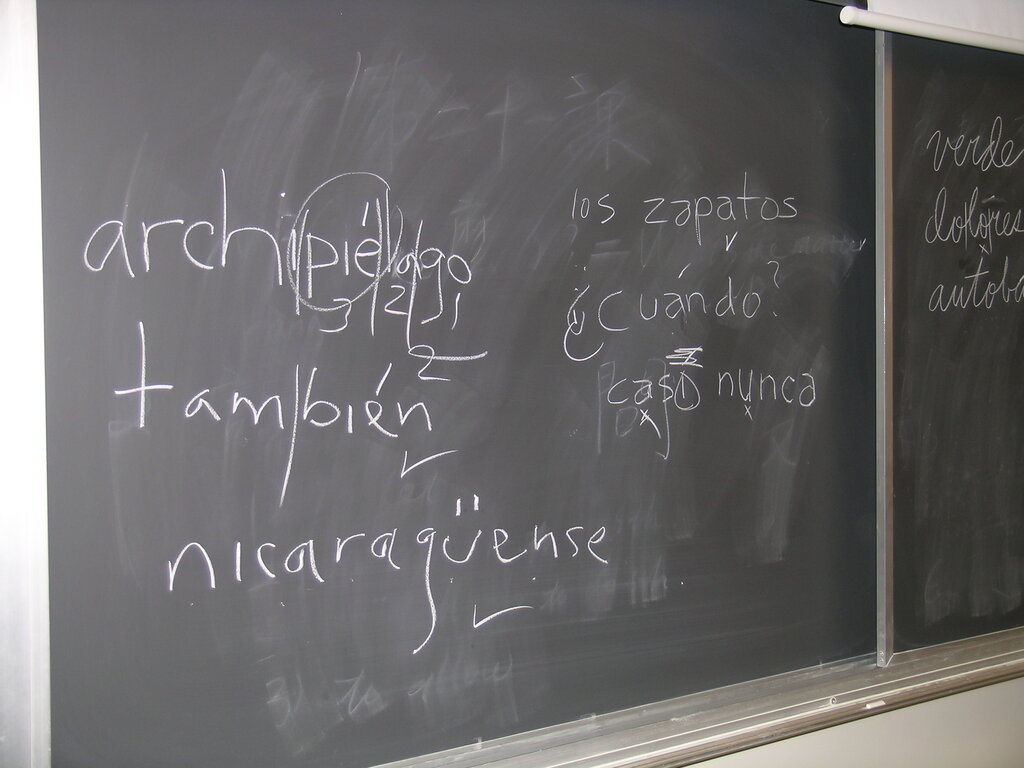
Take the word teléfono (telephone). It ends in a vowel, so the rule says to stress the second-to-last syllable ('fo'). But the accent on the 'e' tells us to stress that one instead: te-lé-fo-no. Accent marks also distinguish between words that are spelled the same but have different meanings, like si (if) and sí (yes).
Let's see how well you remember these rules.
True or False: Unlike in English, each vowel in Spanish has only one consistent sound.
The Spanish letter 'J' is pronounced most like which English letter?
Consistency is what makes Spanish pronunciation achievable. Keep practicing these sounds, and soon they will feel natural.