Spanish Grammar Essentials
Spanish Alphabet and Pronunciation
The Spanish Alphabet
The Spanish alphabet is almost identical to the English one, which is great news for learners. It has 27 letters. The main difference is the addition of one special character: the ñ.
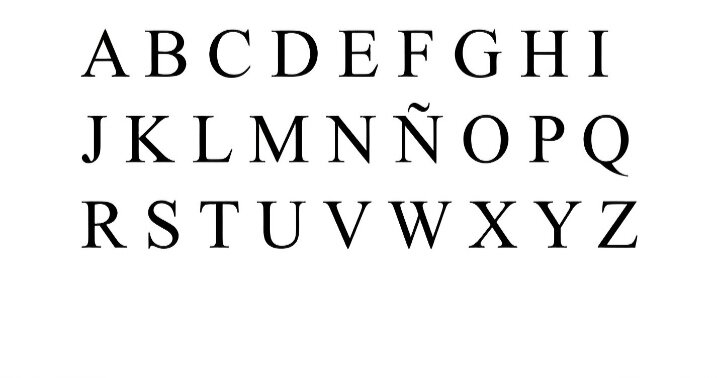
While the letters look familiar, their sounds are more consistent in Spanish than in English. Once you learn the sound for each letter, you can pronounce almost any word correctly just by reading it.
Spanish pronunciation is consistent: once you learn the sounds, you’ll understand and be understood more easily.
The Five Vowel Sounds
Spanish has five simple, pure vowel sounds. Each vowel has only one sound, no matter where it appears in a word. This is one of the biggest keys to clear pronunciation.
| Vowel | Sound (like the vowel in...) |
|---|---|
| A | father |
| E | bed |
| I | machine |
| O | hope |
| U | flute |
Let's practice. The word murciélago (bat) contains all five vowels. Try saying it by sounding out each one: moor-see-EH-lah-go.
Key Consonant Sounds
Most Spanish consonants sound like their English counterparts, but a few have special rules. Mastering these will make a huge difference in how natural you sound.
| Letter(s) | Pronunciation Rule | Example |
|---|---|---|
| C | Before a, o, u, it's a hard 'k' sound. Before e, i, it's a soft 's' sound (or 'th' in Spain). | casa (house), cine (cinema) |
| G | Before a, o, u, it's a hard 'g' sound. Before e, i, it's like the 'h' in 'hello'. | gato (cat), gente (people) |
| H | Always silent. | hola (hello) |
| J | Always sounds like the 'h' in 'hello'. | jamón (ham) |
| LL | Sounds like the 'y' in 'yes'. | calle (street) |
| Ñ | Sounds like the 'ny' in 'canyon'. | español (Spanish) |
| R | A light tap of the tongue. At the beginning of a word, it's rolled. | pero (but), rojo (red) |
| RR | A strong, trilled or rolled 'r'. | perro (dog) |
| Z | Sounds like an 's'. | azul (blue) |
Notice the difference between pero (but) with a single
rand perro (dog) with a rolledrr. This is a common point of confusion, so practice thatrrroll!
Combining Vowels
When two or three vowels appear next to each other in Spanish, their sounds often blend together to form a single syllable. These are called diphthongs and triphthongs.
To understand them, we group vowels into two types:
- Strong vowels: a, e, o
- Weak vowels: i, u
A diphthong is the combination of a strong vowel and a weak vowel, or two weak vowels together. The sounds glide smoothly from one to the next.
aire(air) sounds like EYE-rehciudad(city) sounds like syoo-DAHD
A triphthong is a weak vowel, a strong vowel, and another weak vowel all together.
Paraguaysounds like pah-rah-GWAI
Stress and Accent Marks
Knowing which syllable to stress is simple in Spanish because there are clear rules. An accent mark (´) is a sign that a word breaks these rules.
Rule 1: If a word ends in a vowel, -n, or -s, the stress falls on the second-to-last syllable.
- ca-sa (house)
- ha-blan (they speak)
Rule 2: If a word ends in any other consonant, the stress falls on the last syllable.
- co-mer (to eat)
- ciu-dad (city)
When you see an accent mark, like in café or música, it's telling you to ignore the rules and stress that specific syllable. The accent mark is your guide.
- ca-fé (coffee)
- mú-si-ca (music)
Accent marks are also used to tell words apart that are spelled the same, like si (if) and sí (yes).
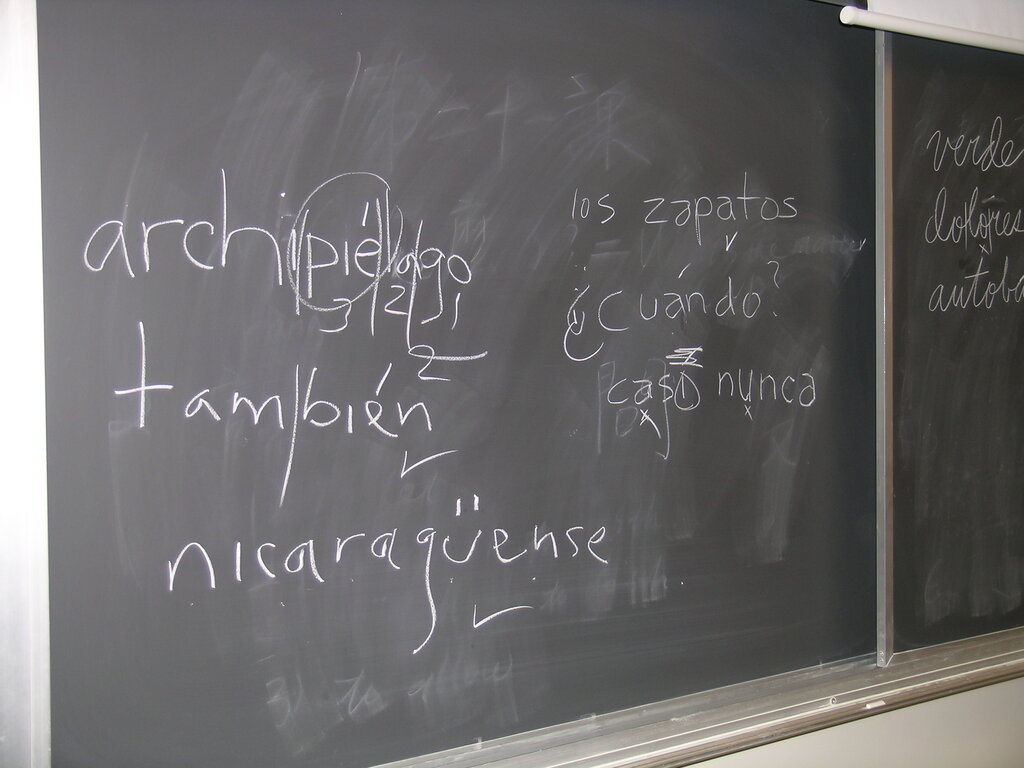
That's it for the basics. With these rules, you're ready to start sounding out Spanish words.
Ready to test your knowledge?
How many letters are in the official Spanish alphabet?
In Spanish, the sound of a vowel can change depending on the letters around it.