Spanish Fundamentals for Beginners
Spanish Alphabet and Pronunciation
The Spanish Alphabet
Good news: the Spanish alphabet is almost identical to the English one. It's written the same way and most letters will look familiar. The main difference is one extra letter, ñ, which we'll cover soon. The best part about learning to pronounce Spanish is that it's very consistent. Unlike English, where a letter can have many different sounds (think of the 'a' in 'apple,' 'father,' and 'able'), in Spanish, each letter almost always makes the same sound. Once you learn the rules, you can pronounce almost any word correctly just by looking at it.
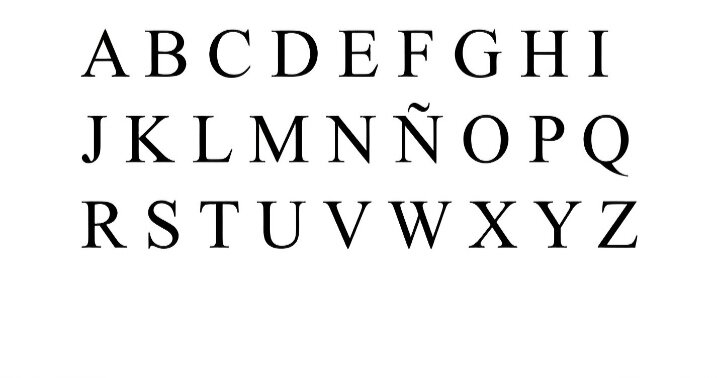
Spanish maintains remarkably consistent sound-to-letter relationships, meaning once you master the basic pronunciation rules, reading aloud becomes significantly more predictable than in English.
Let's start with the foundation of Spanish pronunciation: the vowels.
The Five Vowel Sounds
Spanish has only five vowel sounds, and they never change. Mastering these five simple, pure sounds is the most important step toward clear pronunciation.
| Vowel | Sound | Example Word |
|---|---|---|
| A | ah | papá (father) |
| E | eh | bebé (baby) |
| I | ee | sí (yes) |
| O | oh | hola (hello) |
| U | oo | tú (you) |
That's it. Every time you see an 'a', it will sound like 'ah'. Every time you see an 'e', it's 'eh'. This simple consistency is your biggest advantage when learning Spanish.
Key Consonant Sounds
Most consonants sound similar to their English counterparts, but a few have special rules. Let's look at the ones that might trip you up.
The letter H is always silent in Spanish. For example, hola is pronounced 'o-la'.
The letters C and G change their sound depending on the vowel that follows.
-
C sounds like a 'k' before 'a', 'o', or 'u' (casa, color, cuna). Before 'e' or 'i', it sounds like an 's' (cero, cine).
-
G has a hard 'g' sound (like in 'go') before 'a', 'o', or 'u' (gato, gota, gusto). Before 'e' or 'i', it makes a sound like the 'h' in 'hello' (gente, gigante). To keep the hard 'g' sound before 'e' or 'i', a silent 'u' is added, as in guerra ('ge-rra') or guitarra ('gi-ta-rra').
Here are a few more important consonants to know:
| Letter(s) | Sound | Example |
|---|---|---|
| J | Sounds like the English 'h' | jardín (garden) |
| LL | Sounds like the 'y' in 'yes' | calle (street) |
| Ñ | A 'ny' sound, as in 'canyon' | año (year) |
| R | A light tap of the tongue | pero (but) |
| RR | A rolled or trilled sound | perro (dog) |
| Z | Sounds like an 's' | lápiz (pencil) |
The rolled RR can be tricky for English speakers. Don't worry if you can't do it perfectly at first. It takes practice, and people will still understand you.
The Full Alphabet
Here is a complete table of the Spanish alphabet with the name of each letter and its typical sound.
| Letter | Name | Sound Example |
|---|---|---|
| A, a | a | ah as in father |
| B, b | be | b as in boy |
| C, c | ce | k as in cat (before a, o, u); s as in see (before e, i) |
| D, d | de | d as in dog |
| E, e | e | eh as in met |
| F, f | efe | f as in fan |
| G, g | ge | g as in go (before a, o, u); h as in hello (before e, i) |
| H, h | hache | Always silent |
| I, i | i | ee as in see |
| J, j | jota | h as in hello |
| K, k | ka | k as in kite (rarely used) |
| L, l | ele | l as in love |
| M, m | eme | m as in mom |
| N, n | ene | n as in no |
| Ñ, ñ | eñe | ny as in canyon |
| O, o | o | oh as in no |
| P, p | pe | p as in pet |
| Q, q | cu | k as in queen (always followed by 'u') |
| R, r | ere | Soft r (tap), like the 'tt' in butter |
| S, s | ese | s as in sun |
| T, t | te | t as in top |
| U, u | u | oo as in moon |
| V, v | ve | b as in boy |
| W, w | uve doble | w as in water (rarely used) |
| X, x | equis | x as in taxi, or sometimes 'h' like in México |
| Y, y | i griega | y as in yes |
| Z, z | zeta | s as in sun |
Now that you've seen the letters and their sounds, let's test your knowledge.
True or False: In Spanish, each vowel has multiple possible sounds, similar to the letter 'a' in the English words 'apple,' 'father,' and 'able'.
How is the vowel 'a' consistently pronounced in Spanish?
By remembering these simple rules, you're well on your way to reading and speaking Spanish with confidence.