Spanish Foundations from Ground Zero
Spanish Phonetic System
Phonetic Nuances of Spanish Vowels
While the five-vowel system of Spanish (/a/, /e/, /i/, /o/, /u/) is praised for its phonetic consistency, advanced analysis reveals subtleties beyond the monophthongal basics. Unlike the frequent diphthongisation of English vowels, Spanish vowels maintain their pure quality, or timbre, regardless of their position. However, in rapid, colloquial speech, a degree of vowel reduction does occur, particularly in unstressed syllables. This reduction is less dramatic than in English but can lead to slight centralisation, for example, an unstressed /e/ approaching [e̞] or even [ə].
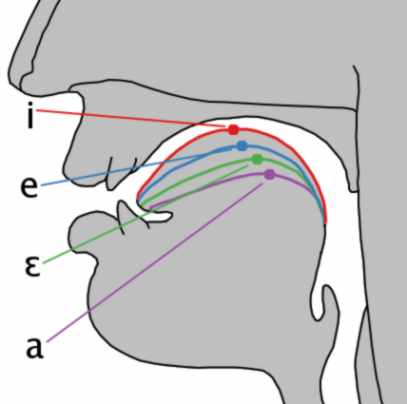
The stability of Spanish vowels is central to understanding diphthongs and triphthongs, which are formed with the semivowels /j/ (from unstressed 'i' or 'y') and /w/ (from unstressed 'u'). The distinction between a diphthong and a hiatus—where two adjacent vowels are pronounced as separate syllables—is governed by stress and vowel strength. For instance, 'continúo' (con-ti-nú-o) demonstrates a hiatus due to the tilde on the weak vowel, breaking the potential diphthong. In connected speech, vowels at word boundaries often merge through a process called ('la alta' becomes /'lal.ta/), a critical feature of Spanish poetic meter and natural cadence.
Consonantal Allophones and Variations
Beyond the standard phonemes, Spanish consonants exhibit significant allophonic variation based on their phonetic environment. The voiced stops /b/, /d/, and /g/ are a prime example. They are realised as plosives ([b], [d], [ɡ]) only at the beginning of an utterance or after a nasal consonant. In all other positions, particularly intervocalically, they soften into voiced approximants ([β], [ð], [ɣ]). This distinction between 'un vaso' [umˈbaso] and 'tu vaso' [tuˈβaso] is a hallmark of native-like pronunciation.
| Phoneme | Plosive Allophone [b, d, ɡ] | Approximant Allophone [β, ð, ɣ] |
|---|---|---|
| /b/ (b,v) | banco, ambos | la boca, uva |
| /d/ (d) | donde, andar | todo, la dama |
| /g/ (g, gu) | gato, tengo | agua, algo |
Similarly, the nasal phoneme /n/ assimilates to the point of articulation of the following consonant. It becomes a dental [n̪] before a dental consonant (ante), an alveolar [n] before an alveolar (cansado), a palatal [ɲ] before a palatal (cónyuge), and a velar [ŋ] before a velar (tengo). This coarticulation is automatic for native speakers but requires conscious effort from learners to perfect.
The distinction between the alveolar tap [ɾ] ('pero') and the alveolar trill [r] ('perro') is phonemic and can change a word's meaning entirely. The trill appears as 'rr' intervocalically and as 'r' at the beginning of a word.
The phonemes represented by 'j' and 'g' (before 'e' or 'i') are typically voiceless velar fricatives /x/, similar to the 'ch' in 'loch'. However, in many parts of Spain, the sound is realised as a harsher voiceless uvular fricative [χ]. Conversely, in much of Latin America, it softens to a glottal fricative [h], akin to the English 'h' in 'house'. The palatal nasal /ɲ/, represented by 'ñ', and the palatal lateral /ʎ/, represented by 'll', are also key. However, a phenomenon known as has led to the merger of /ʎ/ with the palatal approximant /ʝ/ (represented by 'y') in most of the Spanish-speaking world.
Stress, Tildes, and Prosody
Spanish prosody is governed by predictable stress rules. Words are classified based on which syllable receives the primary stress. Understanding these categories is essential for correct pronunciation and the proper use of the acute accent, or tilde.
| Category | Stress Position | Rule for Tilde | Examples |
|---|---|---|---|
| Agudas | Last syllable | Add tilde if word ends in -n, -s, or a vowel | canción, compás, sofá |
| Llanas (Graves) | Penultimate syllable | Add tilde if word does not end in -n, -s, or a vowel | árbol, lápiz, fácil |
| Esdrújulas | Antepenultimate syllable | Always has a tilde | teléfono, música, página |
| Sobresdrújulas | Syllable before antepenultimate | Always has a tilde | dígamelo, corrígeselo |
Beyond these structural rules, the tilde serves a diacritical function to distinguish between homonyms that would otherwise be identical. This is crucial for grammatical clarity.
Mastering these phonetic and prosodic systems moves a speaker from proficiency to fluency, allowing for a more natural and authentic command of the language.