Spanish Foundations for Beginners
Pronunciation and Greetings
The Five Simple Vowels
Let's start with the best news about Spanish pronunciation: the vowels are simple and consistent. Unlike English, where a vowel can have many sounds (think of the 'a' in 'cat', 'car', and 'cake'), in Spanish, each vowel has only one sound. Always. If you master these five sounds, you're halfway to sounding clear and confident.
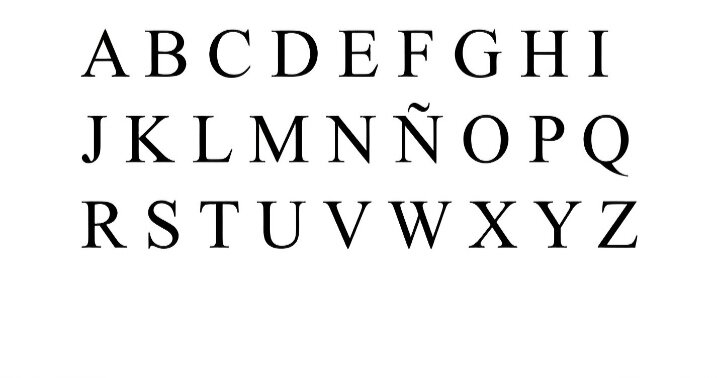
Here are the five vowel sounds you need to know.
| Vowel | Sound like the 'a' in... | Example |
|---|---|---|
| A | father | casa (house) |
| E | bed | café (coffee) |
| I | machine | si (yes) |
| O | hope | hola (hello) |
| U | rule | uno (one) |
Practice saying them out loud: ah, eh, ee, oh, oo. Every time you see these letters, they will make these exact sounds.
Key Consonant Sounds
Most Spanish consonants sound similar to their English counterparts, but a few have unique rules. Getting these right will make a big difference in how well you're understood.
First, the letter H is always silent. It's written, but never spoken. Think of it as a ghost letter. So, the word hola (hello) is pronounced 'o-la', and hotel is 'o-tel'.
Next is the letter J. It makes a sound similar to the 'h' in the English word "hat." It's a breathy sound that comes from the back of your throat. Try saying jardín (har-DEEN), which means garden.
The double L, or LL, usually sounds like the 'y' in "yes." So, the word llama (the animal) is pronounced 'ya-ma'. A common phrase, ¿Cómo te llamas? (What's your name?), is pronounced 'KO-mo te YA-mas?'
Finally, we have the ñ, a letter unique to Spanish. It's not just an 'n' with a squiggle. That squiggle, called a tilde, changes the sound entirely. It sounds like the 'ny' in "canyon." You'll see it in words like español (es-pa-NYOL) and mañana (ma-NYA-na).
ñ
noun
A letter in the Spanish alphabet, representing a palatal nasal sound.
Putting It All Together
Now that you know the basic sounds, you can start saying real Spanish words. Greetings and farewells are the perfect place to start. They're used every day and are essential for any conversation.
| Greeting | Pronunciation Guide | Meaning |
|---|---|---|
| Hola | O-la | Hello |
| Buenos días | BWAY-nos DEE-as | Good morning |
| Buenas tardes | BWAY-nas TAR-des | Good afternoon |
| Buenas noches | BWAY-nas NO-chess | Good evening / Good night |
When you ask someone how they are, the phrase is ¿Cómo estás? for informal situations or ¿Cómo está? for formal ones. This brings up an important distinction in Spanish: tú vs. usted address. Tú is the informal 'you' (used with friends, family, people your age), while usted is the formal 'you' (used for elders, authority figures, or people you don't know). For now, just be aware of the difference.
A common reply to ¿Cómo estás? is Estoy bien, gracias. (I'm well, thank you.)
When it's time to leave, you have a few options.
| Farewell | Pronunciation Guide | Meaning |
|---|---|---|
| Adiós | a-dee-OS | Goodbye |
| Hasta luego | AS-ta loo-EH-go | See you later |
| Hasta mañana | AS-ta ma-NYA-na | See you tomorrow |
Time to review what you've learned.
Let's check your understanding.
How many distinct sounds does each Spanish vowel have?
How is the letter 'h' pronounced in Spanish words like 'hola' or 'hotel'?
Congratulations, you've taken your first step. The key is to practice saying these sounds and words out loud. Language is a physical skill as much as a mental one. ¡Hasta luego!