Spanish Foundations for Beginners
Spanish Pronunciation
The Five Pure Vowels
One of the best things about Spanish is its consistency. Unlike English, where vowels can have multiple sounds (think of the 'a' in 'cat,' 'father,' and 'able'), Spanish vowels are simple and predictable. There are five vowels, and they each have only one sound. Master these, and you've built the foundation for clear pronunciation.
The cornerstone of Spanish pronunciation lies in mastering the five pure vowels: A, E, I, O, and U.
Let's break them down.
| Vowel | Pronunciation Guide (like the vowel in...) | Example Word |
|---|---|---|
| A | father | casa (house) |
| E | bed | mesa (table) |
| I | meet | libro (book) |
| O | go | solo (only) |
| U | flute | luna (moon) |
That's it. Every time you see these vowels, they will make these exact sounds. The 'u' is silent after a 'q' (as in queso) and sometimes after a 'g' (as in guitarra), but otherwise, the rule holds.
Key Consonants
Many Spanish consonants sound similar to their English counterparts, but a few have unique sounds or rules you'll need to learn.
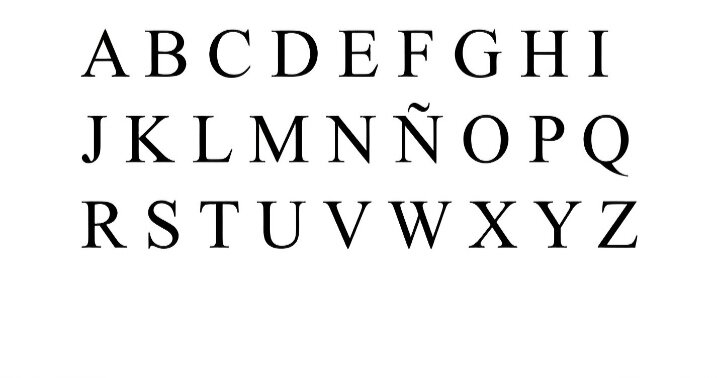
The Ñ (eñe) is probably the most iconic letter in the Spanish alphabet. It's pronounced like the 'ny' sound in 'canyon'. You'll see it in words like español and mañana (tomorrow).
Tilde
noun
The squiggle mark (~) placed over the letter 'n' to create 'ñ'. It indicates a change in pronunciation.
Next up is the famous rolling R. Spanish has two 'r' sounds:
-
The single 'r' (soft r): This is a quick tap of the tongue against the roof of the mouth, just behind your top teeth. It sounds like the 'tt' in the American English pronunciation of 'butter' or 'ladder'. You'll hear this sound when 'r' is in the middle of a word, like in pero (but) or caro (expensive).
-
The double 'rr' (rolled r): This is the trilled sound. You make it by holding your tongue in the same place as the soft 'r' and letting air vibrate the tip of your tongue. This sound is used for 'rr' in the middle of a word, like perro (dog) and carro (car). It's also used for a single 'r' at the beginning of a word, like rosa (rose).
Can't roll your 'r's yet? Don't worry. It takes practice. Try repeating the phrase 'tee-dee-va' quickly. The motion your tongue makes is very similar to the 'r' tap.
Here are a few other consonants with special rules:
C and G change their sound depending on the vowel that follows.
- Before a, o, u, 'c' sounds like a 'k' (casa, cosa, cuna), and 'g' has a hard 'g' sound (gato, gota, gusto).
- Before e, i, 'c' sounds like an 's' (cero, cine), and 'g' sounds like the 'h' in 'hello' (gente, gigante).
H is always silent. Always. Just pretend it isn't there, as in hola or hacer.
J always makes a sound like the 'h' in 'hello', no matter which vowel follows it. Think of jardín or jugar.
LL traditionally sounds like the 'y' in 'yes'. So, calle (street) is pronounced 'cai-yeh'.
Z always sounds like an 's', as in zapato (shoe). It never makes a 'zzz' sound like in English.
Gliding Between Vowels
Sometimes in Spanish, you'll see two vowels next to each other in the same syllable. This combination is called a diphthong. It might look tricky, but the rule is simple: just glide from the first vowel sound to the second without stopping.
Think of the English word 'boy'. You don't say 'boh-ee'; you smoothly connect the 'o' and 'y' sounds. Spanish diphthongs work the same way. The key is to remember the pure sound of each vowel and then blend them together.
| Diphthong | Example Word | Pronunciation Guide |
|---|---|---|
| ai / ay | baile (dance) | Sounds like the word 'eye' |
| ie | bien (well) | 'ee-eh' blended quickly |
| ue | puerta (door) | 'oo-eh' blended quickly |
| au | auto (car) | Sounds like 'ow' in 'cow' |
| ei / ey | rey (king) | Sounds like 'ay' in 'say' |
Learning to spot these combinations and pronounce them as a single, fluid sound will make your Spanish sound much more natural. Now, let's test what you've learned.
In Spanish, the sound of the letter 'r' is always the same, regardless of where it appears in a word.
How is the letter 'g' pronounced in the Spanish word gigante?
Keep practicing these sounds. Listening to native speakers and repeating what you hear is one of the best ways to get them right.