Spanish Foundations and Mastery
Pronunciation and Basics
The Predictable Vowels
Spanish pronunciation is refreshingly consistent, especially compared to English. The foundation lies in its five pure vowel sounds. Once you learn them, you can pronounce a huge number of words correctly because they almost never change.
| Vowel | Sound | Example |
|---|---|---|
| A | 'ah' as in "father" | casa (house) |
| E | 'eh' as in "met" | elefante (elephant) |
| I | 'ee' as in "see" | iglesia (church) |
| O | 'oh' as in "go" | ojo (eye) |
| U | 'oo' as in "moon" | uva (grape) |
Unlike English, where 'a' can sound like 'cat', 'father', or 'late', the Spanish 'a' is always 'ah'. This consistency is your biggest advantage. Focus on making these five sounds short and crisp.
Tricky Consonants
While most consonants are similar to their English counterparts, a few require special attention. Mastering these is key to sounding more natural.
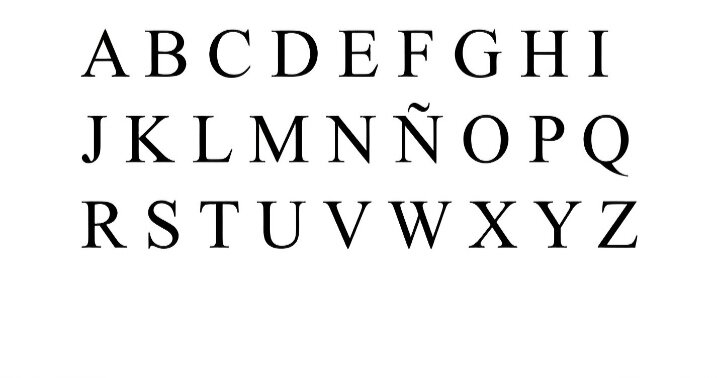
The letter 'ñ', or eñe, makes the 'ny' sound you hear in "canyon." Think of español or mañana (tomorrow).
The letter 'll' (doble ele) has regional variations. In most of Spain and Latin America, it sounds like the 'y' in "yes." So, calle (street) sounds like 'cai-yay'. In Argentina and Uruguay, it often takes on a 'zh' sound, like the 's' in "treasure."
Then there's the 'rr', or doble erre. This is the famous rolled 'r'. To make this sound, you lightly tap the tip of your tongue against the roof of your mouth, just behind your top teeth, and let it vibrate as you exhale. Words like perro (dog) and carro (car) use this sound. The single 'r' is just a single, quick tap in the same spot, as in pero (but). The official body that governs these rules is the Real Academia Española in Spain.
Building Your First Words
With the sounds down, you can start speaking. Basic greetings are the first step. You probably already know hola.
Good morning
From here, you can build a vocabulary of high-frequency words. One of the best things about Spanish is that many words are cognates—words that look and mean the same thing in English. For example, animal, idea, and chocolate are all Spanish words.
Gender and Number
In Spanish, all nouns have a gender: they are either masculine or feminine. This has nothing to do with the object itself; it's just a grammatical rule. You can often tell the gender by the ending of the word.
Nouns ending in '-o' are usually masculine and use the article 'el' (the). For example, el libro (the book).
Nouns ending in '-a' are usually feminine and use the article 'la'. For example, la casa (the house).
To make a noun plural, you generally add '-s' if it ends in a vowel (libros, casas) and '-es' if it ends in a consonant (el color, los colores). The articles also change: 'el' becomes 'los' and 'la' becomes 'las'.
Rule of thumb: 'el' for masculine singular, 'la' for feminine singular, 'los' for masculine plural, and 'las' for feminine plural.
Let's review some of the most common words and their classifications.
| Word | Phonetic | English | Type |
|---|---|---|---|
| de | deh | of, from | Preposition |
| que | keh | that, which | Conjunction |
| no | noh | no | Adverb |
| a | ah | to, at | Preposition |
| y | ee | and | Conjunction |
| ser | sehr | to be (essential) | Verb |
| por | pohr | for, by | Preposition |
| con | kohn | with | Preposition |
| para | PAH-rah | for, in order to | Preposition |
| más | mahs | more | Adverb |
Time to practice what you've learned about these core concepts.
Now, let's test your understanding with a few questions.
How is the Spanish vowel 'a' typically pronounced?
What is the correct way to make the noun la casa (the house) plural?
By focusing on these fundamental rules for vowels, tricky consonants, and noun agreement, you've built a solid base for speaking Spanish.