Spanish for Travelers
Spanish Alphabet and Pronunciation
The Sounds of Spanish
Getting started with Spanish is easier than you might think. The alphabet is almost identical to English, and the pronunciation is much more consistent. Once you learn the sound for each letter, you can confidently pronounce almost any word you see. Let's dive in.
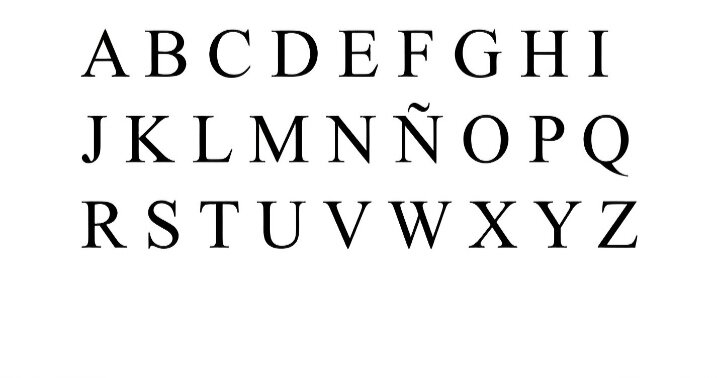
The official Spanish alphabet has 27 letters. In the past, "ch" and "ll" were considered separate letters, but they were removed as distinct entries in 2010. You'll still see them, of course, but now they're treated as two-letter combinations.
| Letter | Name (in Spanish) | Pronunciation of Name |
|---|---|---|
| A, a | a | ah |
| B, b | be | beh |
| C, c | ce | seh |
| D, d | de | deh |
| E, e | e | eh |
| F, f | efe | EH-feh |
| G, g | ge | heh |
| H, h | hache | AH-cheh |
| I, i | i | ee |
| J, j | jota | HOH-tah |
| K, k | ka | kah |
| L, l | ele | EH-leh |
| M, m | eme | EH-meh |
| N, n | ene | EH-neh |
| Ñ, ñ | eñe | EHN-yeh |
| O, o | o | oh |
| P, p | pe | peh |
| Q, q | cu | koo |
| R, r | ere | EH-reh |
| S, s | ese | EH-seh |
| T, t | te | teh |
| U, u | u | oo |
| V, v | ve | beh |
| W, w | doble ve | DOH-bleh beh |
| X, x | equis | EH-kees |
| Y, y | i griega | ee GRYEH-gah |
| Z, z | zeta | SEH-tah |
The Five Simple Vowels
The best part of Spanish pronunciation is the vowels. There are only five, and they almost always make the same sound, no matter where they are in a word. Master these, and you're halfway there.
- A is always "ah," like the 'a' in "father." Example: la casa (the house).
- E is always "eh," like the 'e' in "get." Example: el bebé (the baby).
- I is always "ee," like the 'ee' in "see." Example: mi libro (my book).
- O is always "oh," like the 'o' in "go." Example: loco (crazy).
- U is always "oo," like the 'oo' in "moon." Example: la luna (the moon).
That's it. No silent 'e's or tricky combinations that change the sound. What you see is what you say.
Unlike English, Spanish vowels are pure and short. Avoid dragging them out. Keep them crisp.
Key Consonant Sounds
Most consonants sound similar to their English counterparts, but a few have special rules. Here are the most important ones to know.
consonant
noun
A basic speech sound in which the breath is at least partly obstructed and which can be combined with a vowel to form a syllable.
C has two sounds. Before an a, o, or u, it sounds like a hard 'k' (casa, color, cuna). Before an e or i, it makes an 's' sound (cero, cine).
G also has two sounds. Before a, o, or u, it's a hard 'g' like in "go" (gato, gusto). Before e or i, it makes a sound like the 'h' in "hello" (general, gigante).
H is always silent. Always. You never pronounce it. Think of the word hola (hello). It's pronounced "OH-la."
J always makes a throaty 'h' sound, like the 'g' in general. Think of the name Juan or the word jardín (garden).
LL sounds like the 'y' in "yes." Me llamo (my name is) is pronounced "meh YAH-moh."
Ñ is a unique Spanish letter. It makes a "ny" sound, like the middle of the word "canyon." Example: español, mañana (tomorrow).
R and RR: The single R is a soft tap, similar to the "dd" sound in the word "ladder." The double RR is a strong, rolled sound that takes practice. Think of a cat purring. Example: pero (but) vs. perro (dog).
Z always sounds like an 's'. You'll never hear it buzz like in the English word "zoo." For example, zapato (shoe) sounds like "sah-PAH-toh."
Spanish is a phonetic language. This means words are pronounced exactly as they are written based on these consistent rules. If you can read it, you can say it.
Time to check your understanding of these new sounds.
How is the Spanish vowel 'E' consistently pronounced?
Which letter in the Spanish alphabet is always silent?
With these rules in hand, you have a solid foundation for reading and speaking Spanish. The key is to practice them until they become second nature.