Spanish for English Speakers
Spanish Basics
The Spanish Alphabet
One of the best parts about learning Spanish is its straightforward pronunciation. For the most part, words are pronounced exactly as they are spelled. Once you learn the sound of each letter, you can confidently pronounce almost any word you see. This consistency makes it much easier to pick up than languages with more irregular spelling, like English or French.
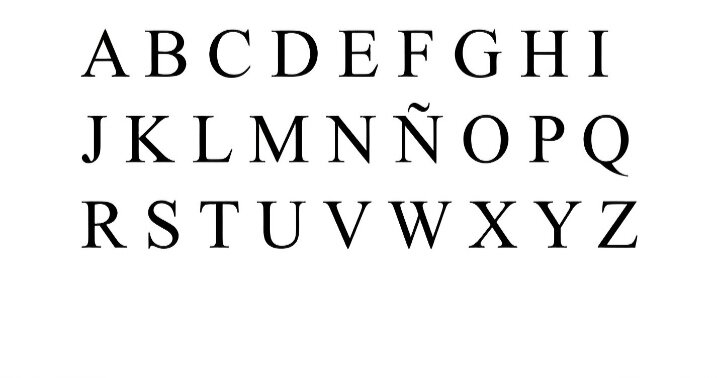
The Spanish alphabet has 27 letters. It's almost identical to the English alphabet, with the addition of one special character: the ñ.
While most letters sound similar to their English counterparts, a few have unique sounds you'll need to learn:
| Letter | Sound Example | What it sounds like in English |
|---|---|---|
| H | hola (hello) | Silent, like the 'h' in hour |
| J | jardín (garden) | A strong 'h' sound, from the back of your throat |
| LL | llamar (to call) | Like the 'y' in yes |
| Ñ | español | Like the 'ny' in canyon |
| R | pero (but) | A quick flap of the tongue, similar to the 'tt' in butter |
| RR | perro (dog) | A rolled 'r' sound |
Don't worry about perfecting the rolled 'rr' right away. It takes practice for most learners. Just focus on making a distinction between the single 'r' and the double 'rr'.
Greetings and Introductions
Now that you have an idea of the sounds, let's learn some essential words for starting a conversation. Greetings are the first step to connecting with people.
Hello
This is the universal, all-purpose greeting. You can use it at any time of day, in any situation. To say goodbye, you can use adiós.
For more specific times of day, you can use these greetings:
Buenos días (bway-nos DEE-ahs) - Good morning Buenas tardes (bway-nahs TAR-des) - Good afternoon Buenas noches (bway-nahs NO-chess) - Good evening / Good night
After greeting someone, it's polite to ask how they are doing. The most common way to ask is:
How are you? (informal)
A typical response would be Estoy bien, gracias. ¿Y tú? (I'm well, thank you. And you?).
To introduce yourself, you can say Me llamo... (My name is...) or Soy... (I am...).
—¡Hola! Me llamo Ana. —Mucho gusto, Ana. Soy David.
Translation: —Hello! My name is Ana. —Nice to meet you, Ana. I'm David.
Building Simple Sentences
Spanish sentence structure is often similar to English, typically following a subject-verb-object pattern. For example, to say "I speak Spanish," you would say Yo hablo español.
Yo (I) is the subject, hablo (speak) is the verb, and español (Spanish) is the object.
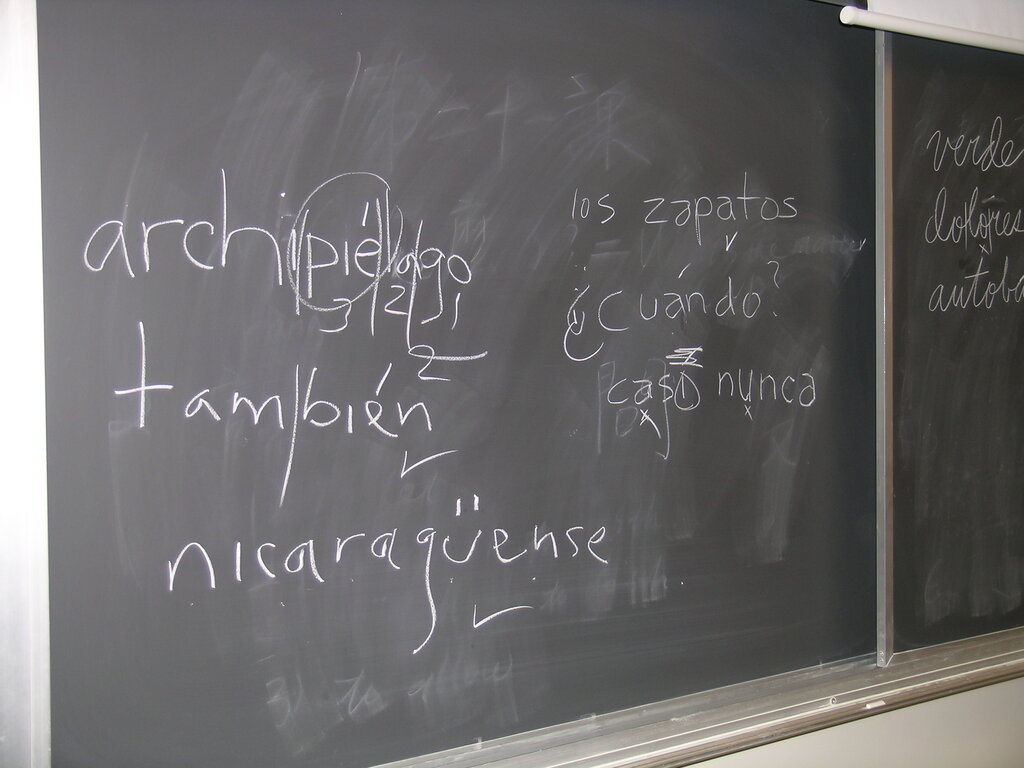
One interesting feature of Spanish is that you can often drop the subject pronoun (like yo, tú, él). The verb ending tells you who is performing the action. So, Hablo español means the same thing as Yo hablo español.
Turning a statement into a question is also simple. You can often just change your intonation, raising your voice at the end of the sentence. In writing, Spanish uses an inverted question mark (¿) at the beginning of the question and a regular one at the end.
Statement: Tú hablas inglés. (You speak English.) Question: ¿Tú hablas inglés? (Do you speak English?)
Essential Phrases
Finally, let's learn a few polite phrases that will be useful in almost any situation. Using these shows respect and will make your interactions much smoother.
| Spanish Phrase | Pronunciation | English Meaning |
|---|---|---|
| Por favor | por fah-VOR | Please |
| Gracias | GRAH-see-ahs | Thank you |
| De nada | day NAH-dah | You're welcome |
| Lo siento | lo see-EN-toh | I'm sorry |
| Con permiso | kon per-MEE-so | Excuse me (to pass by) |
| Perdón | per-DON | Excuse me (to get attention) |
Now let's review what we've covered with some flashcards.
Ready to test your knowledge?
The Spanish alphabet is nearly identical to the English alphabet, with the addition of which unique letter?
You're meeting a friend for dinner at 8 PM. What is the most appropriate greeting?
With these basics, you have a solid foundation to start speaking and understanding simple Spanish. Practice these phrases, and don't be afraid to try them out!