Spanish for Beginners ADHD Friendly
Spanish Alphabet and Pronunciation
The Spanish Alphabet
Getting started with Spanish pronunciation is simpler than you might think. The Spanish alphabet, or abecedario, is almost identical to the English one. The main difference is the addition of one special letter.
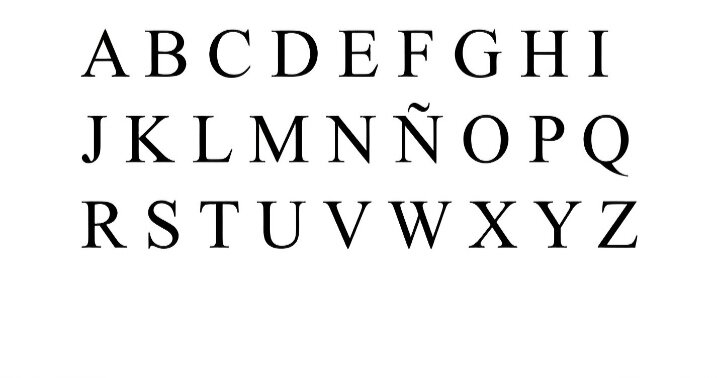
The extra letter is ñ (pronounced enye). It makes a "ny" sound, like the middle of the word "canyon."
You might also see two other letter pairs from older versions of the alphabet: ch and ll. While they are no longer considered separate letters, they represent distinct sounds that are important to learn.
The Five Vowels
The biggest key to Spanish pronunciation is mastering the five vowel sounds. Unlike in English, where a vowel's sound can change dramatically from word to word, Spanish vowels are crisp, short, and consistent. Each vowel has one sound, and it never changes.
Learning these five sounds gets you most of the way to pronouncing any Spanish word correctly.
| Vowel | Pronunciation (like the vowel in...) | Example Word |
|---|---|---|
| A | "father" | agua (water) |
| E | "get" | elefante (elephant) |
| I | "see" | isla (island) |
| O | "go" | oso (bear) |
| U | "moon" | uva (grape) |
Once you know the five vowel sounds, you can pronounce the vowels in any Spanish word you see, even if you don't know what it means.
Key Consonant Sounds
Many Spanish consonants sound just like their English counterparts, such as M, N, P, and T. However, a few have unique sounds or rules you need to know. The most important differences are for letters like H, J, Ñ, and the R sounds.
| Letter(s) | Context | Sound (like the English...) | Example |
|---|---|---|---|
| C | before a, o, u | k sound in "cat" | casa (house) |
| C | before e, i | s sound in "see" | cine (cinema) |
| G | before a, o, u | hard g sound in "go" | gato (cat) |
| G | before e, i | h sound in "hat" | gente (people) |
| H | always | Silent | hola (hello) |
| J | always | h sound in "hat" | jamón (ham) |
| LL | always | y sound in "yes" | llave (key) |
| Ñ | always | ny sound in "canyon" | año (year) |
| R | at start of word, or RR | Rolled R | rojo (red), perro (dog) |
| R | in middle of word | Soft tap, like dd in "ladder" | pero (but) |
| Z | always | s sound in "see" | zapato (shoe) |
The silent H is a simple rule to remember. You just don't pronounce it. The letter J always takes the sound that the English H has.
The difference between the single R and the double RR is crucial. A single r between vowels is a light tap of the tongue, while rr (or an r at the beginning of a word) requires a full roll. This distinction can change a word's meaning entirely. For example, pero means "but," while perro means "dog."
Common Letter Combinations
A few letter combinations create specific sounds. The most common involve the letter U acting as a silent helper to change the sound of the letter before it.
| Combination | Sound (like the English...) | Example |
|---|---|---|
| CH | ch in "chair" | chocolate |
| GUE, GUI | Hard g sound (U is silent) | guerra (war), guitarra (guitar) |
| QUE, QUI | k sound (U is silent) | queso (cheese), quién (who) |
Notice how the u in gue, gui, que, and qui is silent. Its only job is to make the g or c sound hard. If you ever need to pronounce the u in gue or gui, it will be written with two dots, like this: ü. For example, in the word pingüino (penguin), you pronounce both the u and the i.
Spanish pronunciation is consistent: once you learn the sounds, you’ll understand and be understood more easily.
Let's review these new letters and sounds with some flashcards.
Now, test your knowledge of these fundamental rules.
What sound does the Spanish letter 'ñ' make?
True or False: In Spanish, the sound of a vowel changes frequently depending on the word it's in.
With these rules, you've built a strong foundation for reading and speaking Spanish. The consistency of its sounds is one of the best parts about learning the language.