Spanish for Beginners
Spanish Alphabet and Pronunciation
The Spanish Alphabet
Good news: the Spanish alphabet, or abecedario, is almost identical to the English one. It uses the same Roman letters, so you already know what they look like. The main difference is in the pronunciation and the addition of one special letter: Ñ.
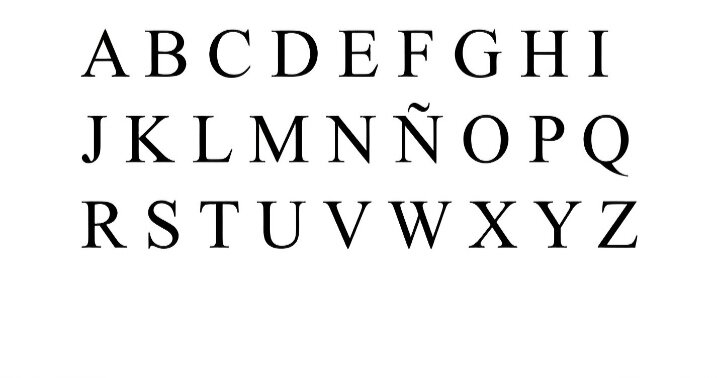
Once you learn the sound for each letter, you can pronounce almost any Spanish word correctly. Spanish is a very phonetic language, which means words are pronounced just as they are spelled. This consistency is a huge advantage for learners.
Spanish pronunciation is consistent: once you learn the sounds, you’ll understand and be understood more easily.
Here’s a look at all the letters and their Spanish names.
| Letter | Name | Pronunciation of Name |
|---|---|---|
| A, a | a | ah |
| B, b | be | beh |
| C, c | ce | seh |
| D, d | de | deh |
| E, e | e | eh |
| F, f | efe | EH-feh |
| G, g | ge | heh |
| H, h | hache | AH-cheh |
| I, i | i | ee |
| J, j | jota | HOH-tah |
| K, k | ka | kah |
| L, l | ele | EH-leh |
| M, m | eme | EH-meh |
| N, n | ene | EH-neh |
| Ñ, ñ | eñe | EH-nyeh |
| O, o | o | oh |
| P, p | pe | peh |
| Q, q | cu | koo |
| R, r | ere | EH-reh |
| S, s | ese | EH-seh |
| T, t | te | teh |
| U, u | u | oo |
| V, v | uve | OO-beh |
| W, w | uve doble | OO-beh DOH-bleh |
| X, x | equis | EH-kees |
| Y, y | ye | yeh |
| Z, z | zeta | SEH-tah |
The Five Pure Vowels
The secret to Spanish pronunciation lies with the vowels. There are only five vowel sounds, and they never change. Unlike in English, where 'a' can sound different in 'cat,' 'car,' and 'cake,' the Spanish 'a' always sounds the same. Master these five sounds, and you're halfway there.
| Vowel | Sound | Example Word (Spanish) | Example Word (English) |
|---|---|---|---|
| A | ah | padre | father |
| E | eh | mesa | bed |
| I | ee | libro | see |
| O | oh | sol | go |
| U | oo | luna | flute |
Key Consonant Sounds
Most consonants sound similar to their English counterparts, but a few have special rules or unique sounds. Let's walk through the important ones.
C: Before an 'a', 'o', or 'u', it sounds like a hard 'k' (casa, color). Before an 'e' or 'i', it sounds like an 's' (cielo, cena).
G: This one is also tricky. Before 'a', 'o', or 'u', it's a hard 'g' like in 'go' (gato, gusto). Before 'e' or 'i', it makes a sound like the 'h' in 'hello' (gente, girar).
H: The 'h' is always silent. Always. Just pretend it isn't there. For example, hola is pronounced 'oh-la'.
J: The 'j' sound is similar to the English 'h', but a bit stronger, made from the back of your throat. Think of the sound in 'loch'. Examples: jardín, ojo.
LL: This double 'l' is pronounced like the 'y' in 'yes'. Me llamo sounds like 'meh yah-moh'.
And now for our special letter.
Ñ, ñ
other
Pronounced 'ny' as in 'canyon'. This is a distinct letter in the Spanish alphabet, not just an 'n' with a squiggle.
Q: In Spanish, 'q' is always followed by a 'u', and together they make a 'k' sound. The 'u' is silent. For example, ¿qué? (what?) is pronounced 'keh'.
R & RR: The single 'r' is a light tap of the tongue, similar to the 'tt' in the American English pronunciation of 'butter'. The double 'rr' is the famous rolled 'r'. It takes practice! You'll find it in words like perro (dog) and carro (car).
Z: The 'z' is pronounced like an 's' in Latin America. For example, zapato (shoe) sounds like 'sa-pa-to'.
Now let's practice what you've learned.
Ready to test your knowledge?
True or False: Spanish is considered a highly phonetic language, meaning words are generally pronounced exactly as they are spelled.
Which letter is unique to the Spanish alphabet compared to the English one?
Getting these sounds right is the first major step toward speaking Spanish with confidence. Keep practicing, and listen to native speakers whenever you can.