Spanish for Beginners
Spanish Pronunciation
Sounding It Out
Good news: Spanish is a phonetic language. This means words are pronounced just as they are spelled. Once you learn the sound for each letter, you can confidently pronounce almost any word you see. This consistency is a huge advantage compared to English, where letters can have many different sounds (think of 'ough' in 'through,' 'tough,' and 'though').
The Spanish alphabet, or abecedario, is very similar to the English one, with a few key differences.
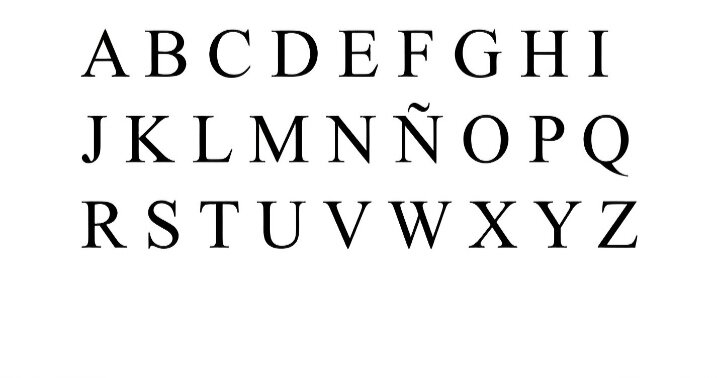
Let's start with the most important sounds in the language: the vowels.
The Five Vowel Sounds
Spanish has only five vowel sounds, and they are always pure and short. Unlike English, the sound of a Spanish vowel does not change based on its position in a word or the letters around it. Master these five sounds, and you've mastered the core of Spanish pronunciation.
| Vowel | Sound (like in...) | Example |
|---|---|---|
| A, a | father | casa (house) |
| E, e | bed | elefante (elephant) |
| I, i | machine | si (yes) |
| O, o | hope | hola (hello) |
| U, u | flute | uno (one) |
That's it. The letter 'A' will always sound like the 'a' in "father." The letter 'E' will always sound like the 'e' in "bed." This consistency is your best friend when learning to speak.
Tricky Consonants
While most Spanish consonants sound similar to their English counterparts, a few require special attention. These are the sounds that can immediately mark you as a non-native speaker if you get them wrong.
Ñ, ñ
noun
This letter is unique to Spanish and a few other languages. It makes a 'ny' sound, like the 'ni' in "onion."
The letter 'H' is always silent. You never pronounce it. Think of the word hola (hello). It's pronounced "o-la," not "ho-la."
Next up are 'B' and 'V'. In Spanish, these two letters make the exact same sound. It's a soft sound, somewhere between the English 'b' and 'v'. To make it, bring your lips together gently, as if you're about to say 'b', but let the air flow through more softly. Listen to native speakers say words like bueno (good) and vaso (glass) to hear it in action.
The letters 'C' and 'G' have two sounds each, depending on the vowel that follows them.
When 'C' is followed by a, o, or u, it has a hard 'k' sound: casa (house), color (color), cuna (crib). When 'C' is followed by e or i, it makes a 's' sound (in Latin America) or a 'th' sound like in "think" (in most of Spain): cena (dinner), cine (cinema).
Similarly, when 'G' is followed by a, o, or u, it's a hard 'g' sound, like in "go": gato (cat), gordo (fat), gusto (pleasure). When 'G' is followed by e or i, it makes a throaty 'h' sound, like the 'ch' in the Scottish "loch": gente (people), gigante (giant).
The Rolled R
The rolled 'R' is perhaps the most famous sound in Spanish. There are two 'R' sounds: the single tap and the multiple trill.
The single 'R' (written r) is a quick tap of the tongue against the roof of the mouth, just behind the front teeth. It sounds a lot like the 'dd' in the American English pronunciation of "ladder." It's used for any single 'r' within a word, like in caro (expensive).
The trilled 'R' (written rr, or r at the beginning of a word) is the one people think of as the "rolled r." To make this sound, you press your tongue against the roof of your mouth and exhale, causing the tip of the tongue to vibrate.
Practice with these words:
- Rojo (red): Starts with a rolled r. Pronounced RRO-jo.
- Perro (dog): Has a rolled rr in the middle. Pronounced PE-rro.
- Pero (but): Has a single tap r. Pronounced PE-ro.
Don't worry if you can't roll your R's right away. It takes practice for most non-native speakers. The key is relaxing your tongue and letting the air do the work.
True or False: In Spanish, words are generally pronounced exactly as they are spelled, with each letter having a consistent sound.
How is the letter 'H' pronounced in the Spanish word hola?
Focusing on these core sounds will build a strong foundation for your Spanish speaking skills. Consistency is what makes Spanish pronunciation achievable for everyone.