Spanish for Beginners
Spanish Alphabet
The Spanish Alphabet
Welcome to the Spanish alphabet, or abecedario. The best part about learning to pronounce Spanish is its consistency. Unlike English, where letters can have many different sounds, in Spanish, what you see is almost always what you get. Once you learn the sound for each letter, you can confidently pronounce words you've never even seen before.
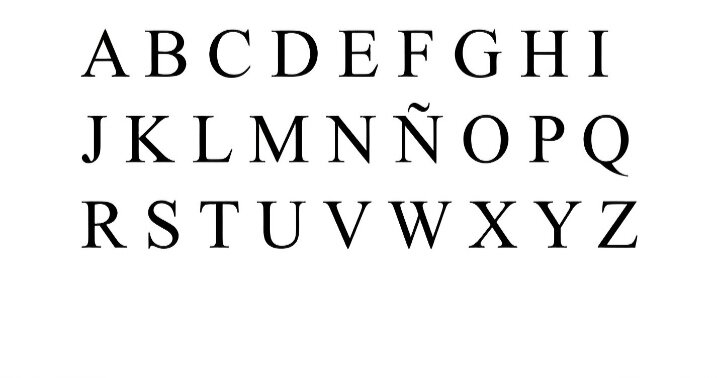
Let's start with the most important letters: the vowels.
The Five Vowels
Spanish has the same five vowels as English: A, E, I, O, U. The crucial difference is that each Spanish vowel has only one sound, and it never changes. This makes pronunciation incredibly predictable.
Think about the English word "tough." The 'o' and 'u' combine to make an "uh" sound. In "through," they make an "oo" sound. Spanish avoids this kind of confusion entirely.
Master these five vowel sounds, and you're halfway to sounding clear and confident in Spanish.
| Vowel | Sound (like in English...) | Example Spanish Word |
|---|---|---|
| A | ah as in "father" | agua (water) |
| E | eh as in "bet" | elefante (elephant) |
| I | ee as in "see" | isla (island) |
| O | oh as in "go" | oso (bear) |
| U | oo as in "moon" | uno (one) |
Practice saying them out loud: ah, eh, ee, oh, oo. Every time you see these letters in a Spanish word, they will make these exact sounds.
Key Consonants
Many Spanish consonants sound very similar to their English counterparts, but a few have special rules. Let's look at the ones that might trip you up.
eñe
noun
The letter Ñ, which is unique to the Spanish alphabet. It is pronounced like the 'ny' sound in the English word 'canyon'.
Here are a few other important letters and their sounds:
| Letter | Sound | Example Spanish Word |
|---|---|---|
| H | Always silent | hola (hello) |
| J | A light 'h' sound, like in "hat" | jamón (ham) |
| LL | A 'y' sound, like in "yes" | llave (key) |
| RR | A rolled or trilled 'r' sound | perro (dog) |
| Z | An 's' sound, like in "snake" | zapato (shoe) |
The rolled 'rr' can be tricky for English speakers. Don't worry about perfecting it right away. Just know that it's a stronger, vibrating sound than the single 'r' in a word like pero (but).
Two other letters, C and G, change their sound depending on the vowel that follows them.
Before E or I, the letters C and G have a soft sound. Before A, O, or U, they have a hard sound.
| Letter Combination | Sound | Example |
|---|---|---|
| ca, co, cu | Hard 'k' sound | casa (house), cosa (thing) |
| ce, ci | Soft 's' sound | cena (dinner), cine (cinema) |
| ga, go, gu | Hard 'g' sound | gato (cat), gorra (cap) |
| ge, gi | Soft 'h' sound | gente (people), girante (giant) |
By learning these simple, consistent rules, you've built the foundation for reading and speaking Spanish. The key is that unlike in English, there are very few exceptions.
What is the most significant difference between Spanish and English pronunciation?
How is the Spanish vowel 'E' always pronounced?