Spanish For Beginners
Spanish Alphabet and Pronunciation
The Spanish Alphabet
The Spanish alphabet, or abecedario, is your starting point for learning the language. It's very similar to the English alphabet, but with one extra letter. In total, there are 27 letters.
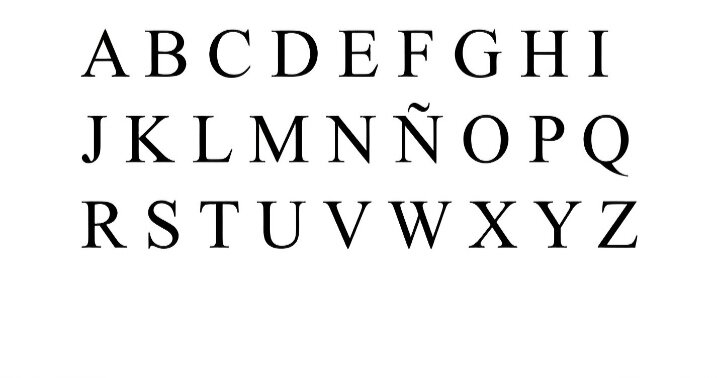
Here they are: A, B, C, D, E, F, G, H, I, J, K, L, M, N, Ñ, O, P, Q, R, S, T, U, V, W, X, Y, Z.
The best part about Spanish is that it's a phonetic language. This means that words are pronounced just as they are spelled. Once you learn the sound for each letter, you can confidently pronounce almost any word you see.
Spanish maintains remarkably consistent sound-to-letter relationships, meaning once you master the basic pronunciation rules, reading aloud becomes significantly more predictable than in English.
Vowel Power
Mastering the five Spanish vowels is the most important step toward clear pronunciation. Unlike English, where vowels can have many different sounds (think of the 'a' in 'cat', 'car', and 'cake'), Spanish vowels are simple and consistent. Each one has only one sound, no matter where it appears in a word.
| Vowel | Sound (like the English...) | Spanish Example |
|---|---|---|
| A | ah, as in 'father' | casa (house) |
| E | eh, as in 'bed' | café (coffee) |
| I | ee, as in 'see' | sí (yes) |
| O | oh, as in 'go' | hola (hello) |
| U | oo, as in 'moon' | uno (one) |
Practice these five pure sounds. They never change. This consistency is your best friend when learning to speak and read Spanish.
Consonants with Character
Many Spanish consonants sound just like their English counterparts. Letters like F, L, M, N, P, S, and T will feel very familiar. However, several consonants have unique sounds or rules you need to know.
eñe
noun
The letter Ñ, ñ. It represents a distinct sound not found in English, similar to the 'ny' in 'canyon'. It is the only Spanish letter that originated in Spain.
Here are the other key consonants to watch out for:
| Letter(s) | Rule | Example |
|---|---|---|
| C | Like 'k' before A, O, U. Like 's' before E, I. | casa (k-sound), cielo (s-sound) |
| G | Like 'g' in 'go' before A, O, U. Like 'h' in 'hat' before E, I. | gato (hard g), gente (h-sound) |
| H | Always silent. Don't pronounce it. | hola, hotel |
| J | Always sounds like the 'h' in 'hat'. | jamón, viaje |
| LL | Traditionally like 'y' in 'yes'. | calle, llave |
| Q | Always followed by 'u', sounds like 'k'. | queso, aquí |
| R | A soft tap, like 'dd' in 'ladder'. | pero (but) |
| RR | A strong, rolled or trilled sound. | perro (dog) |
| V | Sounds identical to the letter B. | vaca, vino |
| Z | Always sounds like the 's' in 'see'. | azul, lápiz |
Remember: The H is always silent. It's a ghost letter. You see it, but you don't hear it.
Now let's review what we've learned.
Time to test your knowledge.
How many letters are in the official Spanish alphabet?
Which of the following letters is found in the Spanish alphabet but not in the English alphabet?
By focusing on these basic rules, especially the five vowel sounds, you've built a strong foundation for speaking and understanding Spanish.