Spanish Fluency Journey
Spanish Pronunciation
The Spanish Alphabet
The Spanish alphabet, or abecedario, is your starting point. It looks very similar to the English alphabet, which is great news. It contains 27 letters. The real advantage, though, is that the letters almost always make the same sound. Once you learn the sound for each letter, you can pronounce almost any Spanish word you see.
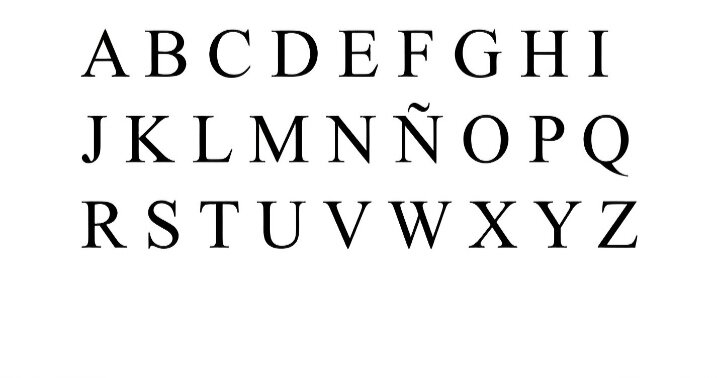
You might have heard about other letters like CH (che) and LL (elle). While they were once considered separate letters in the alphabet, the Royal Spanish Academy officially simplified the alphabet in 2010. Now, they are treated as two-letter combinations, but their sounds are still distinct and important to learn.
Spanish maintains remarkably consistent sound-to-letter relationships, meaning once you master the basic pronunciation rules, reading aloud becomes significantly more predictable than in English.
The Five Vowels
Spanish pronunciation is built on five simple, pure vowel sounds. Unlike English, where a vowel can have many different sounds, in Spanish, a vowel's sound is fixed. Master these five, and you've conquered a huge part of Spanish pronunciation.
| Vowel | Sound (like in English...) | Example |
|---|---|---|
| A | father | casa (house) |
| E | bed | café (coffee) |
| I | see | sí (yes) |
| O | hope | hola (hello) |
| U | rule | luna (moon) |
That's it. The letter A will always sound like "ah," E will always be "eh," and so on. This consistency is your best friend when learning to speak and read.
Key Consonant Sounds
Many Spanish consonants sound just like their English counterparts. However, a few have special rules or sounds that you'll need to learn. Let's look at the most common ones.
C: Before a, o, or u, it sounds like the 'k' in "cat" (casa). Before e or i, its sound changes. In most of Spain, it's like the 'th' in "think" (cielo). In Latin America, it sounds like the 's' in "see" (cielo).
G: Before a, o, or u, it's a hard 'g' like in "go" (gato). Before e or i, it makes a throaty 'h' sound, like the 'h' in "hello" but more guttural (gente). When you see gue or gui, the u is silent, and the g is hard (guitarra). If the u has two dots over it (ü), it is pronounced, as in pingüino.
H: The hache is always silent. Always. Think of words like hola or hacer. You just ignore it and pronounce the vowel that follows.
J: The jota always makes that same throaty 'h' sound as the soft 'g'. It's a sound that comes from the back of your throat, like in jardín (garden).
LL: The elle sound varies by region. It can sound like the 'y' in "yes" (calle), or in some areas like Argentina, it sounds like the 's' in "pleasure".
Ñ: This is the signature letter of Spanish. The squiggle on top is called a tilde. The sound is like the 'ny' in "canyon." You'll see it in words like español or mañana.
R and RR: A single r between vowels is a light tap of the tongue, similar to the 'tt' in the American pronunciation of "butter." The double rr is a full, rolling trill, like in perro (dog). A single r at the beginning of a word is also trilled (rojo).
Stress and Accents
Knowing which syllable to stress is key to sounding natural. Spanish has simple, consistent rules for this. The written accent mark (´), called a tilde, is a helpful guide.
- If a word ends in a vowel, -n, or -s, the stress falls on the second-to-last syllable. Examples: ca-sa, ha-blan, me-sa.
- If a word ends in any other consonant, the stress falls on the last syllable. Examples: ha-blar, pa-pel, ciu-dad.
- If a word has a written accent mark (´), ignore the rules above and stress the syllable with the accent. Examples: can-ción, te-lé-fo-no, á-rbol.
These three rules cover almost every word in Spanish. The accent mark isn't just for decoration; it's a roadmap for pronunciation.
Now, let's test what you've learned about Spanish pronunciation.
According to the Royal Spanish Academy's 2010 update, how many letters are in the official Spanish alphabet?
What is the most important rule to remember about Spanish vowel sounds?
With these foundations, you're well on your way to reading and speaking Spanish with confidence. Consistency is the key.