Spanish Bible Studies
Historical Background
Forbidden Translations
For centuries, translating the Bible into Spanish was a dangerous act. The Catholic Monarchs and the Spanish Inquisition tightly controlled religious texts. They feared that if ordinary people could read the scriptures in their own language, they might develop interpretations that challenged the Church's authority. As a result, possessing a Bible in Spanish could lead to accusations of heresy.
Despite the risks, a few remarkable translation projects emerged. One of the earliest and most fascinating was the Alba Bible.
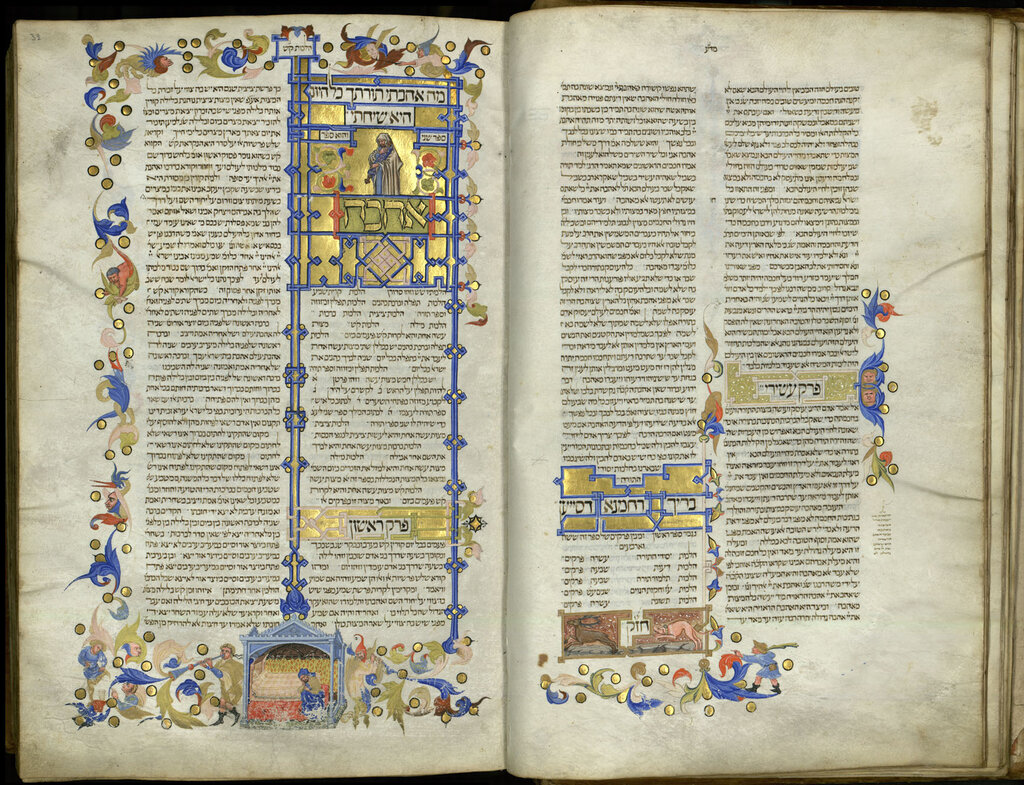
Commissioned in 1422 by a Spanish nobleman, Don Luis de Guzmán, the Alba Bible was a direct translation of the Old Testament from Hebrew into Castilian Spanish. He entrusted the work to a Jewish scholar, Rabbi Moses Arragel. For nearly a decade, Arragel worked on the text, collaborating with Franciscan friars to create a version that was both faithful to the Hebrew original and acceptable to Christian sensibilities. The result was a beautifully illustrated manuscript that stands as a unique example of Jewish-Christian collaboration in medieval Spain.
Scholarly and Protestant Bibles
While the Alba Bible was a single manuscript, the invention of the printing press opened new possibilities. A monumental achievement of biblical scholarship appeared in the early 16th century: the Complutensian Polyglot Bible.
Polyglot
noun
A book containing the same text in several languages, often laid out in parallel columns.
Sponsored by Cardinal Francisco Jiménez de Cisneros and produced at the University of Alcalá de Henares (whose Latin name was Complutum), this six-volume work was a massive undertaking. It presented the biblical text in parallel columns: Hebrew, Aramaic (for the Targum Onkelos), Greek (the Septuagint), and Latin (the Vulgate). It was a tool for scholars, not the general public, designed to establish a more accurate Latin text by comparing it with the original languages.
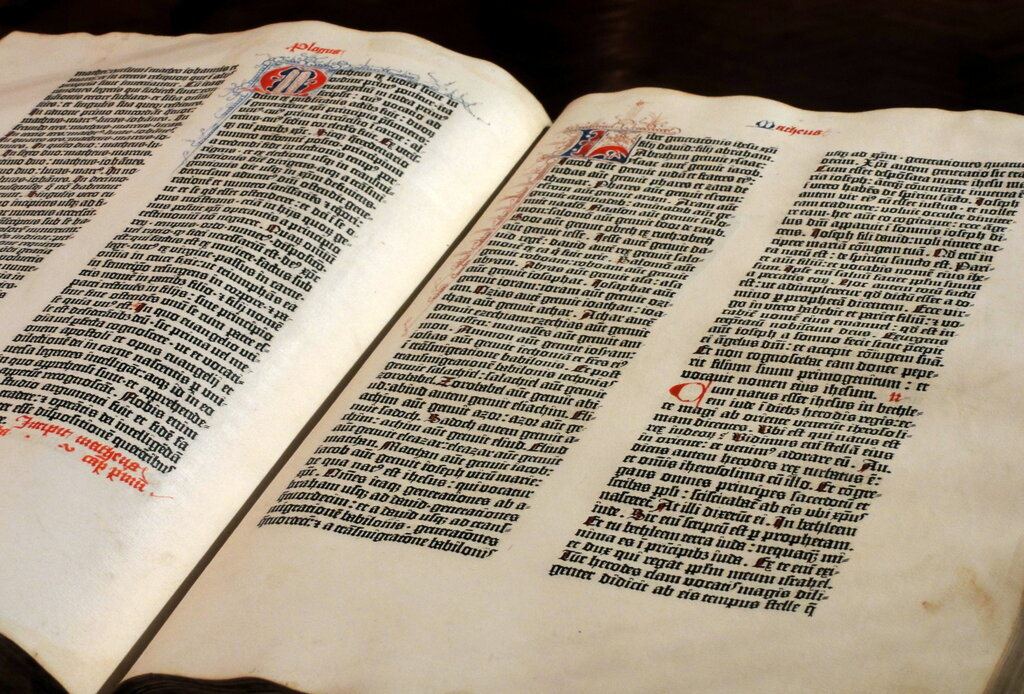
The real push for a widely accessible Spanish Bible came with the Protestant Reformation. Reformers believed that everyone should be able to read the Bible. This conviction drove several Spanish exiles to undertake the dangerous work of translation.
The most important of these was Casiodoro de Reina, a former monk who fled the Inquisition. Working for twelve years, he produced the first complete Spanish Bible translated from the original Hebrew and Greek. Published in 1569 in Basel, Switzerland, it became known as the Biblia del Oso (Bible of the Bear) because of the printer's emblem on its title page, which depicted a bear reaching for honey.
Reina's goal was to create a Bible for the entire Spanish-speaking world, free from the direct control of any single religious faction.
A few decades later, another exiled reformer, Cipriano de Valera, revised Reina's work. Valera's revision, published in 1602, made some textual changes and updates. This combined effort, known as the Reina-Valera, became the foundational text for Spanish-speaking Protestants. Over the centuries, it has been revised many times, but it remains the most beloved and influential Spanish Bible translation, comparable to the King James Version in the English-speaking world.
Let's review the key Spanish Bible translations.
Why was translating the Bible into the vernacular a dangerous act in Spain for many centuries?
What was a unique characteristic of the 15th-century Alba Bible project?