Spanish A1 Essentials
Greetings and Introductions
First Words
Every conversation starts with a greeting. The most common and useful greeting in Spanish is “Hola.” You can use it at any time of day, in any situation, whether you're talking to a friend or a stranger. It’s the perfect, all-purpose way to say hello.
Hello
Spanish also has greetings for specific times of the day, just like in English. Think of them as more formal or specific alternatives to “Hola.”
| Spanish Phrase | English Meaning | When to Use |
|---|---|---|
| Buenos días | Good morning | From morning until noon |
| Buenas tardes | Good afternoon/evening | From noon until sunset |
| Buenas noches | Good night | After sunset or when going to bed |
Notice that “días” is masculine, so we use “buenos.” But “tardes” and “noches” are feminine, so we use “buenas.”
Asking and Answering
After greeting someone, it's polite to ask how they are. The most common way to do this is with the phrase “¿Cómo estás?” This is the informal version, which you would use with friends, family, and people your own age.
How are you? (informal)
If you're speaking to someone older, a person in authority, or someone you don't know, you should use the formal version, “¿Cómo está usted?” It shows a bit more respect.
How are you? (formal)
So, how do you respond? Here are a few common answers.
| Spanish Phrase | English Meaning |
|---|---|
| Muy bien, gracias. | Very well, thank you. |
| Bien, ¿y tú? | Good, and you? (informal) |
| Bien, ¿y usted? | Good, and you? (formal) |
| Más o menos. | So-so. / More or less. |
Making Introductions
Now it's time to introduce yourself. The most straightforward way is to say “Me llamo...” which literally means “I call myself...” You can also use “Soy...” which means “I am...”
Me llamo David. (My name is David.) Soy Ana. (I am Ana.)
After someone tells you their name, you can say “Mucho gusto,” which means “Nice to meet you.” It's a friendly and essential phrase.
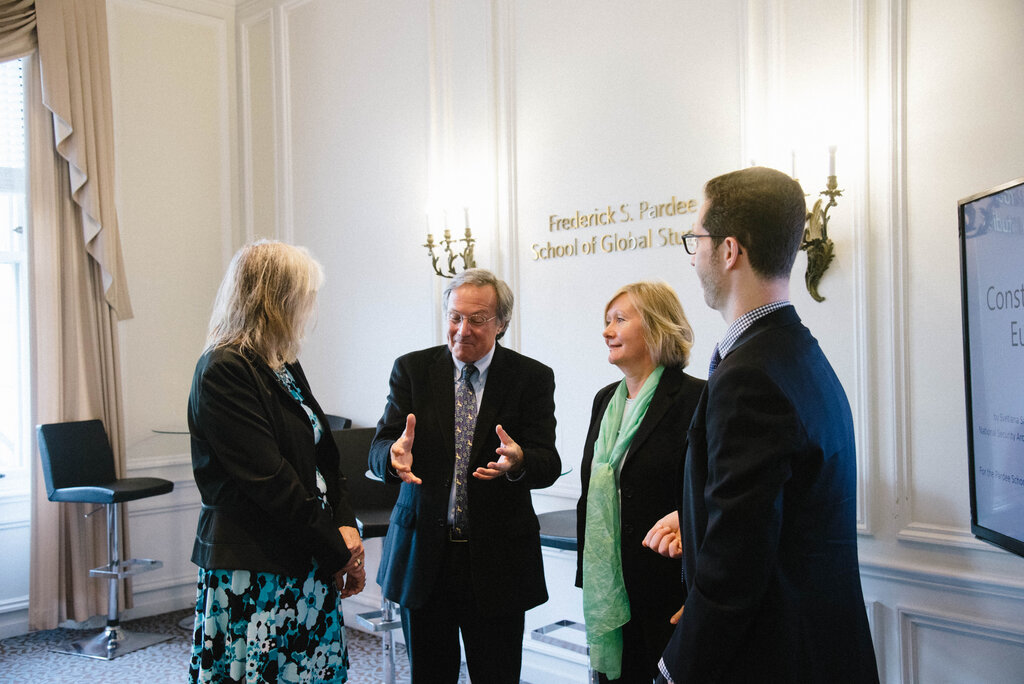
Another way to say "Nice to meet you" is with "Encantado" (if you're male) or "Encantada" (if you're female). This literally means "enchanted" or "delighted."
To introduce other people, you can use “Este es...” for a male and “Esta es...” for a female.
- Este es mi amigo, Juan. (This is my friend, Juan.)
- Esta es mi amiga, Sofia. (This is my friend, Sofia.)
Saying Goodbye
Just as there are many ways to say hello, there are several ways to say goodbye.
| Spanish Phrase | English Meaning | When to Use |
|---|---|---|
| Adiós | Goodbye | A general, all-purpose farewell. |
| Hasta luego | See you later | Use when you expect to see the person again. |
| Hasta mañana | See you tomorrow | Use when you will see them the next day. |
| Nos vemos | See you | A casual way to say you'll see each other around. |
| Chao | Bye | Very common and informal, borrowed from Italian. |
To wrap things up, let's not forget the magic words. Being polite goes a long way in any language.
- Por favor (pohr fah-VOR) - Please
- Gracias (GRAH-see-ahs) - Thank you
- De nada (deh NAH-dah) - You're welcome
Let's review these essential phrases before you test your knowledge.
Ready to try a few questions?
Which Spanish greeting is the most versatile, suitable for any time of day and any situation?
If you are meeting your new, older professor for the first time, how should you ask, "How are you?"
With these basic greetings, introductions, and polite phrases, you have the tools to start your first simple conversations in Spanish. ¡Buena suerte! (Good luck!)