Spain's Historical Tapestry and Cultural Threads
Ancient Iberian Cultures
The First Peoples of Iberia
Long before the Romans arrived, the Iberian Peninsula was a mosaic of distinct cultures. The peoples who lived there weren't a single, unified group. Instead, they were a collection of tribes and societies with their own languages, traditions, and ways of life. Three major groups stand out: the Iberians, the Celts, and a fascinating blend of the two, the Celtiberians.
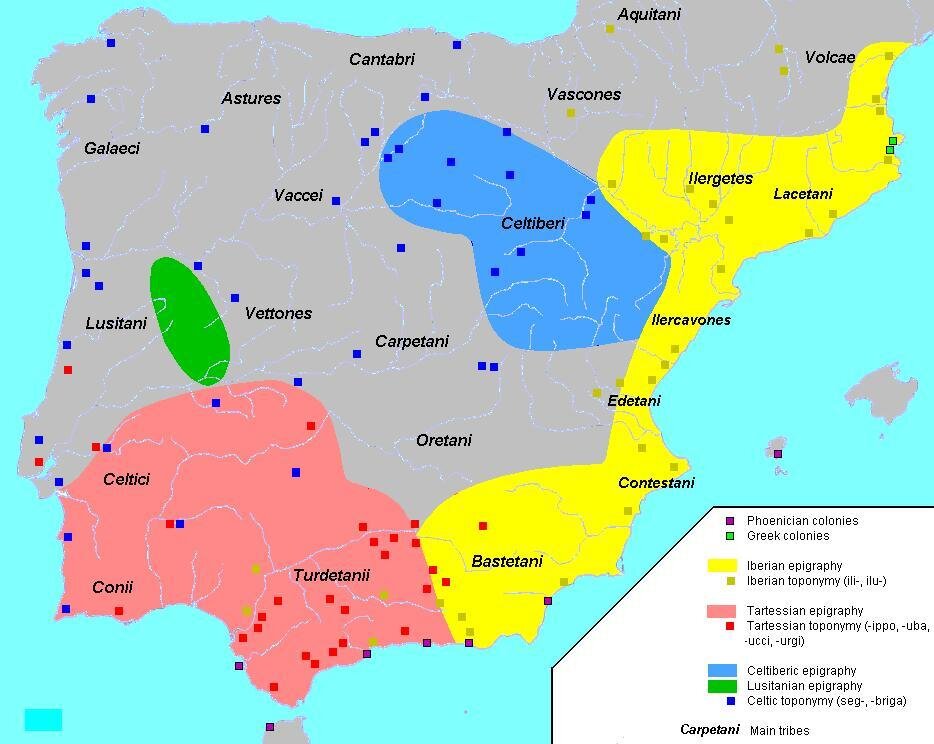
Understanding these early inhabitants is key to grasping the deep roots of modern Spanish and Portuguese culture. Their legacies are not just confined to museums; they echo in place names, local traditions, and even the genetic makeup of the people today.
The Iberians
The Iberians were a sophisticated people who occupied the southern and eastern coastal regions of the peninsula. They were not a single kingdom but a network of independent tribes and city-states, often built on fortified hills known as 'oppida'. This strategic placement gave them a defensive advantage and a clear view of the surrounding agricultural lands they expertly farmed.
They were skilled artisans, particularly in metalwork and pottery. Their society was hierarchical, led by chieftains or kings who commanded warriors. The famous sculpture, the 'Lady of Elche', showcases their artistic refinement, with intricate details in the headdress and jewellery.
The Iberian language is one of Europe's great linguistic mysteries. It was written down, but we still can't fully understand it.
What makes the Iberians particularly distinct is their language. It is considered a 'Paleohispanic' language, meaning it predates the arrival of the Romans and their Latin. Crucially, it's a non-Indo-European language, unlike Celtic, Latin, or modern Spanish. Although scholars have deciphered the script and can pronounce the words, the meaning of most of their texts remains elusive.
The Celtic Influence
Beginning around the 9th century BCE, Celtic peoples from central Europe began migrating across the Pyrenees mountains, settling primarily in the northern, central, and western parts of the peninsula. These were Indo-European speakers, bringing with them new technologies, particularly advanced iron-working, and different societal structures.
Like the Iberians, they lived in fortified hilltop settlements, which are called 'castros' in this region. The Castro Culture of the northwest is a prime example of their settlement patterns. Their societies were tribal, organised around clans and led by a warrior aristocracy. Their cultural legacy can be seen in the folklore and music of regions like Galicia and Asturias, where bagpipes, an instrument often associated with Celtic cultures, are still played.
The Celts of Iberia were not a single tribe, but many, including the Gallaeci, the Astures, and the Cantabri.
Their languages, part of the Celtic family, left their mark on the peninsula. While they were eventually replaced by Latin, some words and many place names with Celtic origins survive, especially in the northern parts of Spain and Portugal.
The Celtiberians A Cultural Fusion
Where the territories of the Iberians and Celts met, a new, blended culture emerged: the Celtiberians. They inhabited the high plains of the central-eastern Meseta, a rugged area that shaped their character. They were renowned as fierce warriors, often serving as mercenaries in armies across the Mediterranean.
The Celtiberians combined elements from both parent cultures. They spoke a Celtic language but adopted the Iberian script to write it down. Their social structures were tribal, like the Celts, but they also lived in fortified settlements similar to the Iberian 'oppida'. Their pottery and metalwork show a unique fusion of Celtic and Iberian artistic styles.
The archaeological, historical and linguistic evidence can show us the religious beliefs and practices of the Continental Celts.
The city of Numantia is perhaps the most famous Celtiberian stronghold. Its resistance against the Roman legions became legendary, a symbol of their formidable and independent spirit. This fusion culture demonstrates that the interaction between different peoples in ancient Iberia was not always one of conflict; it was also a story of adaptation and exchange.
Time to test what you've learned about the early inhabitants of the Iberian Peninsula.
Which of the ancient peoples of the Iberian Peninsula primarily occupied the southern and eastern coastal regions?
What was the most significant linguistic difference between the Iberian and Celtic languages spoken on the peninsula?
The rich tapestry of ancient Iberia, with its distinct yet interconnected cultures, laid the essential groundwork for the societies that would later emerge on the peninsula.