SpaceX Revolution: Engineering the Multiplanetary Future
Falcon Reusability Engineering
The Engine of Reusability
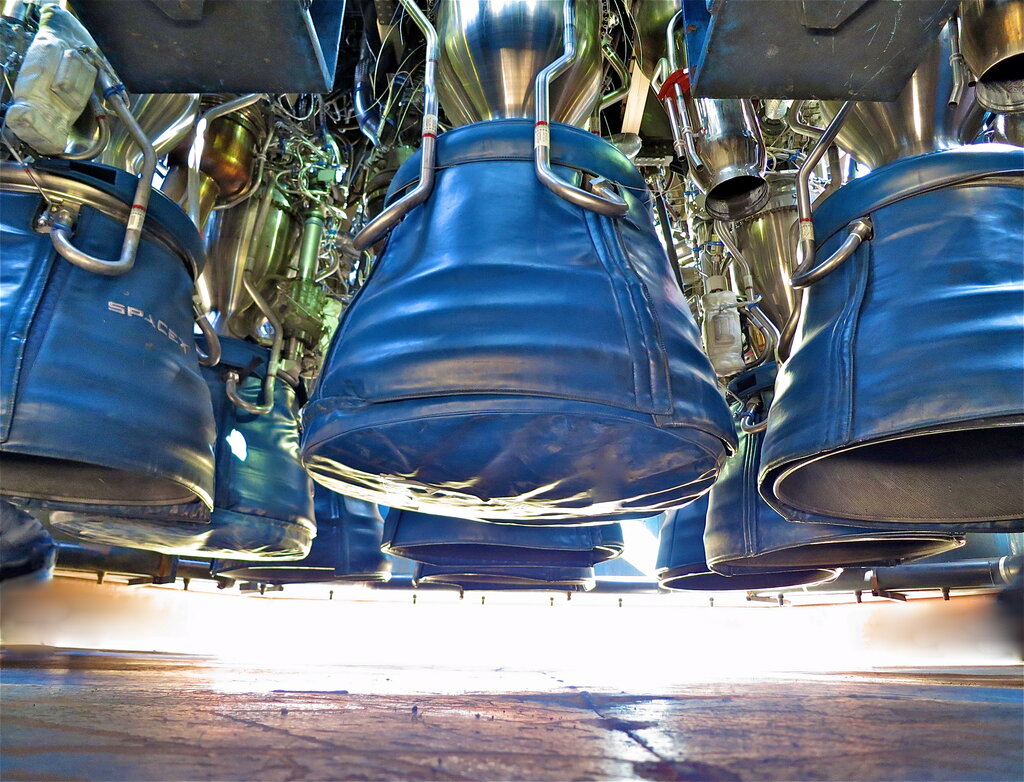
The secret to the Falcon 9's reusability lies in its engines. The first stage is powered by nine Merlin 1D engines, marvels of engineering designed specifically for reliability and reuse. Unlike many rocket engines that are essentially single-use, the Merlin 1D was built from the ground up to be fired again and again.
One of its key features is its open-cycle gas-generator design. In this system, a small amount of propellant is burned in a preburner to power a turbine, which in turn drives the main fuel and oxidizer pumps. The exhaust from this turbine is then vented overboard. While slightly less efficient than a closed-cycle system, this approach is mechanically simpler and more reliable, which is critical for an engine that needs to restart in mid-air.
What truly sets the Merlin 1D apart is its deep-throttling capability. It can reduce its thrust down to just 39% of its maximum power. This incredible range is enabled by its pintle injector, a design that maintains stable combustion across a wide variety of pressures and flow rates. Combined with a thrust-to-weight ratio of nearly 200:1, one of the highest ever achieved, this flexibility gives the rocket the delicate control needed to not just launch, but also to land.
The Hoverslam Maneuver
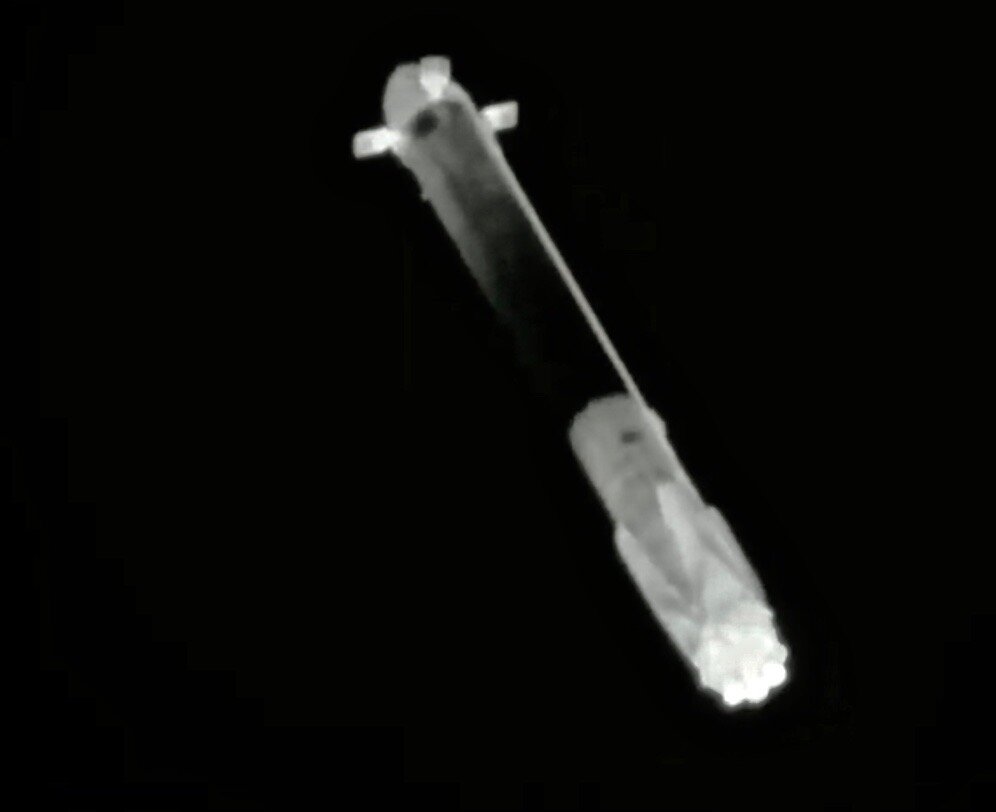
Landing a 14-story rocket booster requires more than just a throttleable engine; it demands a precise and daring maneuver. After separating from the second stage, the booster performs a series of burns to guide itself back to the landing zone. The final and most critical phase is the landing burn, often called the 'hoverslam'.
Because the booster has very little fuel to spare and is aerodynamically unstable at low speeds, it cannot simply hover and gently descend like a helicopter. Instead, it falls at high speed toward its target, firing a single engine (or sometimes three) at the last possible moment. The engine's thrust rapidly decelerates the booster from terminal velocity to zero just as it touches the landing pad. It's an all-or-nothing maneuver that requires precise timing and the Merlin engine's ability to fire up instantly and provide reliable thrust.
Steering Through Fire
During its fiery reentry into the atmosphere at hypersonic speeds, the rocket booster needs a way to steer. Traditional fins or airplane-like control surfaces would be ineffective in the thin upper atmosphere and would burn up. The solution is a set of four grid fins located at the top of the booster.
These lattice-like structures can be individually rotated to control the booster's pitch, yaw, and roll, guiding it with remarkable precision. Early versions of the Falcon 9 used aluminum grid fins. While effective, they were essentially single-use, as the intense heat of reentry would cause significant damage. To achieve true, rapid reusability, SpaceX upgraded them.
The current Falcon 9 Block 5 boosters use much larger grid fins cast from a single piece of titanium. Titanium has a much higher melting point than aluminum, allowing the fins to withstand the extreme temperatures of multiple reentries without significant degradation. This change was a crucial step in reducing the time and cost needed to refurbish a booster between flights.
The Payload Trade-Off
Reusability doesn't come for free. The propellant required for the boostback, reentry, and landing burns is propellant that cannot be used to push the payload into a higher orbit or increase its mass. This creates a direct trade-off between reusability and performance.
When a Falcon 9 flies in its reusable configuration, a significant portion of its propellant is reserved for the landing sequence. If a mission requires the absolute maximum performance of the rocket, SpaceX can choose to fly it in an expendable mode, using all the propellant to maximize payload capacity and simply discarding the first stage in the ocean. The difference in capability is substantial.
| Flight Profile | Max Payload to LEO | First Stage Recovery |
|---|---|---|
| Reusable | ~17.5 metric tons | Yes (Land or Droneship) |
| Expendable | ~22.8 metric tons | No (Discarded) |
The choice between profiles depends entirely on the customer's needs. For most commercial satellite launches and Starlink deployments, the reusable configuration offers more than enough performance at a much lower cost. For heavy national security payloads or missions to higher-energy orbits, the expendable profile provides the necessary muscle.
This focus on engineering for reuse, from the engine design to the landing hardware, is what transformed the Falcon 9 from just another rocket into the workhorse of the modern space industry.
What is the key design feature of the Merlin 1D engine that allows it to maintain stable combustion across a wide range of thrust levels, enabling the rocket to land?
Why is the Falcon 9's landing maneuver described as a 'hoverslam'?