Space Biology Essentials
Introduction to Space Biology
Life Beyond Earth's Boundaries
Space biology is the study of how living things react to the unique environment of space. It's not about searching for aliens, but about understanding what happens to life from Earth when we take it off the planet. From the smallest microbe to the most complex human, every organism evolved under a very specific set of conditions: constant gravity, a protective atmosphere, and predictable light cycles. Space changes all of that.
Scientists in this field ask fundamental questions. How do cells communicate in microgravity? Can plants grow without a clear 'up' or 'down'? What are the long-term effects of cosmic radiation on DNA? Answering these questions helps us protect astronauts on long missions, like a trip to Mars, and also gives us a deeper understanding of the basic rules of biology.
A Brief History of Life in Orbit
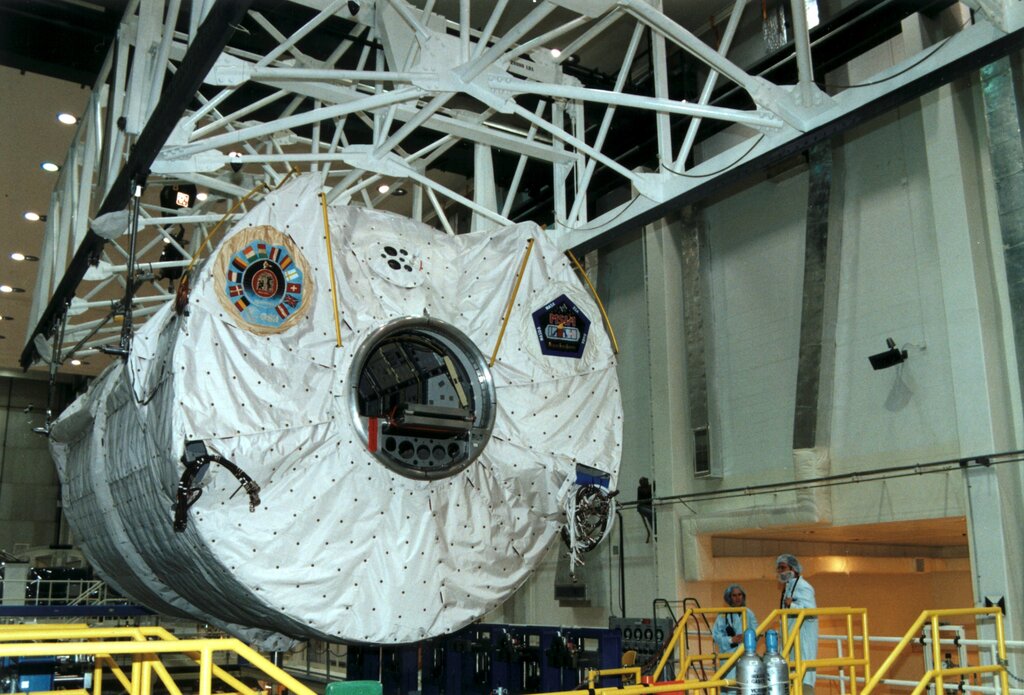
The story of space biology began before humans ever left the planet. In the 1940s, scientists launched fruit flies on rockets to see how they'd handle high altitudes and radiation. These early experiments paved the way for sending more complex animals. The Soviet Union famously sent the dog Laika into orbit in 1957, followed by monkeys and apes in the American space program. These animal astronauts were pioneers, providing the first data on how vertebrates could survive in space.
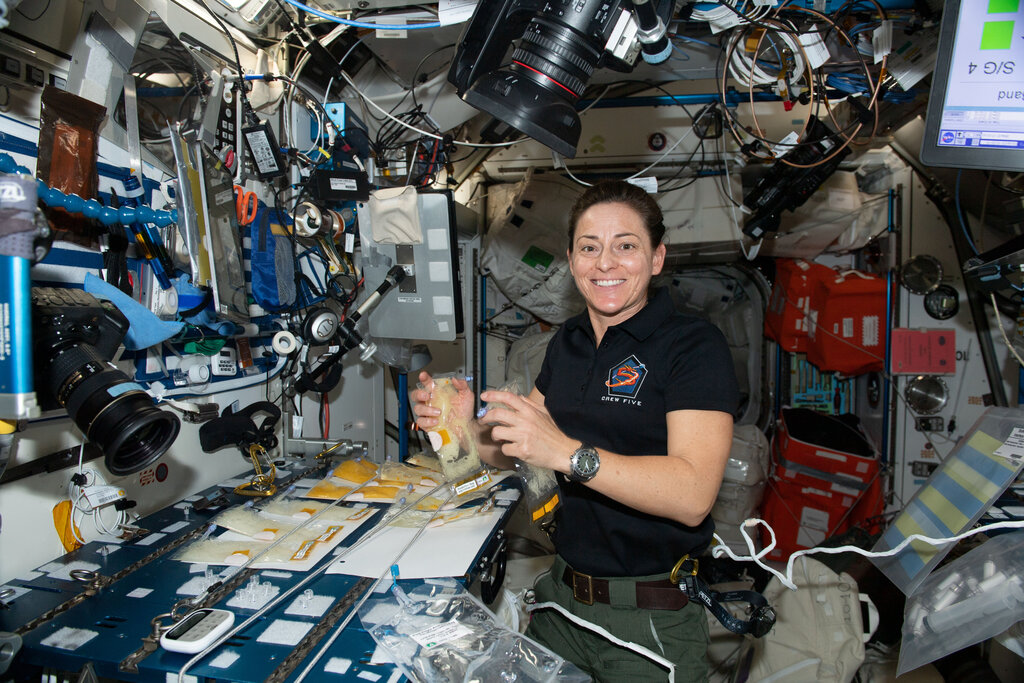
As human spaceflight became more common, so did biological research. Early missions on Skylab in the 1970s and later on the Mir space station allowed for longer-term studies. Today, the International Space Station (ISS) is a world-class laboratory dedicated to this research. Scientists from around the globe use it to conduct experiments that would be impossible to perform on Earth, growing plants, studying cell cultures, and monitoring the health of astronauts who live and work in orbit for months at a time.
The Major Hurdles of Space
The space environment is hostile to life as we know it. Three major factors create a constant challenge for any organism.
Microgravity is perhaps the most defining feature of being in space. It's not an absence of gravity, but a state of continuous free-fall around the Earth. Without the constant pull of gravity, systems within the body begin to change.
Bones lose density because they no longer need to support weight. Muscles weaken from lack of use. Even the fluids in the body shift, moving towards the head and chest, which can affect everything from vision to the sense of taste.
Next is radiation. On Earth, our planet's magnetic field and atmosphere shield us from the vast majority of harmful space radiation, which comes from the sun and distant cosmic events. In space, this protection is gone. Astronauts are exposed to much higher levels of radiation, which can damage cells and increase long-term health risks. Understanding and shielding against this radiation is one of the biggest challenges for future deep-space missions.
Finally, there's isolation and confinement. Living in a small, enclosed habitat millions of miles from home takes a psychological toll. Astronauts face long periods of separation from family, monotonous routines, and reliance on a small group of crewmates. Maintaining mental health and effective teamwork is just as critical as maintaining physical health.
How Life Responds
Faced with these challenges, living organisms show a remarkable range of responses. At the cellular level, gene expression can change. Some genes that are quiet on Earth might switch on in space, while others might turn off. This is the cell's way of trying to adapt to the new environment. For example, immune cells can become less active, making astronauts more susceptible to infections.
On a larger scale, we see physiological shifts. Plants might have trouble orienting their roots and shoots without gravity as a guide. Bacteria can sometimes grow faster and become more resistant to antibiotics. For humans, the changes are systemic, affecting the cardiovascular, musculoskeletal, and nervous systems.
These responses are not just problems to be solved. They are a window into the fundamental workings of life. By studying how biology changes when the rules are different, we learn more about how it works here on Earth.
What is the primary focus of space biology?
Which of the following were among the very first animals used in space biology research, even before human spaceflight?