South African Film Industry Entrepreneurship
South African Film Industry Overview
From Propaganda to Global Player
The South African film industry has a long and complex history. During the apartheid era, filmmaking was heavily controlled and often used to promote the state's ideology. But since the transition to democracy in 1994, the industry has undergone a dramatic transformation. It has blossomed into a vibrant and diverse space for storytelling, moving away from its propagandist past to embrace authentic South African narratives that resonate with both local and global audiences.
This shift allowed filmmakers to explore the country's rich cultural tapestry, tackle difficult social issues, and celebrate its unique identity. Films like Tsotsi, which won the Academy Award for Best Foreign Language Film in 2006, signaled a new era, proving that South African stories had a place on the world stage.
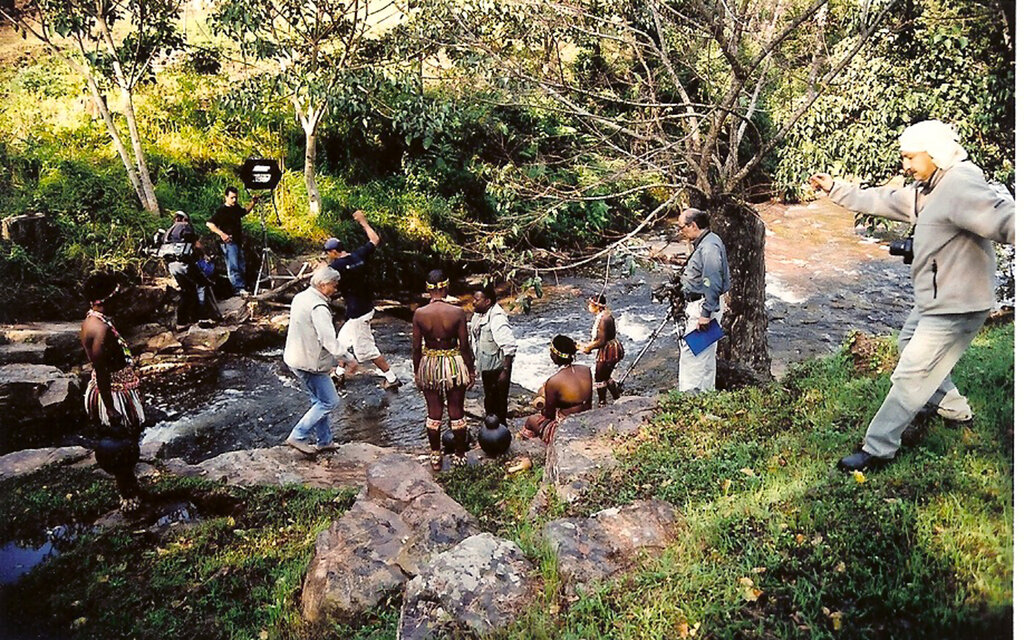
A Powerful Economic Engine
Today, the film industry is a significant contributor to South Africa's economy. Before the global pandemic, the industry was generating over R7 billion annually. While it faced challenges, projections show a steady recovery and growth, driven by both local productions and international projects choosing South Africa as their backdrop.
The economic impact extends far beyond the box office. The industry is a major employer, providing jobs for thousands of people. This includes not only actors, directors, and writers, but also a vast network of skilled technicians, caterers, drivers, costume designers, and construction workers who build the sets. For every film or TV show made, a small economy springs up around it.
For every rand spent on film production, an estimated R2.50 is generated in the local economy, creating a ripple effect that boosts businesses and communities nationwide.
Government, Collaboration, and Streaming
The industry's growth hasn't happened by accident. The South African government plays a crucial role through various support programs and incentives. The Department of Trade, Industry and Competition (the dtic) offers rebates and tax incentives designed to attract foreign investment and support local filmmakers. These programs make it financially attractive to produce films in the country, leveling the playing field with other popular global locations.
South Africa has earned its place on the global production map with a winning combination of diverse locations, skilled crew, modern infrastructure, and one of the most competitive film rebate systems in the world.
These incentives have fostered a boom in international collaborations. Major Hollywood studios and European production houses frequently shoot in South Africa, drawn by the financial benefits, stunning landscapes, and world-class production facilities in cities like Cape Town and Johannesburg. This brings in foreign currency and also provides invaluable opportunities for local crews to gain experience on large-scale projects.
At the same time, there's been a surge in demand for uniquely local content, thanks in large part to streaming platforms like Netflix, Showmax, and Amazon Prime Video. These services are actively commissioning South African series and films, giving local storytellers unprecedented access to a global audience. This has created a new wave of opportunity, fueling a creative renaissance and ensuring that the stories being told are as diverse as the country itself.
What was the most significant shift in the South African film industry after the end of apartheid in 1994?
Which government department plays a crucial role in supporting the film industry through incentives like tax rebates?
This overview provides the foundational context of South Africa's film industry. Understanding its history, economic scale, and key growth drivers is the first step in identifying where the opportunities lie.