Sorting Algorithms Simplified
Sorting Basics
What is Sorting?
At its core, sorting is simply the process of arranging items in a specific order. Think about looking up a friend's number in a phone book. You can find their name quickly because the names are listed alphabetically. Now, imagine if those names were in a completely random order. Finding that one name would take a very long time.
Computers face the same problem. When data is organized, or sorted, a computer can find what it's looking for much more efficiently. This simple act of putting things in order is a fundamental concept in computer science that makes programs faster and more powerful.
Sorting
noun
The process of arranging data into a logical sequence, such as numerical or alphabetical order.
Types of Order
When we sort data, we typically arrange it in one of two ways.
Ascending order arranges items from smallest to largest. For numbers, this means 1, 2, 3, and so on. For letters, it's A, B, C, etc.
Descending order is the opposite. It arranges items from largest to smallest, like 10, 9, 8 or Z, Y, X.
| Order Type | Numbers | Letters |
|---|---|---|
| Ascending | 1, 2, 3, 4, 5 | A, B, C, D, E |
| Descending | 5, 4, 3, 2, 1 | E, D, C, B, A |
The choice between ascending and descending depends entirely on what you need to do with the data. Do you want to see the newest emails first, or the oldest? The highest-priced items, or the lowest? Both are achieved through sorting.
Where the Sorting Happens
Imagine you're organizing a messy bookshelf. You have two main ways you could tackle this.
You could rearrange the books one by one, right there on the shelf, until they are all in order. This is like in-place sorting. You work within the original space and don't need any extra room.
Alternatively, you could take all the books off the shelf and spread them out on a large table. You'd organize them on the table and then put them back on the shelf in their new, correct order. This is out-of-place sorting. It requires extra space (the table) to get the job done.
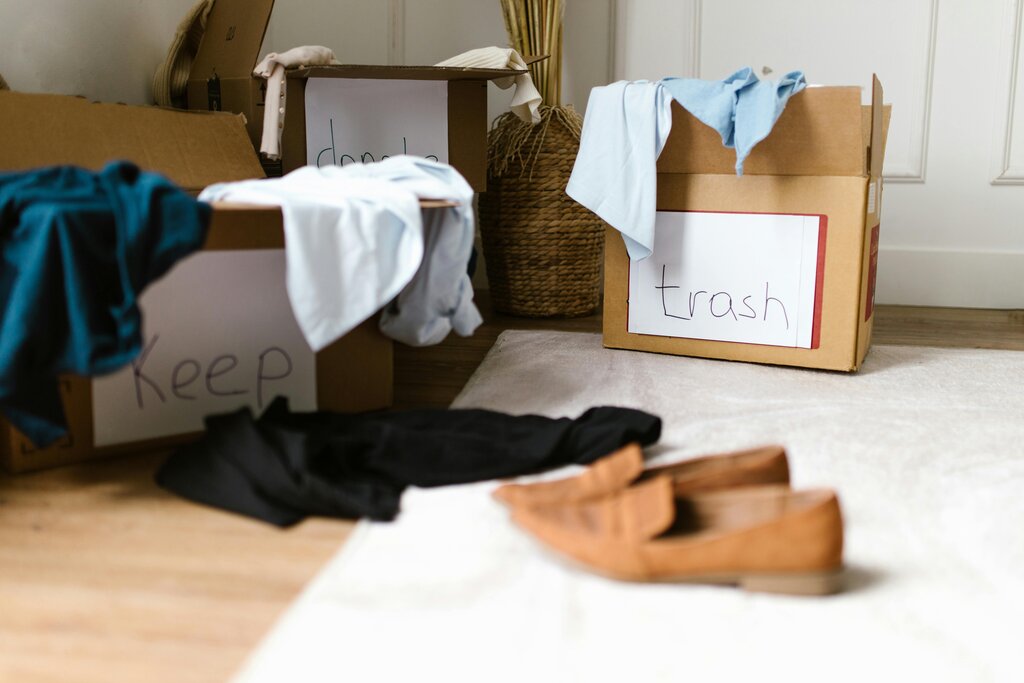
In computing, these two approaches have different trade-offs. In-place sorting is memory-efficient because it doesn't need to create a new, separate copy of the data. Out-of-place sorting might be faster or simpler to implement for certain situations, but it comes at the cost of using more memory.
In-place sorting happens within the data's original location. Out-of-place sorting uses extra memory to hold the sorted data temporarily.
Now let's check your understanding of these fundamental concepts.
What is the primary purpose of sorting data?
If you want to display a list of employee names from A to Z, which sorting order should you use?
Understanding these basic ideas sets the stage for exploring specific methods, or algorithms, that computers use to sort data efficiently.