Sophisticated Governance and Culture of the Mughal Empire
Imperial Administration Systems
The Engine of Empire
Running a vast, diverse empire like the Mughal's required more than just military might. It demanded a sophisticated administrative machine to manage resources, command the army, and unify a patchwork of regional powers. Emperor Akbar's solution was the Mansabdari system, a unique framework that integrated the empire's military and civil services into a single, hierarchical structure.
The Mansabdari system was the steel frame of the Mughal administration. Every official in the empire, from a high-ranking general to a court bureaucrat, was a 'mansabdar'—a holder of a rank, or 'mansab'.
This system wasn't just about organising the government; it was a tool for political consolidation. By assigning ranks to influential leaders from different backgrounds, including Rajputs and Persian nobles, the Mughals brought powerful regional players into the imperial fold. It turned potential rivals into loyal servants of the state, binding their personal success to the stability of the empire.
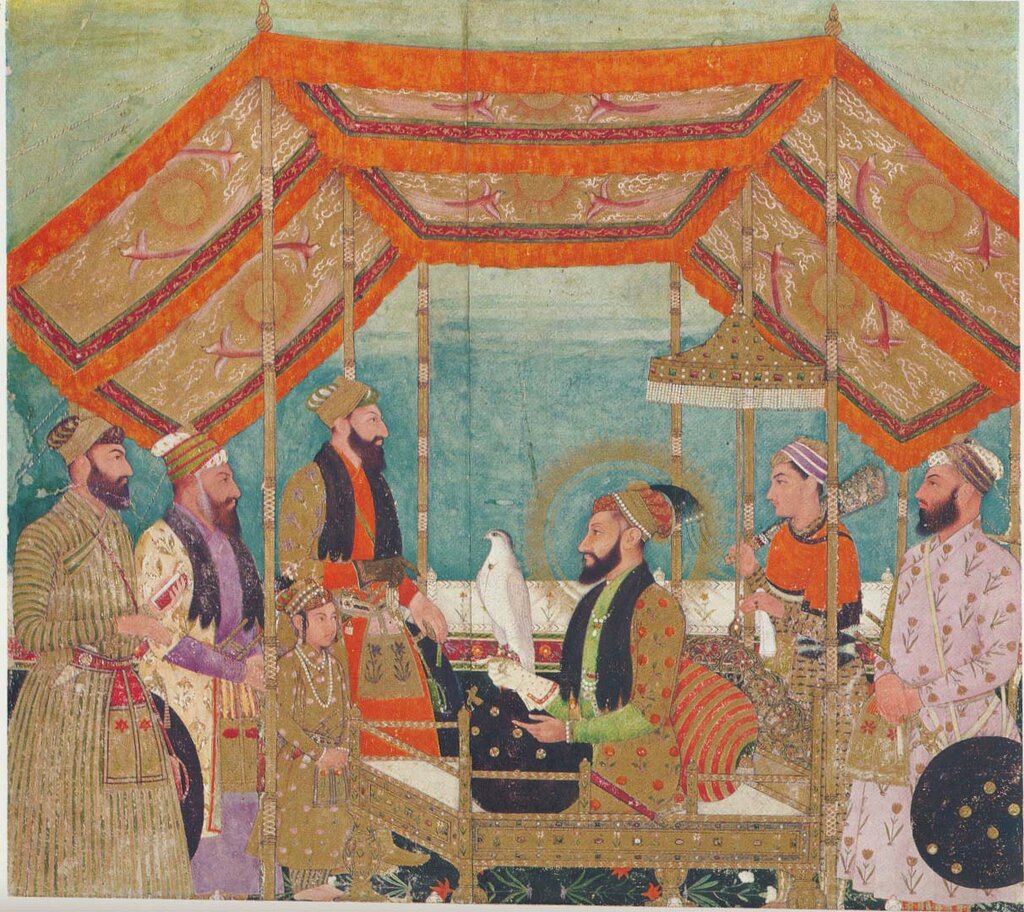
Rank and Responsibility
A mansabdar's rank was not a single number. It was defined by two critical components: Zat and Sawar. These dual ranks precisely determined an official's position, salary, and military obligations.
Zat was the primary rank. It determined the holder's personal status in the imperial hierarchy and, crucially, their personal salary. A higher Zat meant more prestige and a larger pay packet.
Sawar was the cavalry rank. It specified the exact number of horsemen and horses a mansabdar was required to maintain for the imperial army. These troops were the backbone of Mughal military power, and the Sawar rank ensured the empire could field a massive, well-equipped force whenever needed.
| Rank Example (Zat / Sawar) | Meaning |
|---|---|
| 5000 / 5000 | A high-ranking noble, commands 5000 troops. |
| 3000 / 1500 | A significant official, commands 1500 troops. Personal status is of the 3000 rank. |
| 1000 / 1000 | A mid-level commander or administrator. |
| 500 / 200 | A junior officer with a personal status of 500, maintaining 200 horsemen. |
Typically, the Sawar rank was equal to or less than the Zat rank. A mansabdar was expected to bring his contingent for regular review, ensuring his troops were well-equipped and his horses properly branded. Failure to meet these standards could result in fines or demotion.
Paying the Officials
How did the empire pay for this vast bureaucracy and army? While some junior mansabdars were paid in cash from the imperial treasury, most high-ranking officials were compensated through the —a complex arrangement involving land revenue assignments.
Instead of a cash salary, a mansabdar was granted a jagir, a territory whose estimated revenue was equivalent to the salary for both his Zat and Sawar ranks. The mansabdar, now also a jagirdar, was responsible for collecting this revenue from the peasants and producers in his assigned area.
From this collected revenue, the jagirdar paid his own salary and the costs of maintaining his cavalry contingent—salaries for soldiers, and feed and equipment for the horses.
This system cleverly outsourced the complex and difficult task of revenue collection to the officials themselves. It created a delicate balance. The central government maintained control by assigning and, importantly, transferring jagirs every few years to prevent any single official from becoming too powerful in a region. However, this very system contained the seeds of its own decline. As the empire weakened in its later years, powerful jagirdars began to defy transfers, treat their jagirs as hereditary lands, and withhold revenue from the central treasury, contributing to imperial instability.
Ready to test your knowledge on the framework that held the Mughal Empire together?
What was the primary purpose of the Mansabdari system introduced by Akbar?
In a mansabdar's dual rank, what did 'Zat' signify?
The Mansabdari and Jagirdari systems were a remarkable feat of administrative engineering, enabling the Mughals to govern a vast and complex territory for centuries. They balanced centralization with regional delegation, creating a framework that was both flexible and powerful.